
Fashion plays a significant role at the Winter Olympics, not only through athletic performance but also in the distinctive uniforms and apparel worn by participating nations. For Milan Cortina 2026, this focus on style is heightened by Milan's status as a global fashion hub, contending with Paris for the spotlight following the Paris 2024 Summer Olympics, renowned for their stylish presentations.
Amid anticipation building on social media through athletes sharing unboxing experiences of their new team gear, the official debut of these uniforms is scheduled for the Parade of Nations during the opening ceremony on Friday evening. This showcase provides a platform where fashion and athletics converge on an international stage.
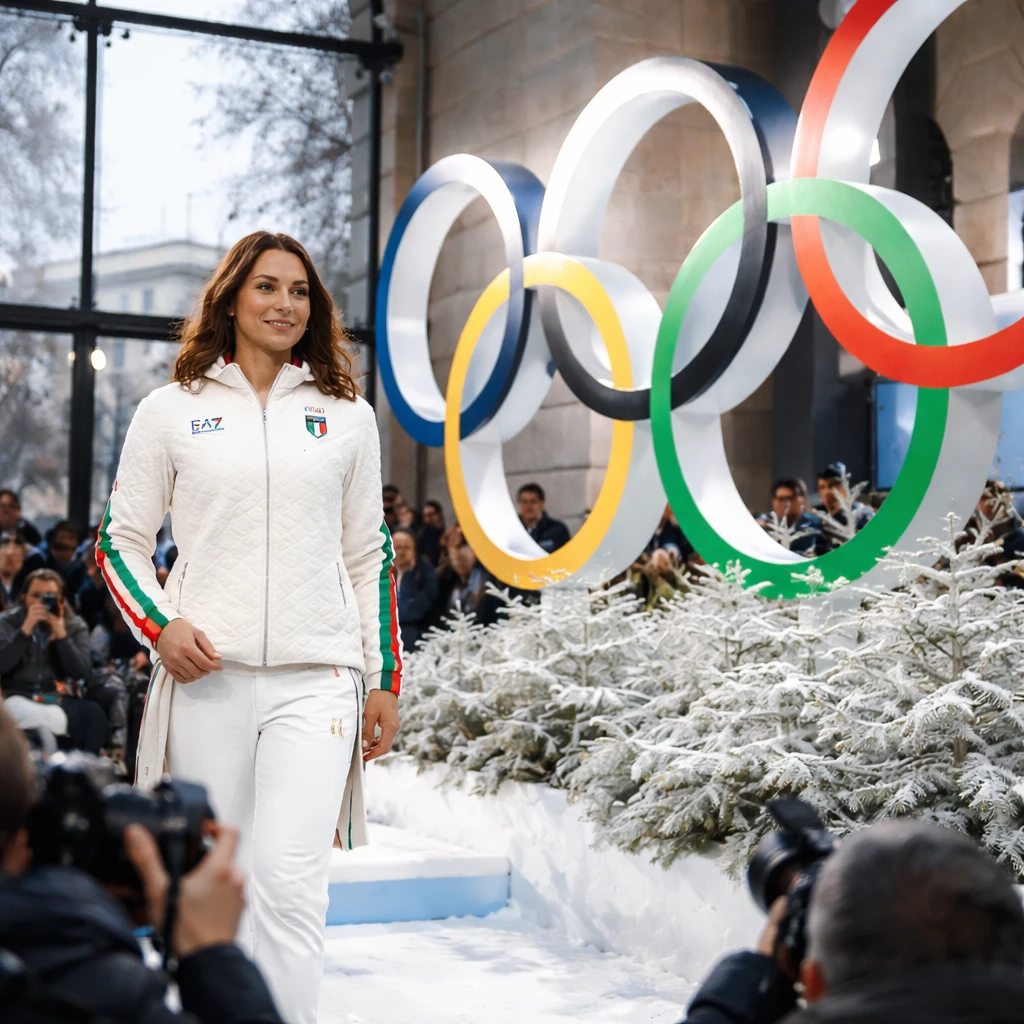
Among the notable designs is Team Italy's collection, the final iteration crafted by the late Italian fashion icon Giorgio Armani, who passed away in September at the age of 91. The uniforms, featuring a milky white hue symbolizing peace and snow-capped mountains, consist of a down jacket, thermal ski outerwear, and waterproof trousers. The focal point is a striking oversized bomber jacket embellished with repeated "Italia" heat-printed motifs and completed with a high-knit collar bleeding with the Italian tricolor of red, green, and white. This marks Armani's fourth Winter Olympics collaboration under the EA7 Emporio Armani athletic label. During the opening ceremony, a special tribute will honor Armani's extensive contribution to Italian ready-to-wear fashion and his deep ties to Milan.
For Team USA, Ralph Lauren continues its longstanding partnership as official outfitter, unveiling a collection that channels cozy Americana. The opening ceremony wardrobe, revealed in December, showcases the traditional red, white, and blue palette, highlighted by Fair Isle knitwear embroidered with the U.S. flag and Olympic rings, complemented by matching tasseled hats and mittens. The uniform's central theme is winter white, featuring a duffle coat and trousers that evoke a serene and ethereal ambiance. Notably, Pantone's announcement of "Cloud Dancer" as the color of 2026 coincided with Ralph Lauren's unveiling, a selection reflecting athletes' shared sentiment associating the color with peace and calmness. The brand's involvement dates back to 2008, with designers commencing preparations approximately two and a half years before each Olympic cycle.
The Haitian Olympic team's attire presents a culturally rich narrative designed by Italian-Haitian creative Stella Jean. Drawing inspiration from a Haitian artist's painting, the initial uniforms depicted Toussaint Louverture, a historic revolutionary figure who led the creation of the first Black republic in 1804, astride a red horse. However, due to the International Olympic Committee's regulations prohibiting political symbolism, the image was altered to exclude Louverture, instead focusing on the horse against a vivid tropical background. Despite the IOC's silence on the matter, Jean emphasized compliance with Olympic rules, acknowledging the necessity to avoid political, religious, or racial propaganda within event venues.
The Mongolian delegation's apparel, developed by Goyol Cashmere, received significant acclaim upon its launch. These designs evoke the historic "warrior spirit" of Mongolians, whose ancestors relied on cashmere garments to withstand harsh Central Asian winters during the era of the Great Mongol Empire from the 13th to 15th centuries. For Milan Cortina 2026, athletes will don cashmere ceremonial deels—traditional robes adorned with silk trims—to homage their heritage. The designs also include cashmere knitwear inspired by Western alpine ski sweaters, integrating traditional Mongolian patterns that bridge culture and functionality.
Many other nations are keeping their Olympic uniform designs confidential, opting to reveal them only during the opening ceremony hosted at Milan's San Siro stadium, which accommodates 80,000 spectators. Nevertheless, known partnerships between teams and fashion brands include:
- Austria with AlphaTauri
- Brazil with Moncler
- Canada with lululemon
- China with Li-Ning
- Czech Republic with ALPINE PRO
- Finland with Luhta
- France with Le Coq Sportif
- Germany with Adidas
- Great Britain with Ben Sherman
- Iceland with 66 North
- Poland with Adidas
- Spain with Joma
- Sweden with UNIQLO
- Switzerland with OCHSNER SPORT
- Ukraine with 4F
The Milan Cortina Games thus present a unique intersection between fashion capitals and global sports, where the aesthetic identity of athletes complements their competitive spirit. The collaboration between luxury fashion brands and national sports bodies underlines the evolving relationship between performance wear and cultural expression on the Olympic stage.