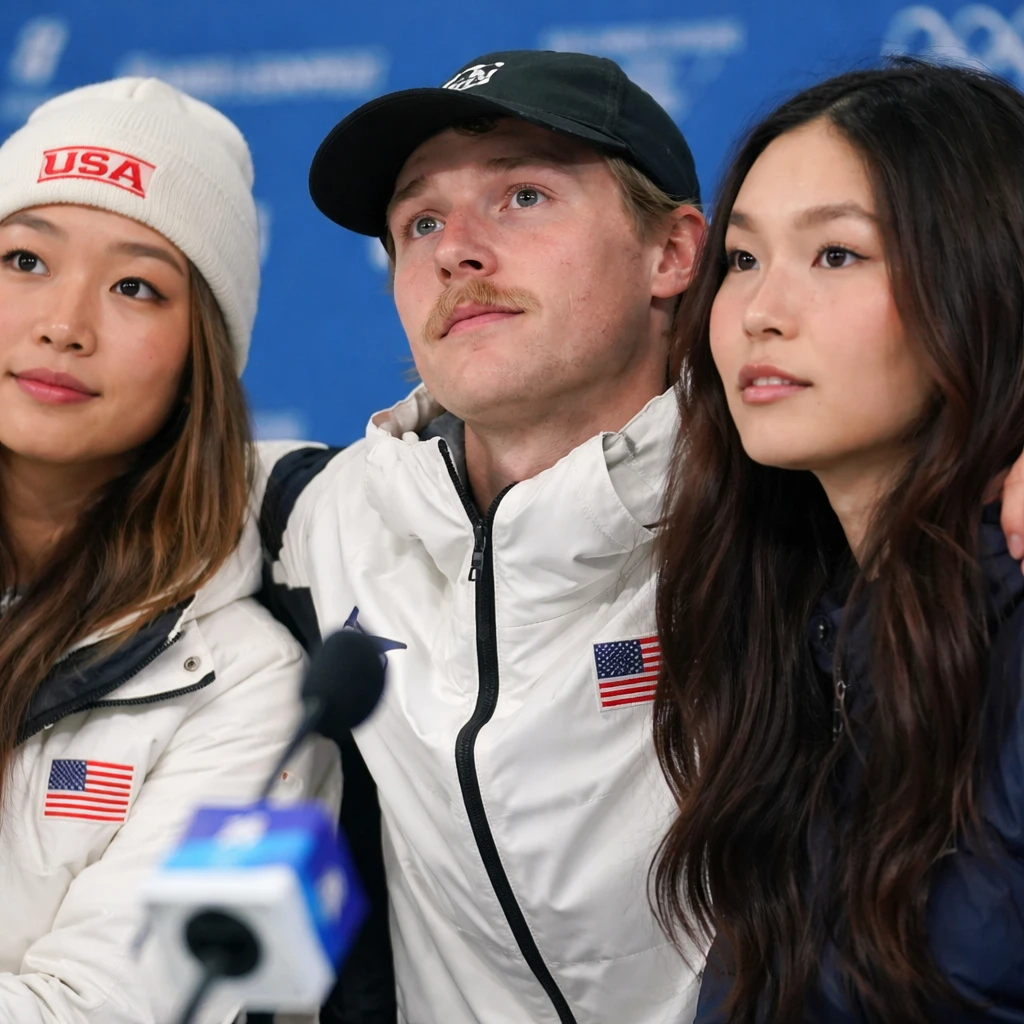
At the Winter Olympic venue in Livigno, Italy, prominent athletes Chloe Kim and Eileen Gu addressed a recent political controversy involving their friend and fellow American freeski competitor Hunter Hess. Hess had drawn criticism from former President Donald Trump after he voiced opposition to the president's intensified immigration enforcement policies.
Following Hess’s candid remarks to reporters about not fully endorsing the increased immigration crackdown—comments made amidst reports of two protesters' deaths in Minnesota and widespread community disruptions—Trump publicly disparaged Hess the next day on social media, labeling him "a real Loser" and expressing reluctance to support him in the Games.
In response, Kim, who holds two Olympic gold medals and whose parents emigrated from South Korea, reflected on the issue with a personal perspective. She stated, "My parents being immigrants from Korea, this one definitely hits pretty close to home." She articulated pride in representing the United States while asserting that expressing one's views with love and compassion is vital.
Kim opened her remarks by underscoring the importance of solidarity during turbulent times, saying, "I think in moments like these, it is really important for us to unite and kind of stand up for one another for all that’s going on." Her comments highlight the ongoing intersection of sports, personal identity, and sociopolitical discourse.
Similarly, Gu, an American-born athlete competing under the Chinese flag, spoke candidly about the pressures of being caught amid political debate. After securing a silver medal in the slopestyle competition, she shared her solidarity with Hess, mentioning they had connected over their shared experience of scrutiny. Gu lamented the way political controversies have cast a shadow over the Olympic spirit, describing the situation as "an unwinnable press war" and regretting that such headlines detract from the event’s intended celebratory purpose.
Other U.S. snowboarders also voiced their perspectives following the controversy. Bea Kim, another snowboarder on the American team, acknowledged the nation's current divisions but emphasized pride in representing the United States and championed the nation's diversity as a source of strength.
Maddie Mastro, likewise a team member, expressed sorrow over the situation at home and the broader challenges faced. She emphasized that while the nation grapples with internal strife, it upholds values of kindness and compassion, bringing people together in the face of injustice.
This collective response from athletes illustrates a broader discourse about freedom of expression and the multifaceted nature of national representation in international sports contexts. The situation involving Hess highlights the complexities athletes face when personal convictions intersect with their role as representatives of their countries.
As the Winter Olympic events progress, the athletes’ confrontation with political pressures reveals an ongoing challenge of balancing sportsmanship with social commentary. This episode reaffirms that major sporting events can become platforms for broader societal conversations, including those surrounding immigration and national identity.
While these athletes continue to compete at the highest level, their statements emphasize a shared call for unity and compassion amid the divisions voiced publicly and politically in the United States.