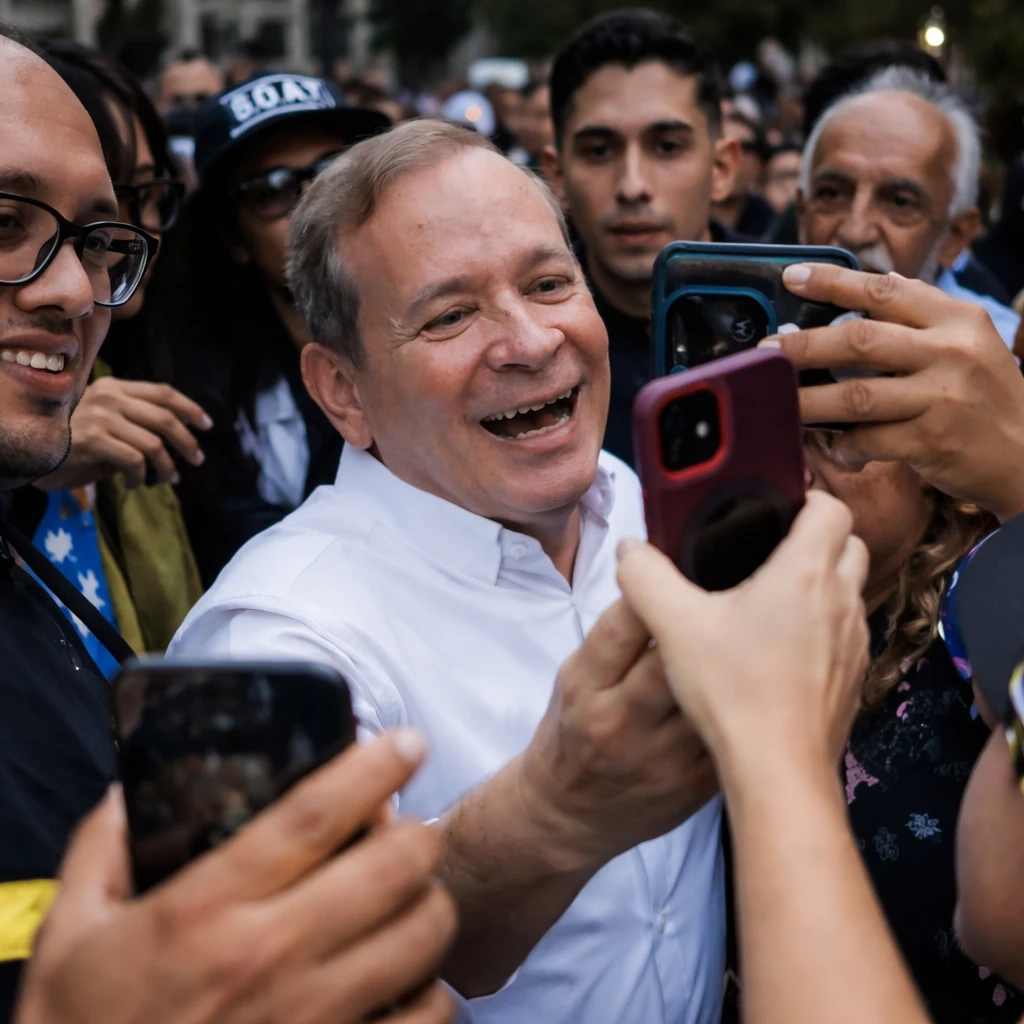

In Caracas, Venezuela, intense political developments continued to unfold this Monday as the country’s attorney general revealed that the judiciary had requested the arrest of Juan Pablo Guanipa, a prominent ally of opposition leader María Corina Machado. This request came less than 12 hours following Guanipa’s release, which had been part of a broader governmental initiative to free individuals detained on politically charged accusations.
The announcement made by Attorney General Tarek William Saab did not specify whether Guanipa had already been rearrested, nor did it clarify his current location. Authorities had freed Guanipa along with several other opposition figures on the previous day, after these individuals had experienced protracted detentions widely viewed as politically motivated.
The Attorney General’s office indicated on social media that it had moved to revoke the court-ordered precautionary release granted to Guanipa. The stated reason was his failure to comply with conditions imposed upon him by the court. However, the specifics of any contraventions by Guanipa within the brief period of his liberty were not disclosed. Notably, officials are reportedly seeking to place him under house arrest.
Ramón Guanipa, the son of Juan Pablo Guanipa, provided reports to the press stating that on Sunday night, shortly before midnight, his father and associates were intercepted by armed men in civilian attire and bulletproof vests, traveling in multiple vehicles through a Caracas neighborhood. Ramón Guanipa also mentioned that he had not officially been informed about his father’s whereabouts or the formal decision regarding house arrest placement.
According to Ramón Guanipa, his father had adhered to the release conditions detailed in the court order, which included monthly court check-ins and a prohibition on travel outside Venezuelan territory. He presented this document to reporters to support the claim that no violations had occurred.
The political backdrop to Guanipa’s fluctuating detention status is complex and heightened by recent national and international events. This turmoil intensified following the U.S. military operation on January 3, which resulted in the capture of former President Nicolás Maduro and his spouse, Cilia Flores, from a military facility in Caracas and their subsequent transfer to New York to face drug trafficking charges.
Since the inauguration of acting President Delcy Rodríguez, the Venezuelan government has initiated the release of numerous political detainees, addressing ongoing demands from opposition groups, human rights organizations, and external actors such as the United States. These releases were timed shortly after a visit by delegates from the United Nations High Commissioner for Human Rights.
Human rights organization Foro Penal, based in Venezuela, confirmed that at least 30 prisoners were freed on Sunday. Among those released were well-known opposition members including attorney Perkins Rocha and organizer María Oropeza, both connected with María Corina Machado’s political movement. Rocha was reportedly placed under house arrest following her release.
Guanipa himself had been detained since late May, accused by Interior Minister Diosdado Cabello of involvement with a purported “terrorist group” aiming to disrupt the legislative elections held in May. His family and supporters have rejected these accusations, interpreting the arrest as a tactic to suppress political dissent.
Following the January announcements by Rodríguez’s administration about releasing a significant number of politically motivated detainees, human rights advocates and families of prisoners have criticized the gradual pace of these actions. Additionally, the ruling party-controlled National Assembly has commenced debates on an amnesty bill designed to facilitate the release of hundreds more detainees, drawing measured optimism and calls for transparency from opposition and civil society groups.
National Assembly President Jorge Rodríguez projected optimism about the amnesty, stating via social media that all detainees would be freed by the week following the bill's approval. Meanwhile, diplomatic engagement between Delcy Rodríguez and U.N. High Commissioner Volker Türk has included discussions on establishing frameworks for dialogue and reconciliation centered on human rights achievements.
Despite these developments, ongoing concerns persist over the legal status and treatment of opposition figures like Guanipa. His son lamented the criminalization of basic political expression. Guanipa himself, during his brief liberty, expressed hope and conviction that Venezuela was fundamentally changing and emphasized the collective responsibility to pursue a free and democratic society.