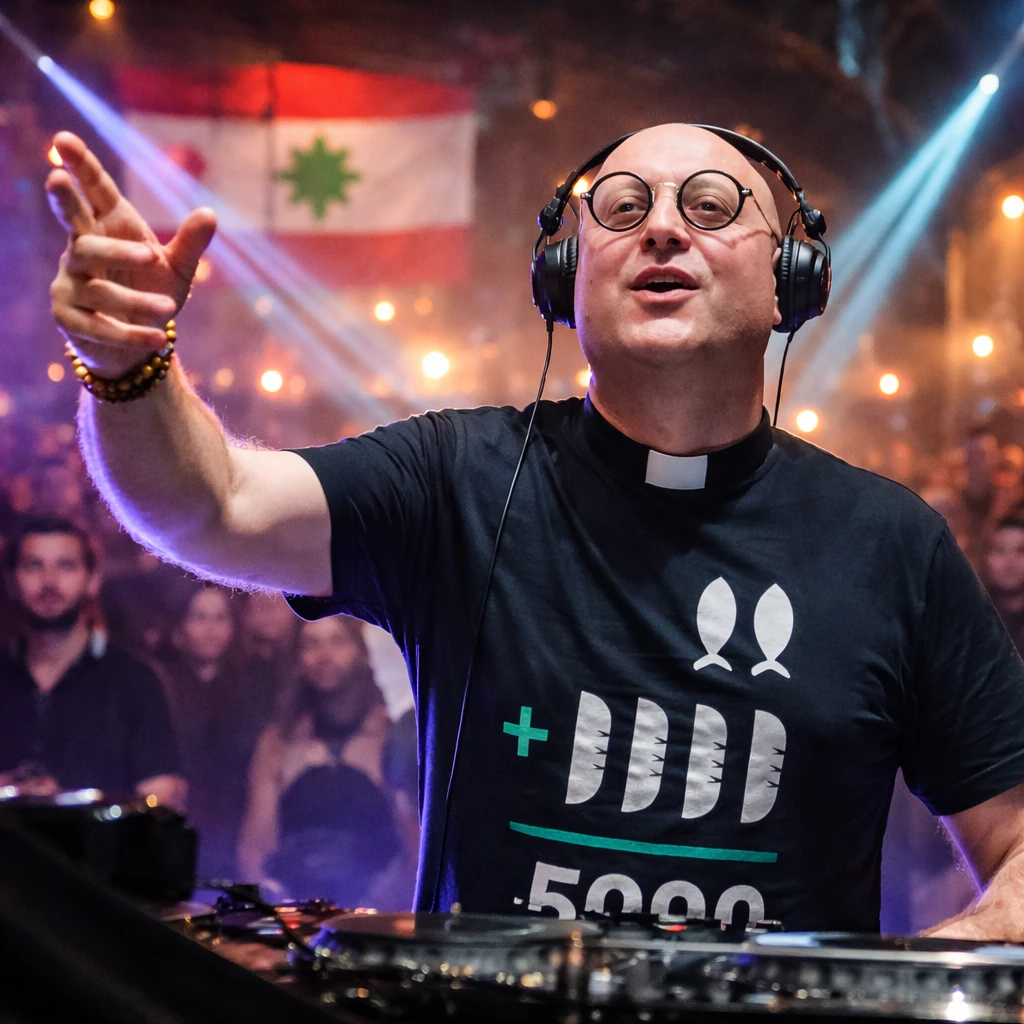

In the energetic heart of Beirut, Lebanon's vibrant party scene welcomed an unusual figure behind the DJ booth at a prominent nightclub on a packed Saturday night. The event drew a full house, captivated by the music and energized bass reverberations familiar to any Middle Eastern nightlife hub.
What set this gathering apart was the identity of the DJ: Padre Guilherme, a 52-year-old Catholic priest from northern Portugal who balances spiritual leadership with nocturnal musical performances. Prior to his evening act, he had conducted a traditional Mass at Saint Joseph University of Kaslik, a Lebanese Catholic institution.
For Padre Guilherme, the fusion of his clerical role with electronic music serves multiple purposes. He interprets his DJing not just as artistic expression but as an extension of his faith, designed to foster messages of peace and harmony, while building a connection with younger generations.
Reflecting on his approach, he noted, "The Psalm asks us to praise the Lord with all instruments. Now we include this new instrument that electronic music represents." This statement came before he led a well-attended Mass at the university, where his presence bridged traditional and contemporary modes of worship.
His unique blend of priesthood and performance has drawn international attention, with a social media following of 2.6 million and performances at significant gatherings such as the World Youth Day in 2023 before Pope Francis’s outdoor Mass, as well as at an event featuring Pope Leo in 2025. Initially, his DJ sets aimed to support fundraising efforts for local churches, but they have evolved into a dynamic platform for evangelization.
Lebanon, with its Christian community comprising approximately one-third of the population, presented a fitting venue on his global tour. The nation holds the largest proportion of Christians in the Middle East, predominantly Maronite Catholics.
Pope Leo XIV’s visit to Lebanon in November 2023 underscored the importance of peace and dialogue amid the country's longstanding internal political and sectarian challenges, as well as regional instability.
Padre Guilherme’s debut performance in Lebanon, however, was met with resistance. A group of eighteen individuals, including Christian clergy, petitioned judicial authorities to prohibit his show, deeming it disrespectful to the faith. This petition was ultimately dismissed by a judge, and the nightclub agreed to implement security measures and refrain from displaying religious symbols during the event to mitigate potential offense.
Addressing critics, Padre Guilherme expressed regret for any perceived scandal, asking detractors for their prayers while affirming his intentions.
His university sermon, delivered in traditional priestly garments alongside a Lebanese cleric, attracted a diverse audience, ranging from youthful attendees to older members of the community.
Public opinion on social media platforms was polarized. Some voiced concerns about the sanctity of religious messages being overshadowed by entertainment elements, particularly in settings associated with alcohol and theatrical effects. Conversely, others acclaimed Padre Guilherme’s innovative approach as a vital means to reengage younger believers with their faith.
When night fell, Padre Guilherme entered the stage at Beirut’s AHM nightclub amid enthusiastic applause from hundreds of revelers. Visuals of Popes Francis and John Paul II, along with symbolic white doves, projected across giant screens framed his performance. Highlighting solidarity, he dedicated a song to Lebanon and waved the national flag, an emblematic gesture resonant with the crowd.
As part of negotiations following initial objections, Padre Guilherme adapted his appearance by foregoing his traditional cassock, a recognizable clerical coat, to align with the venue’s guidelines and sensitivities.
Lebanon’s ongoing internal conflicts and the looming threat of escalation between Israel and Hezbollah create a complex backdrop. Against this turbulent environment, both Pope Leo XIV’s visit and Padre Guilherme’s performance carried unified messages endorsing peace and coexistence.
Peixoto encapsulated his perspective on his role: "Look to the dance floor: there you witness respect and a beautiful coming together. If people of different races and attire can unite in dance, why can’t global society embody that harmony?"