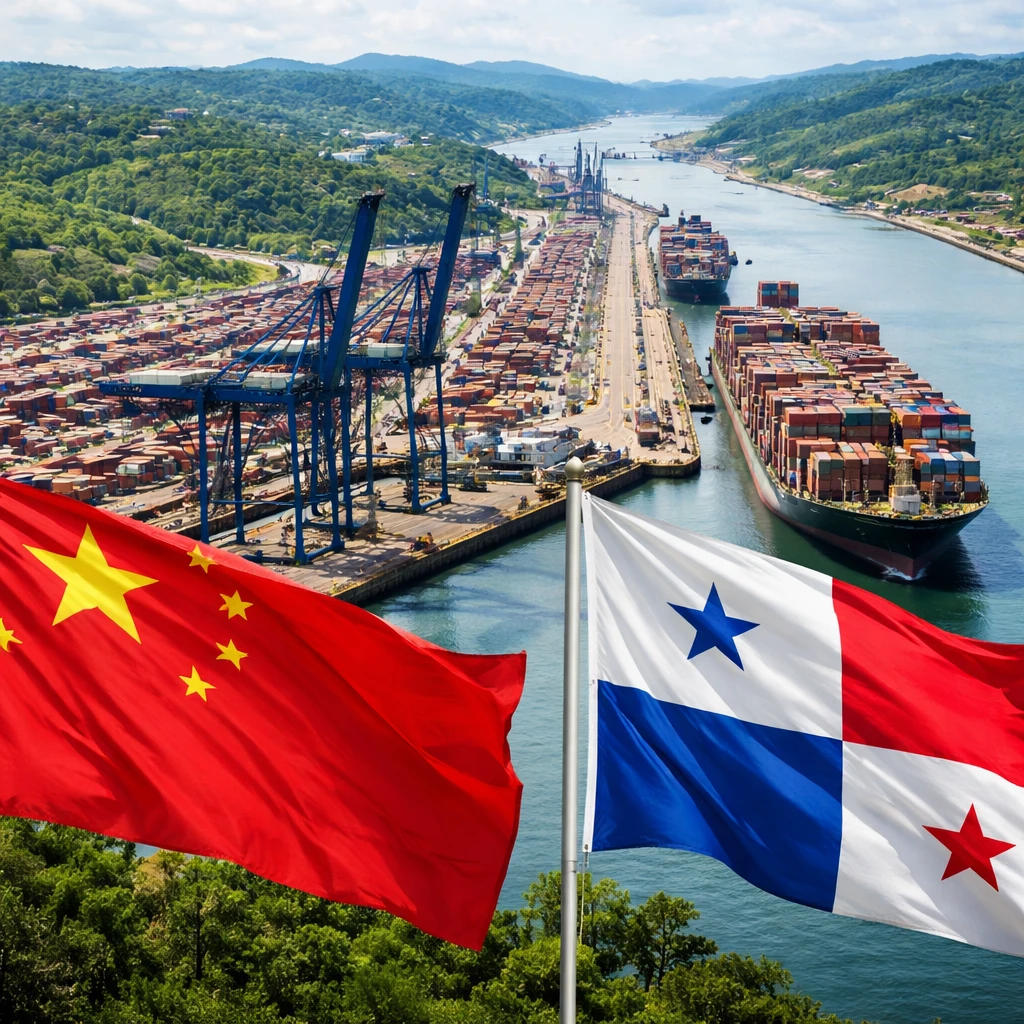
In a significant development affecting the management of one of the world's key maritime transit points, Panama's Supreme Court announced late Thursday that the concession bestowed upon a Hong Kong subsidiary of CK Hutchison Holdings for the operation of ports at the entrances to the Panama Canal contravenes the constitution. This decision moves alignment with prior U.S. objectives aimed at curtailing Chinese involvement in the operations of the strategically vital canal.
The ruling stems from findings revealed in an audit conducted by Panama’s comptroller, which purportedly uncovered irregularities in the procedural handling of a 25-year extension granted to the concession in 2021. The audit reportedly identified issues including missed payments, accounting discrepancies, and a covert concession arrangement purportedly active since 2015. The audit estimated financial impacts on the Panamanian government as approximately $300 million since the last extension and about $1.2 billion over the entire original contract period. The company has firmly denied these allegations.
This judicial outcome echoes ongoing geopolitical tensions, notably reflecting the Trump administration's policy emphasis on preventing China from exerting influence over the Panama Canal. Former U.S. Secretary of State and current Florida Senator Marco Rubio visited Panama as one of his first assignments as a senior U.S. diplomat, underscoring the canal's importance in U.S. foreign policy. Although both the Panamanian government and the Panama Canal Authority have repeatedly stated that China does not influence canal operations, U.S. officials have expressed concern that the port operations bear national security implications for the United States. At one point, former President Donald Trump advocated for reasserting U.S. control over the canal.
The Supreme Court's announcement did not specify subsequent steps regarding port management. Nonetheless, local political analyst Edwin Cabrera suggested that, upon formal notification of the ruling to involved parties, responsibility for addressing the ports' operational future will fall primarily to Panama’s executive branch, particularly the Panama Maritime Authority. Cabrera noted indications from his sources that operations at the ports are expected to continue uninterrupted despite the ruling.
In reaction to the ruling, the Panama Ports Company (PPC), a subsidiary of CK Hutchison Holdings, expressed that it has yet to receive official notification but affirmed that its concession was awarded through an open, international bidding process. PPC asserted the court’s decision lacks a legal foundation and warned it threatens not only the company and its contractual rights but also the livelihood of thousands of Panamanians dependent on port activity, along with broader concerns regarding legal certainty and the rule of law in Panama. The company reserves all options to pursue legal remedies within Panama or externally but provided no further specifics.
The Hong Kong government has pronounced strong opposition to Panama's ruling, characterizing it as an unreasonable and coercive act undermining Hong Kong businesses' interests. Representatives urged the Panamanian government to honor contractual obligations and foster a fair commercial environment.
China’s foreign ministry spokesperson, Guo Jiakun, affirmed Beijing’s commitment to protect the lawful rights and interests of the involved Chinese-affiliated company, though the spokesperson did not specify particular measures to be taken.
CK Hutchison Holdings entered into a transaction last year intending to sell its majority stake in the Panamanian ports and other international port assets to a consortium including BlackRock Inc. However, this sale appeared stalled amid objections from the Chinese government. In response last July, CK Hutchison indicated consideration of inviting a Chinese investor to join the consortium as a significant member, a strategic decision interpreted by some as an effort to gain Beijing’s approval. Since then, the company has not publicly provided updates regarding this initiative.
The situation highlights the complex environment faced by Hong Kong enterprises like CK Hutchison in balancing the demands of Beijing’s national loyalty expectations with the commercial realities of operating in politically sensitive regions, particularly against the backdrop of strained China-U.S. relations. CK Hutchison is owned by the family of Hong Kong’s wealthiest individual, Li Ka-shing.
The comptroller’s audit was initiated in parallel with investigations into the company, which has operated the ports since 1997 under a concession subsequently renewed in 2021 during the prior Panamanian administration. Comptroller Anel Flores noted that the contract extension lacked necessary endorsement from the comptroller's office. On July 30, the comptroller formally contested the validity of the Panama Ports Company’s operations before the Supreme Court, precipitating the court's final ruling.