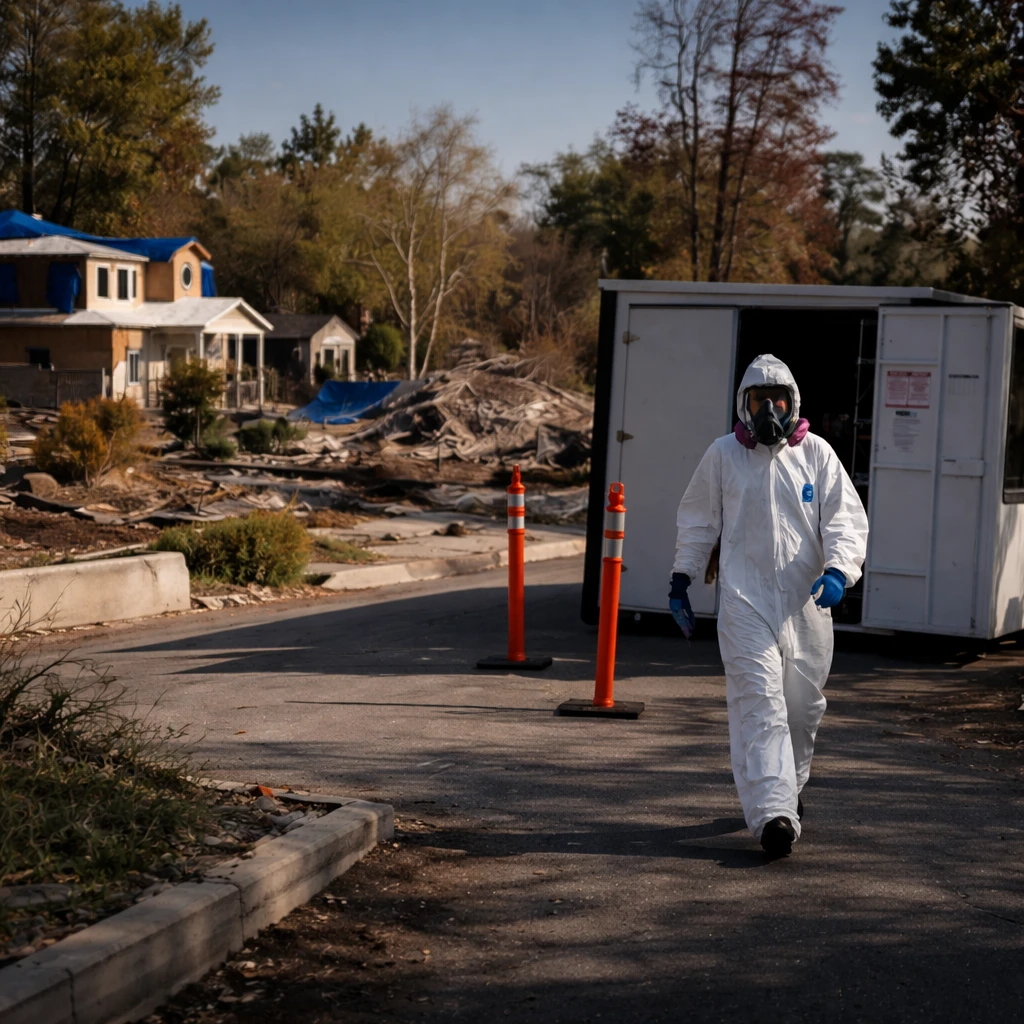

In the Altadena neighborhood of California, stark warnings mark homes, alerting residents and workers to the presence of hazardous substances left in the wake of the 2025 wildfires. Signs reading "DANGER: Lead Work Area" caution that exposure can damage fertility, unborn children, and the central nervous system. Across streets where homes escaped total destruction, cleaning crews clad in protective gear labor to remove persistent contaminants.
Since the record-breaking fires swept through the Los Angeles area on January 7, 2025, the aftermath has been a year marked by grief and ongoing challenges. The wildfires claimed at least 31 lives and eliminated nearly 17,000 buildings—residences, schools, businesses, and places of worship alike fell victim to the flames. The path to rebuilding is expected to span several years, while survivors wrestle with fears surrounding residual toxins in structures that still stand.
Scientific understanding of indoor air quality following such large-scale urban fires is still developing. Researchers have yet to definitively determine the long-term health consequences of exposure to the mix of substances unleashed. Nonetheless, some identified chemicals have established links to cardiovascular and respiratory diseases, and exposure to minerals like magnetite is correlated with neurodegenerative conditions such as Alzheimer’s disease.
The remnants of the fires comprise a hazardous mixture of burnt materials, including vehicles, electronics, paint, furniture, and personal possessions. This complex ash contains pesticides, asbestos, plastics, lead, and other heavy metals. For those whose homes remain intact, these health threats persist despite the absence of visible fire damage.
Nina and Billy Malone, Altadena residents of two decades, had previously considered their home a secure refuge. However, smoke, ash, and soot infiltrated the house, leaving behind lead contamination on wooden flooring that professional cleaning efforts have yet to eliminate. In August, rental assistance ended, forcing the Malones to return to their home despite consistent symptoms including sore throats and headaches for Nina and respiratory difficulties for Billy. The persistent smell of smoke in their bedroom underscores the ongoing presence of harmful substances. Their concerns extend to unregulated toxins that fall outside insurance companies’ testing requirements.
These experiences are not isolated. A volunteer group, Eaton Fire Residents United, compiled self-reported data from 50 homeowners who undertook cleaning efforts after sustaining smoke damage. Their November report indicated that 60% of these residences harbor unsafe asbestos, lead, or both. Professional cleaning was enlisted by 78% of participants. Alarmingly, 63% exhibit lead levels surpassing Environmental Protection Agency (EPA) safety thresholds, with average concentrations close to 60 times higher than regulatory limits.
After the fires faded, volatile organic compounds from smoke remained inside homes, many with cancer-causing properties. Experts recommend enhanced ventilation strategies, including opening windows and operating HEPA purifiers equipped with charcoal filters, as interim measures to reduce health risks for returning occupants.
Despite testing confirming dangerous lead and other toxins in Zoe Gonzalez Izquierdo’s Altadena residence, her insurance company has yet to agree to comprehensive remediation. She emphasizes that superficial cleaning by uncertified companies fails to address persistent contamination, a critical concern given her young children. Lead dust commonly arises from the incineration of surfaces coated with lead-based paint, prevalent in homes constructed before 1979; a predominant portion of burned properties fall into this category, according to the University of Southern California.
Pediatrician Dr. Lisa Patel underscores the heightened vulnerability of pregnant women and young children to lead and asbestos exposure. She stresses the imperative to eliminate these hazards entirely, as no safe exposure level has been established.
Residents in other affected areas like Pacific Palisades confront comparable predicaments. Homeowners find themselves reliant on insurance providers, whose coverage decisions and amounts often provoke conflict and frustration. The California Fair Access to Insurance Requirements Plan, the insurer of last resort in the state, has faced criticism for its response to wildfire claims.
Many homeowners advocate for regulatory enforcement ensuring reimbursement and restoration to pre-fire conditions. Julie Lawson’s family, for example, invested approximately $7,000 of personal funds to test soil contamination despite prior agreements with their insurer to replace damaged landscaping. They also intend to conduct indoor testing post-remediation, willing to bear costs if insurance support is insufficient. Lawson reflects on the enduring impact on home value and community cohesion, acknowledging the protracted recovery ahead amid a landscape scarred by destruction.
Annie Barbour, a representative from United Policyholders, notes the myriad difficulties survivors face, from insurer resistance to disagreement among industrial hygienists over contaminant testing protocols. Drawing from her experience surviving the 2017 Tubbs Fire, Barbour highlights the profound psychological toll on residents, many of whom initially felt relief but have since endured ongoing hardship.
The Malones continue their meticulous examination of personal possessions, sorting through items potentially contaminated by soot and ash. Despite wearing protective gear during cleaning, they find residual residue in cabinets and floors. Their insurer refuses to fund retesting; with costs estimated at $10,000, the family contemplates self-financing further assessments. Furthermore, insurers have indicated payment for toxin remediation will be limited to federally regulated substances such as lead and asbestos, excluding many other chemicals. Nina expresses frustration at the challenge of compelling insurance companies to finance sufficient cleanup to ensure safety, while also considering therapy to manage anxiety stemming from uncertainty.