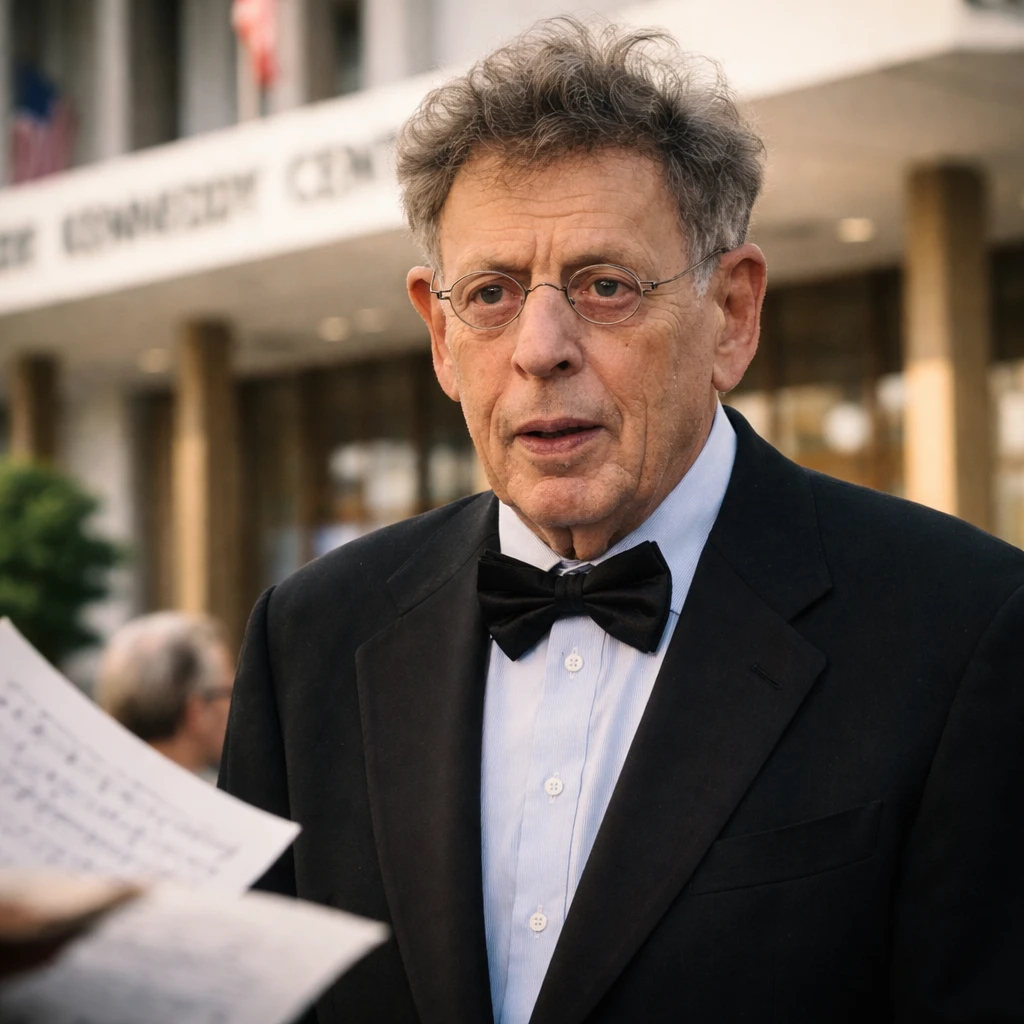
Philip Glass, the distinguished composer recognized with multiple accolades, has taken the significant step of canceling the upcoming world premiere of his Symphony No. 15, titled "Lincoln," which was scheduled to take place at the Kennedy Center. The planned performances, set for June 12 and 13, were to be conducted by Grammy winner Karen Kamensek. The decision follows a series of cancellations by other artists since former leadership at the Kennedy Center was removed by President Donald Trump.
In an official statement released on Tuesday via his publicist, Glass expressed that his Symphony No. 15 serves as a portrayal of Abraham Lincoln and the principles he represented. He articulated that the values currently held by the Kennedy Center under its new administration stand in direct opposition to the symphony's thematic message. As a result, he stated feeling compelled to withdraw the premiere of his work from the venue under its present governance.
Responding to Glass's announcement, Roma Daravi, the Kennedy Center's vice president of public relations, issued a statement emphasizing that the arts institution does not entertain political agendas. Daravi suggested that boycotts based on political views constitute a misjudgment and do not belong in artistic engagements.
Philip Glass, who is approaching his 89th birthday this coming Saturday, was previously honored at the Kennedy Center in 2018. Notably, three years prior to that, he was the recipient of the National Medal of Arts awarded by then-President Barack Obama.
The Kennedy Center has recently experienced several artist withdrawals from scheduled performances, with notable figures including Renée Fleming and Béla Fleck among those who have pulled out. The controversies trace back to directives under President Trump’s administration, wherein the appointed board has announced intentions to rename the institution the "Trump Kennedy Center." This development has positioned the center at the forefront of the administration's public discourse surrounding what it terms "woke" culture.
Despite objections from scholars highlighting that renaming the center requires congressional action, the name "Trump" has already been affixed to the building’s facade.
Glass’s Symphony "Lincoln" draws inspiration from the "Lyceum Address" of 1838, a speech delivered by the young Abraham Lincoln when he was a 28-year-old representative in the Illinois state legislature. The address cautioned against mob violence and highlighted the threats it posed to democratic governance and the rule of law. Lincoln presented this speech to the Young Men's Lyceum, a debating society based in Springfield, Illinois.
This evolving situation at the Kennedy Center reveals ongoing frictions within the cultural and political spheres tied to leadership changes, artist relations, and the interpretation of institutional values.
January 28, 2026
News & Politics
Philip Glass Withdraws Symphony Premiere in Response to Kennedy Center Leadership Changes
Composer Cancels World Debut of Symphony Reflecting Lincoln Amid Institutional Controversy

Leila Farooq
Telecom & Media Analyst
Summary
Philip Glass has canceled the debut performances of his Symphony No. 15, "Lincoln," at the Kennedy Center, citing fundamental differences with the center’s current leadership. This decision underscores ongoing tensions following governance changes at the arts institution under President Donald Trump's administration.
Key Points
Philip Glass has canceled the Kennedy Center premiere of his Symphony No. 15, "Lincoln," citing conflicting values between his work and the center's current leadership.
The Kennedy Center has seen multiple artist withdrawals after President Trump's administration replaced its prior leadership and announced plans to rename the institution the "Trump Kennedy Center."
Glass's symphony is inspired by Abraham Lincoln's 1838 "Lyceum Address," which warned against mob violence and emphasized the importance of democracy and rule of law.
Risks
- Ongoing political disputes may lead to further cancellations and boycotts by artists, affecting the reputation and programming stability of major cultural institutions like the Kennedy Center.
- Potential legislative or public backlash due to unilateral changes such as renaming the Kennedy Center without congressional approval could generate legal and reputational challenges for the institution.
- The intersection of politics and the arts in this context may deter stakeholders, sponsors, and audiences who prefer to avoid politically charged environments, impacting funding and attendance.
Disclosure
This article is based exclusively on the information provided in the relevant news report and does not include any additional facts or speculative analysis.