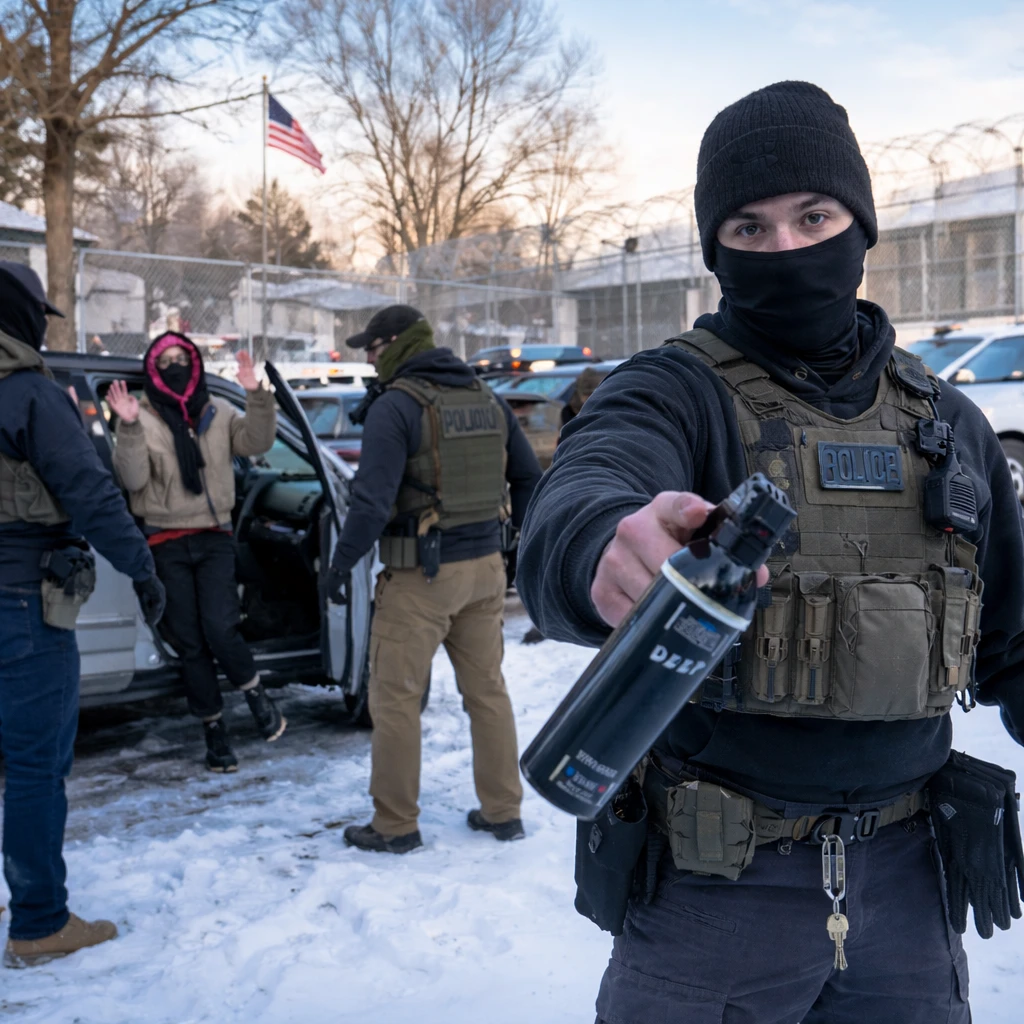

Federal immigration enforcement operations across various U.S. states have been given distinctive, sometimes sharply jocular names — from Operation Dirtbag in Florida to Operation Catahoula Crunch (also known as Swamp Sweep) in Louisiana, and Operation Catch of the Day in Maine. The naming practices, accompanied by an often sardonic tone in official communications from the Department of Homeland Security (DHS), have provoked a wide range of reactions, notably split along political affiliations and views on immigration enforcement policies that predominantly affect Black and brown communities.
Representative Jimmy Gomez, a Democrat from California who sits on the House Intelligence Committee, criticized the names as emblematic of a dehumanizing attitude towards immigrants, asserting that the labels imply these individuals are "sub-human." Gomez remarked to media outlets that such "disgusting names" reflect a stark departure from the language used when U.S. operations abroad address threats from high-profile terrorists.
Conversely, Congressman Brandon Gill, a Republican from Texas, interprets these operation titles as a clear indication of the Trump administration's resolve to address illegal immigration and bolster border security. Gill stated that the names convey seriousness about securing the border and deporting those unlawfully present in the U.S.
Operation Names and Their Historical Context
The tradition of naming U.S. military and security operations historically leaned toward neutral, non-descriptive terms designed to avoid revealing the mission's intent and to reduce risk if intercepted by adversaries. Michael O’Hanlon, director of research in foreign policy at the Brookings Institution, highlighted World War II operations such as Market Garden and Torch as examples of cautious naming conventions.
In the contemporary context, operation names often serve a dual role: shaping public perception of the mission and acting as an expression of confidence or political messaging. For instance, operations during President George W. Bush's tenure often centered on themes of freedom, and the Trump administration notably labeled its rapid aerial campaign on Iran in 2025 as Operation Midnight Hammer.
O’Hanlon noted that sometimes when an administration anticipates success, operation titles adopt a triumphant or bold character designed as a political statement. Conversely, more ambiguous or generic names might be preferred when the outcome is uncertain. He asserted that recent immigration raids' evocative naming choices clearly communicate the administration's motivation, purpose, and justification for such missions.
Detention Facility Names and Public Reaction
Similar branding approaches extend to immigration detention centers, with designations like "Speedway Slammer" in Indiana, "Cornhusker Clink" in Nebraska, and "Alligator Alcatraz" and "Deportation Depot" in Florida. These monikers have sparked various internet memes and merchandise, drawing criticism for how they seemingly market detention locations in a manner perceived as provocative or troll-like.
Miami immigration lawyer Hector Diaz, who has represented numerous detained Hispanic clients in Florida, described this trend as seemingly intended to market detention centers with a contentious or mocking attitude.
Political and Community Backlash
Operation Catch of the Day, which concluded recently in Maine, rapidly faced condemnation from Democratic lawmakers following its announcement. Congresswoman Chellie Pingree characterized the operation's name as "racist and degrading" toward both residents of Maine and immigrant communities. She referred to it as "a sick joke" on social media platforms.
Maine's Democratic Secretary of State Shenna Bellows, also a gubernatorial candidate, criticized the branding, warning that the operation's approach and messaging have instilled fear, adversely affecting economic and civic engagement within the state. Bellows emphasized that the visible presence and actions of Immigration and Customs Enforcement (ICE) agents have contributed to an atmosphere of intimidation among residents.
State Senator Joe Baldacci echoed these concerns, underscoring the gravity of the situation by noting that these operations impact real people's lives and are not trivial matters.
Supporters' Defense of the Naming Convention
Defenders of the administration perceive such names as intentional signals of commitment to immigration control rather than dismissive or offensive tactics. The usage of cultural references — including a sweep named after the classic children’s book "Charlotte’s Web" in North Carolina — has also been a point of contention, with descendants of the book's author condemning the appropriation for an immigration operation.
Despite incidents involving federal agents, such as fatal shootings and allegations of misconduct, the persistence of these operation titles signals an ongoing administration posture emphasizing border enforcement. Some supporters dismiss criticisms of the rhetoric and naming as distractions from the underlying challenges posed by immigration.
Jason Savage, executive director of the Maine Republican Party, argued that focusing on operation names detracts from what he views as failures by Democrats to address immigration issues properly in the state.
During Maine Gov. Janet Mills’ recent State of the State address, she accused ICE of trying to intimidate and silence communities. Republican Representative Billy Bob Faulkingham responded by calling for prioritization of long-standing residents over newcomers amid ongoing immigration enforcement operations.
Calls for Further Oversight and Investigations
Democratic lawmakers in Congress have pledged to investigate immigration and customs enforcement officials' conduct, including potential abuses and the agency’s rhetoric and social media presence, especially in the event of regaining legislative control.
Debu Gandhi, senior director of immigration policy at the Center for American Progress, criticized the administration’s operation names as compounding the harm caused by what he termed "unconstitutional racial profiling" and unaccountable enforcement tactics. Gandhi maintained that it is possible to secure national borders and enforce immigration laws effectively without the cruelty and disorder attributed to current policies.
The impression left by the operation names — alongside the enforcement strategies — contributes to the broader debate on immigration policy, enforcement ethics, and the treatment of immigrant communities within the United States.
Corrections concerning political candidates have been noted, including clarifications that Congresswoman Chellie Pingree is not pursuing a gubernatorial bid; rather, it is her daughter who is a candidate for the position in Maine.