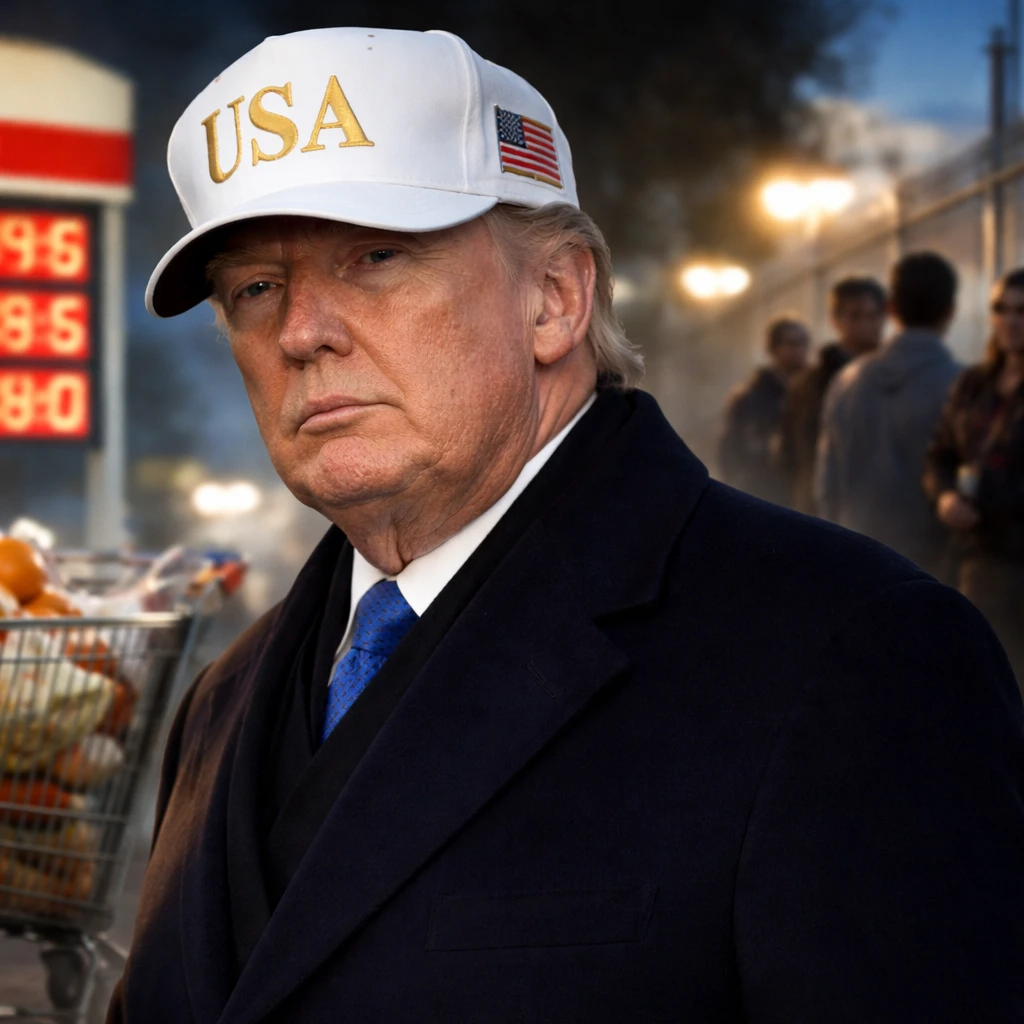

Despite the Trump administration's assertions about progress in making life more affordable for Americans, current polling data suggest the public remains unconvinced and increasingly dissatisfied with the president's handling of key domestic and international issues. Multiple polls conducted recently demonstrate a growing perception among Americans that President Trump is neglecting crucial economic concerns, and that his attention to immigration enforcement and international matters is a source of rising discontent.
Financial strain continues to be a pervasive issue for many Americans, yet surveys reveal that a majority do not believe the administration's policies have alleviated these pressures. A New York Times poll of registered voters found that around half perceive Trump's economic actions as having made everyday life less affordable for most citizens. Complementing this, a Fox News survey reported that approximately 70% of registered voters feel the president dedicates insufficient time towards economic issues, including nearly half of Republicans surveyed.
The same Fox News data indicates that about 40% of respondents feel personally disadvantaged by the current economic policies, with a similar fraction observing no noticeable impact. Only about 20% believe they have directly benefited from Trump's economic strategy, while 45% anticipate a worsening economic environment in the upcoming year. These findings underscore a potential disconnection between the administration's economic messaging and public experience.
Turning to immigration, the data also highlight shifting attitudes towards enforcement agencies such as Immigration and Customs Enforcement (ICE). Independent polls conducted by the New York Times and Fox News identify a majority of registered voters expressing the belief that ICE's methods have become excessively forceful. The Fox News poll records a notable 10-point increase since the previous July in respondents who view ICE's deportation efforts as overly aggressive.
These sentiments predate incidents like the fatal shooting of Alex Pretti by Border Patrol personnel in Minneapolis, reflecting a broader, nationwide frustration with immigration enforcement tactics. Initial polling from the AP-NORC survey found that immigration was among Trump's strongest issues early in his second term; however, approval for his handling of immigration has declined from 49% in March to 38% in January. Notably, support among Republicans dropped from 88% to 76%, pointing to some erosion within his core constituency.
Concerns extend to the president's preoccupation with foreign policy matters, which some polls suggest detract from addressing pressing domestic issues. Recent developments such as discussions about acquiring Greenland, attempts to control Venezuelan oil resources, and sanctions on Iran for suppressing protests have occupied significant White House attention. Yet, data from Fox News show roughly 40% of voters wish for the president to reduce his focus on foreign affairs, with only about 30% believing his involvement is appropriate.
The proposition to take over Greenland, in particular, faces marked opposition—about 60% of Americans surveyed by Pew Research Center disapprove of this initiative. Republican opinion on this matter is divided, with approximately 40% in favor, a third opposed, and the rest uncertain.
Finally, there's an observable decline in Republicans' confidence in the president's character and mental fitness. Pew Research Center polling reveals that only 56% of Republicans currently endorse "all" or "most" of Trump's policies, down from 67% shortly after his inauguration. Confidence in his ethical conduct and respect for democratic values has also diminished considerably, with less than half of Republicans expressing strong confidence in his adherence to ethical standards, a decrease from 55% earlier in his term. Moreover, conviction about Trump's mental fitness has fallen below two-thirds among Republican respondents from an earlier 75%, a concerning trend considering the president's previous focus on his predecessor's mental capacity.