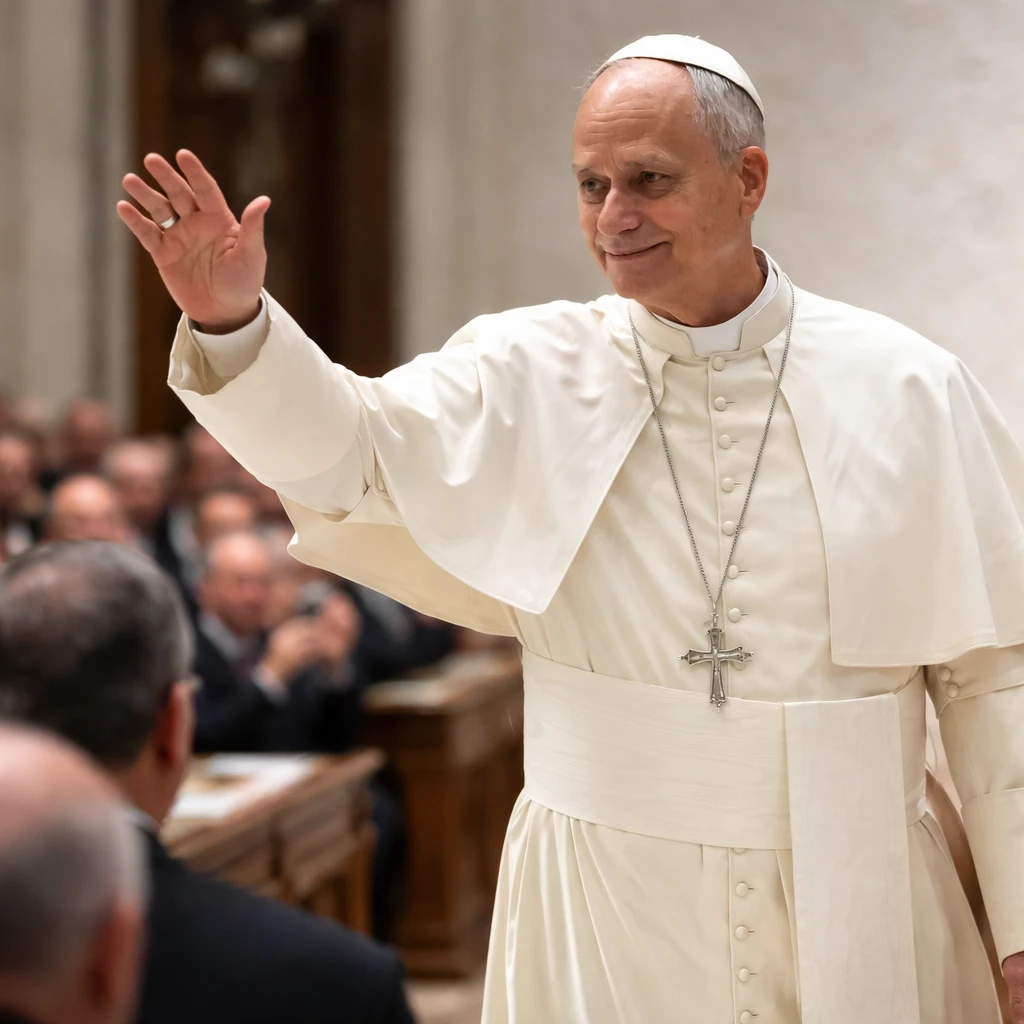

In a recent address to the Vatican’s Dicastery of the Doctrine of the Faith, Pope Leo XIV underscored the importance of grounding decisions regarding clergy sexual abuse cases in principles of truth, justice, and charity. The dicastery, which oversees Catholic doctrine and processes abuse allegations worldwide, was urged by the pontiff to remain a judicious tribunal in these delicate matters.
Although Pope Leo XIV, history’s first American pontiff, mentioned abuse cases only briefly in his speech, the nuances of his message reflect a measured stance on an issue that has profoundly challenged the Catholic Church's global credibility. Notably absent from his discourse was any mention of victims, an omission that suggests the pope views the dicastery primarily as a body for legal adjudication rather than pastoral care.
This position contrasts with the role of the Pontifical Commission for the Protection of Minors, another Vatican entity that survivors of abuse often look to for support. While Pope Francis had integrated this commission within the dicastery, Pope Leo XIV appears to maintain operational separation, as evidenced by the absence of commission members at the dicastery audience.
Pope Leo XIV advised the bishops and cardinals within the doctrinal office to collaborate with religious superiors who hold responsibility under canon law for investigating and penalizing priests involved in abuse. He described this responsibility as "a very delicate area of ministry" requiring unwavering dedication to justice, truth, and charity.
This counsel echoes the pope’s recent remarks to another Vatican tribunal, the Roman Rota, where he spoke about the necessity of balancing justice and compassion in pursuit of truth. Given his background as a canon lawyer and two decades after the abuse crisis erupted in his native United States, Pope Leo XIV’s approach can be characterized as cautious and deliberate. He has consistently advocated that church leaders enhance their attentiveness to victims while also safeguarding the rights of accused priests.
At a confidential meeting with cardinals in early January, the pope emphasized that the abuse crisis remains unresolved and called for a more authentic and active listening to survivors. "We cannot close our eyes or hearts," he stated, acknowledging the additional suffering victims have endured when they felt ignored or unwelcome.
Following his address to the doctrine office, Pope Leo XIV met with members of Regnum Christi, the lay segment affiliated with the Legion of Christ, a religious order infamous for one of the most severe clergy abuse and cover-up cases in modern Church history. The Legion’s founder, Rev. Marcial Maciel, was disciplined by the Vatican in 2006 after decades of allegations, but Pope Leo XIV’s remarks to the lay members did not reference Maciel or the order directly.
Instead, he highlighted ongoing reform efforts initiated by the Vatican in 2010 that are still underway. He stressed the challenge Regnum Christi faces in defining its unique spiritual identity, or charism, and called for innovative governance structures. The previous Vatican investigation exposed serious dysfunctions within the Legion, including problematic authority abuses that necessitated a process of institutional purification.
"A truly evangelical government," the pontiff remarked, "should consistently be oriented toward service, supporting and accompanying members in their spiritual growth to emulate the savior daily." He encouraged openness to experimenting with new governance models, noting that such collective endeavors could strengthen community bonds and deepen participation in the mission.
Pope Leo XIV’s recent activities illustrate the ongoing complexity and sensitivity with which the Vatican addresses clergy sexual abuse and internal reform. By delineating roles between tribunals and pastoral bodies and promoting structural renewal within influential religious groups, he signals a methodical, if cautious, trajectory for the institution.