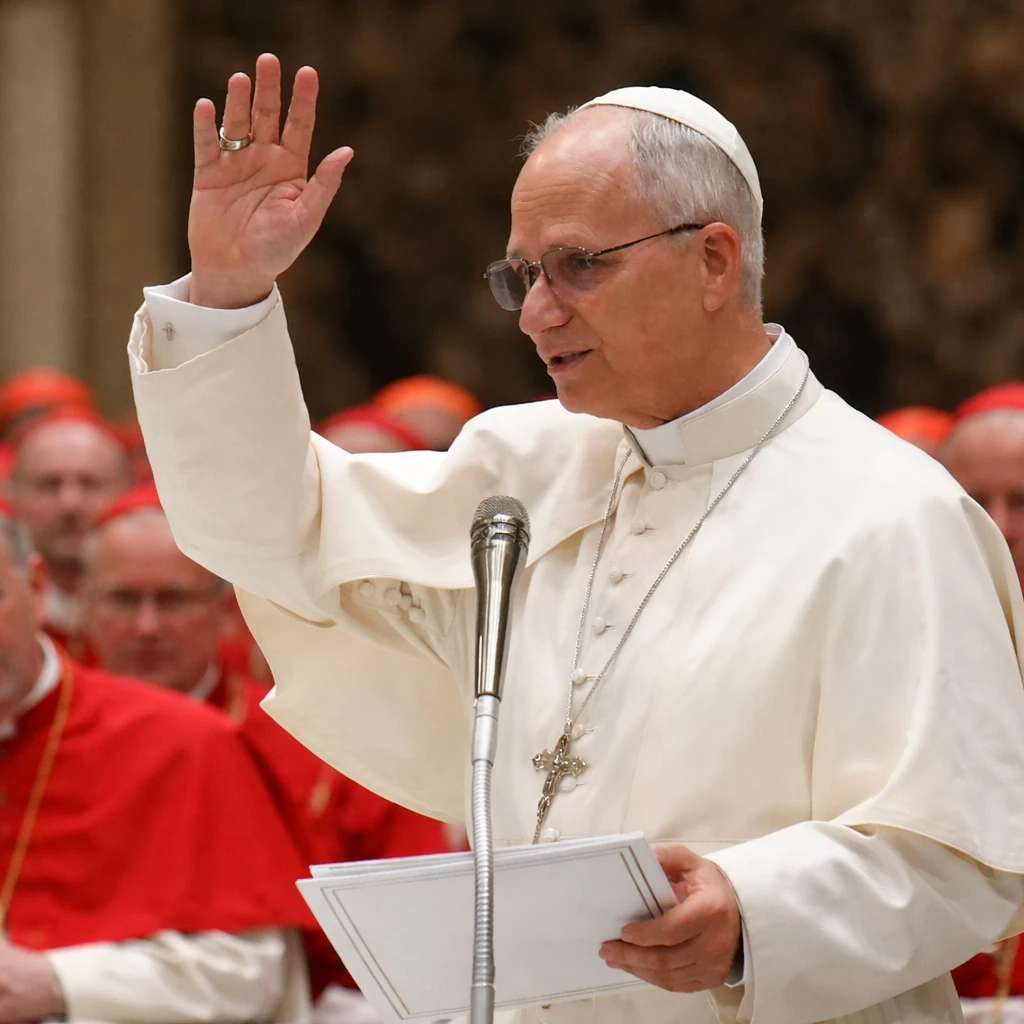
On Wednesday in Vatican City, Pope Leo XIV marked the start of a fresh chapter in his papacy by convening the global body of cardinals in Rome. His opening remarks set the tone for a reform-oriented agenda centered on the Second Vatican Council, which he referred to as the “guiding star” for the church's journey forward.
Cardinals adorned in their characteristic red gathered in the Vatican’s audience hall for the initial session of a two-day consistory - the first such meeting under Leo's leadership. Some cardinals acknowledged uncertainty about the meeting's content, with invitations from the pope referencing only broadly defined agenda points.
Latin Patriarch of Jerusalem Cardinal Pierbattista Pizzaballa reflected this anticipation upon arrival, remarking, “We'll see, we haven't even started yet. Be patient!”
During his weekly general audience that morning, the pope delivered a firm message signaling his papacy’s direction, emphasizing the necessity of fully enacting the reforms promulgated by Vatican II in the 1960s. He noted the passing of the generation that participated directly in crafting those transformative decisions.
“While the call remains not to let its prophecy fade and to seek ways to implement its insights, it is crucial to revisit and understand the council's documents firsthand, not through secondhand interpretations,” Leo said. This approach involves deep reflection on the original texts to ensure the reforms' authentic application.
He further reinforced Vatican II’s central role by citing successive popes since the council who underscored its significance, concluding that the council's teachings continue to serve as the authoritative guiding principle for the church today.
The council introduced several substantive changes, including allowing Mass to be celebrated in vernacular languages instead of Latin, encouraging greater lay participation in church life, and redefining Catholic relations with Jews and other faith communities. However, these reforms have historically accentuated divides within the church between traditionalist and progressive factions, a dynamic that persists.
Leo’s opening consistory came just after the conclusion of the intensive 2025 Holy Year festivities, which occupied much of his early months as pope. These activities involved extensive engagements with pilgrimage groups, Jubilee Masses, and closing ceremonies initiated under his predecessor, Pope Francis.
Calling the consistory to commence immediately after the Jubilee celebrations signaled the pope’s intent to shift focus towards his own broader leadership agenda. This move contrasts with Francis’ style, who often relied on a smaller circle of nine influential cardinals for governance rather than the full College.
Before Leo's election, some cardinals had critiqued Francis’ more centralized leadership approach, and Leo’s summons to the entire body may respond to calls for wider consultation.
Official Vatican statements describe the consistory's purpose as fostering shared discernment and providing the pope with support and counsel in leading the universal church.
The meeting's agenda also revisited major reform themes championed by Francis. These include reviewing key documents from the beginning of Francis' pontificate and his 2022 overhaul of the Vatican bureaucracy.
Another important point of discussion is the push for a more “synodal” church model, aiming for increased responsiveness to ordinary Catholics’ perspectives.
Additionally, the consistory addressed matters around the liturgy, which observers believe includes debates over the celebration of the traditional Latin Mass that Vatican II reforms altered by endorsing vernacular liturgies and active lay participation.
Under Francis, restrictions tightened on the pre-Vatican II Latin Mass due to concerns about causing divisions, provoking considerable pushback from traditionalist groups, especially within regions like the United States.
Leo, originally from Chicago, appears cautiously attentive to balancing these tensions, avoiding abrupt policy shifts as he aims for church unity grounded in Vatican II’s vision.
Religious studies expert Matthew Schmalz, of the Jesuit College of the Holy Cross, remarked that while some expected the new pope might ease restrictions on the old Latin Mass, his stated priorities around unity and Vatican II adherence suggest a more measured approach.
The College of Cardinals currently comprises 245 members, split nearly evenly between those under 80, who participated in Leo’s election, and older cardinals. The Vatican has not disclosed precise attendance figures for the consistory.
Among those scheduled for private audience was Cardinal Joseph Zen, the retired archbishop of Hong Kong, known for his conservative critiques of Pope Francis, particularly regarding outreach efforts to China. Zen, nearing 94 years of age, also noted Francis had declined private meetings with him for several years.