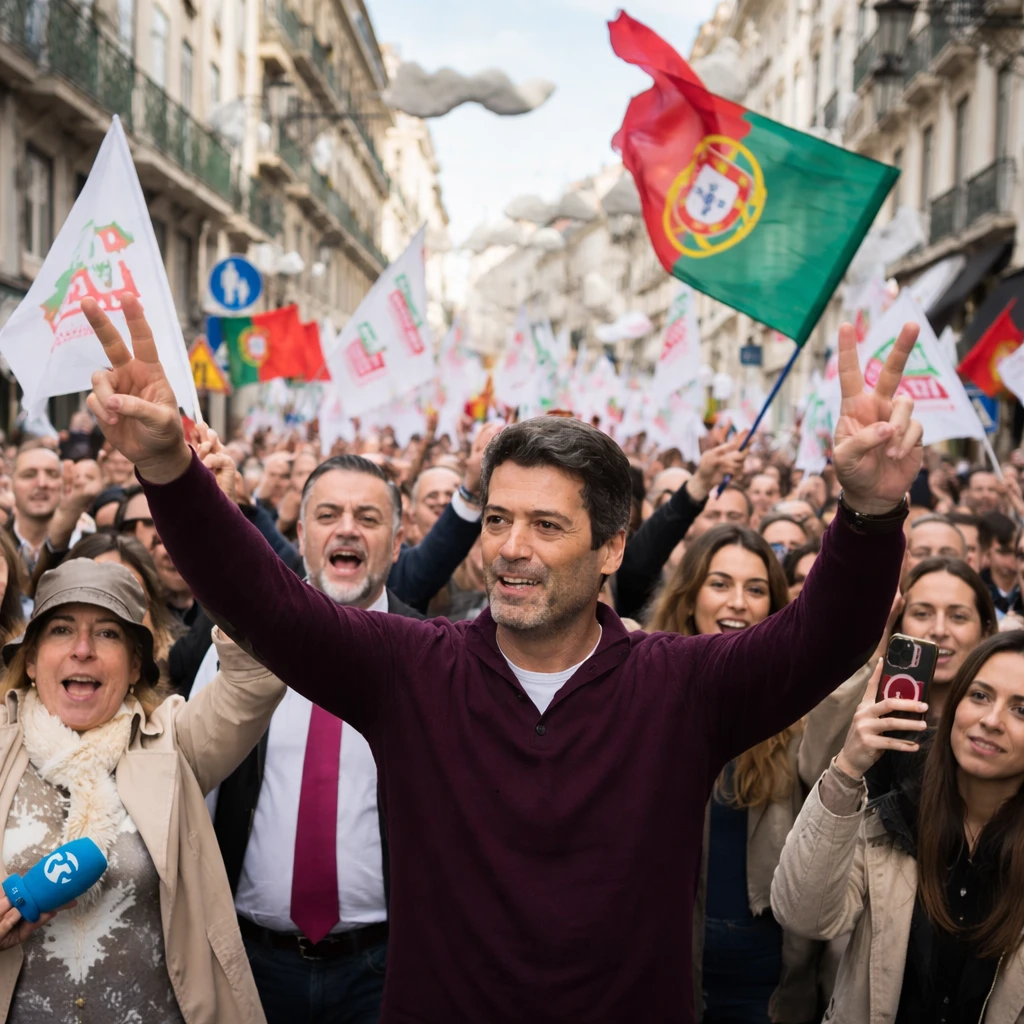

Portugal held a presidential election featuring a record eleven candidates on Sunday, with significant attention focused on the leader of a growing populist party who appeared poised to make further political gains for far-right movements across Europe. The crowded field made it unlikely that any single candidate would clear the 50% vote threshold required to win outright in the first round, setting the stage for a runoff between the top two vote-getters scheduled for the following month.
The electoral roll comprises nearly 11 million eligible voters, with the majority of results expected to be reported by the close of the day. The victor will succeed incumbent Marcelo Rebelo de Sousa, who is concluding the maximum two five-year terms permitted.
Polls opened at 8 a.m. under predominantly sunny skies nationwide and were set to close 12 hours later.
Leading Candidates and Party Dynamics
Among the front-runners indicated by recent opinion polls is André Ventura, head of the populist Chega party, which translates to "Enough." Chega's surge in public support elevated it to the position of Portugal's second-largest parliamentary party last year, a remarkable ascent since its inception just six years prior.
Ventura has centered much of his campaign rhetoric on what he describes as "excessive immigration," coinciding with increased visibility of foreign workers in Portugal in recent years. Messaging such as "Portugal is ours" has featured prominently, accompanied by nationwide billboards with provocative slogans including "this is not Bangladesh" and statements opposing immigrants' access to social welfare benefits.
This overt anti-immigrant stance marks a significant shift in Portugal's political discourse, where such expressions were largely absent until recently.
Other notable contenders emerge from the country’s two dominant political parties, which have alternated governance over the past five decades: Luís Marques Mendes representing the center-right Social Democratic Party, currently in power, and António José Seguro of the center-left Socialist Party.
Adding to the competitive field is retired Vice Admiral Henrique Gouveia e Melo, running as an independent. Gouveia e Melo gained public recognition through his leadership in coordinating Portugal's rapid COVID-19 vaccination rollout during the pandemic.
Among the candidates, there is only one woman, with Portugal yet to elect a female or non-white individual as head of state.
Challenges Anticipated for the Incoming President
Earlier in May, Portugal witnessed its third general election in as many years, reflecting the most significant political instability in decades. Addressing this volatility stands as a central challenge for the next president.
While Ventura’s campaign has elevated immigration concerns, surveys suggest voters prioritize issues such as housing shortages and rising living costs.
Another significant matter awaiting the new president’s attention is legislation permitting euthanasia and physician-assisted suicide, passed by the parliament in 2022 but currently stalled due to constitutional challenges. This law is anticipated to be presented to the president for approval.
Presidential Role and Political Context
Portugal's presidency primarily constitutes a ceremonial position lacking extensive executive power. The president’s conventional role is to rise above partisan battles, mediating conflicts and alleviating tensions within the political sphere.
Nonetheless, the president wields certain influential instruments: the capacity to veto parliamentary legislation, although such vetoes can be overridden by the legislature; and, notably, the constitutional power colloquially known in Portuguese politics as the "atomic bomb" - the authority to dissolve parliament and call for early elections.
Political developments in Portugal generally have minimal impact on the broader European Union direction, given the country's relatively small economy within the bloc and modest military forces.
Next Steps in the Election
A runoff election between the two leaders from the initial round is scheduled for February 8. This decisive vote will determine who will undertake a five-year term as president at the historic "Pink Palace," situated alongside the river in Lisbon.