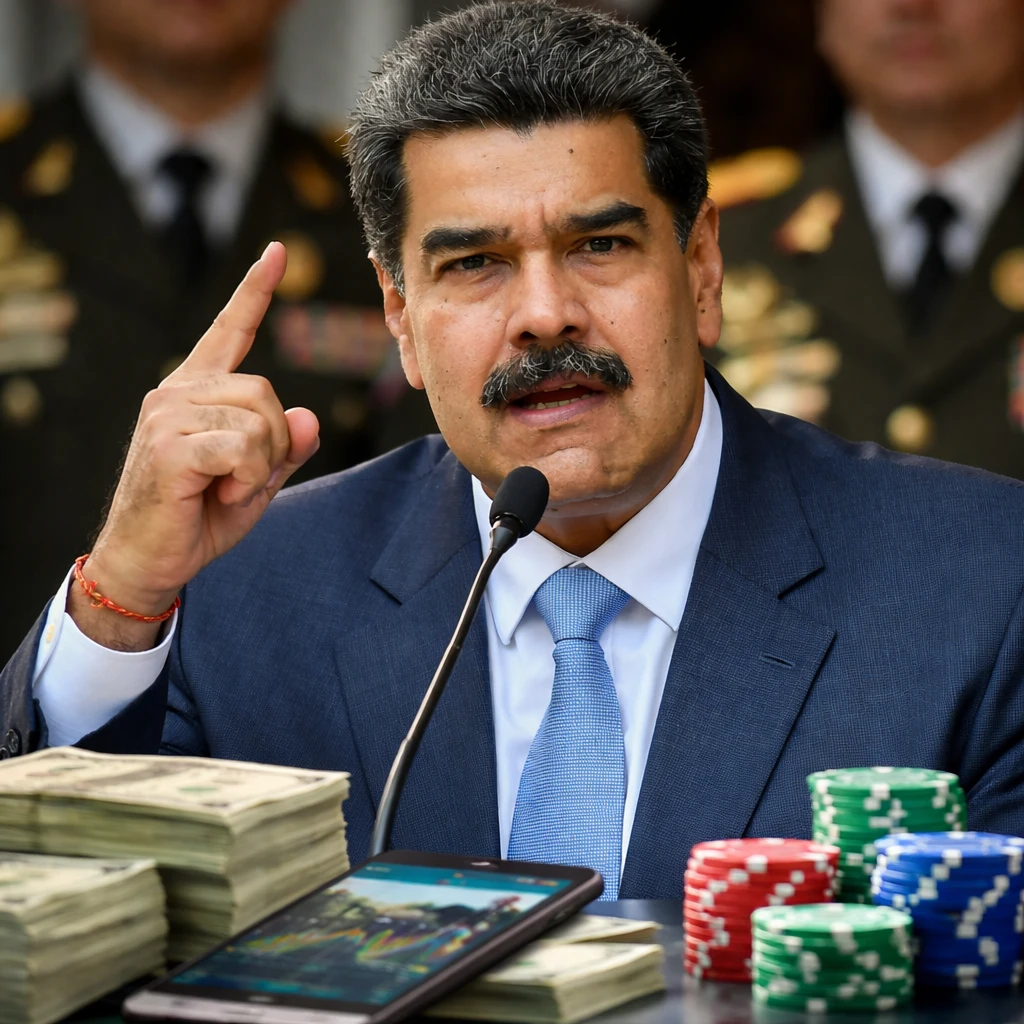

Prediction markets allow participants to place bets on diverse subjects, ranging from sports results to political events. A striking example emerged recently when an anonymous trader earned over $400,000 on Polymarket by wagering that Nicolás Maduro, the former Venezuelan President, would be removed from office soon. Notably, the majority of this trader’s bets were placed just hours before President Donald Trump announced a surprise nighttime raid that resulted in Maduro’s capture. This timing stirred discussions online about possible insider trading due to the trader’s limited and focused activity on the platform.
Responses to these suspicions are divided. Some contend the risk of engaging in illegal insider trading is too significant to undertake, while others suggest that ongoing public speculation about Maduro’s fate could naturally explain the betting pattern observed. Attempts to obtain comments from Polymarket regarding the situation did not elicit any response.
In recent years, the commercial popularity of prediction markets has surged, enabling individuals to speculate financially on an expanding variety of future outcomes. Despite occasional substantial gains like the Maduro-related payout, traders frequently experience losses. In the United States, regulatory classification separates prediction market trades from conventional gambling, raising important questions about transparency, oversight, and associated risks.
Mechanics of Prediction Markets
Prediction markets cover a broad spectrum of topics, from geopolitical developments and pop culture phenomena to election outcomes and conspiracy theories. Recently, wagering activity has intensified around elections and sporting events. Some platforms have even hosted bets on hypothetical scenarios, such as a rumored secret conclusion for Netflix’s “Stranger Things,” official government recognition of extraterrestrial life, and the frequency of billionaire Elon Musk’s social media posts.
Participants purchase or sell what are known as “event contracts,” typically representing “yes” or “no” outcomes. Contract prices range from $0 to $1, reflecting the collective market assessment of the likelihood an event will transpire. As perceptions fluctuate, contract values rise or fall accordingly, allowing traders to realize incremental profits by exiting positions early or to minimize losses incurred.
Advocates argue that financially committed prediction markets enhance forecasting accuracy. For instance, economist Koleman Strumpf from Wake Forest University notes these platforms have achieved notable success in election outcome predictions, including the 2024 U.S. presidential race. Nevertheless, he emphasizes that these markets are not infallible.
The identities of participants are often shielded behind anonymized profiles, although platforms gather some personal data for verification and payment purposes. This obscurity poses challenges for public scrutiny of who profits from specific event contracts, which complicates assessments of market integrity. While some investors are likely informed observers of unfolding events, others may engage more haphazardly.
Critics warn that the accessibility and continuous operation of prediction markets lead to frequent financial losses, particularly impacting individuals susceptible to gambling addiction. The format’s rapid and anonymous nature also widens opportunities for insider trading and unethical behavior.
Prominent Operators and Market Expansion
Polymarket stands as the largest prediction market globally, accommodating funding via cryptocurrency, debit and credit cards, and bank transfers. Another key player, Kalshi, similarly facilitates event contract trading and recently secured regulatory approval to offer wagers on political races and sports nationwide in the United States. Kalshi began incorporating sports-focused trading roughly a year ago.
Regulatory conditions vary internationally, but in the U.S. market, prediction trading has grown briskly as federal policies have evolved. During the Biden administration, authorities took a stringent stance, culminating in Polymarket’s 2022 settlement with the Commodity Futures Trading Commission (CFTC) restricting its U.S. operations. However, late in the Trump administration, Polymarket announced plans to re-enter the U.S. market after obtaining CFTC clearance, currently managing a "waitlist" for American users.
The sector also became more competitive with the recent introduction of prediction platforms by major sports betting firms DraftKings and FanDuel. Online brokerage Robinhood is expanding into the field, while Donald Trump’s social media venture Truth Social has partnered with Crypto.com to launch an in-platform prediction market. In parallel, Donald Trump Jr. holds advisory roles at both Polymarket and Kalshi.
Legal expert Melinda Roth, visiting associate professor at Washington and Lee University School of Law, remarked on this trend, noting that event contract trading has effectively established itself as a permanent fixture despite regulatory uncertainties.
Regulatory Environment and Challenges
Prediction markets operate under the oversight of the CFTC as sellers of event contracts rather than traditional gambling entities. This classification permits them to bypass the patchwork of state restrictions imposed on conventional gambling and sports betting, highlighting a significant regulatory loophole identified by Karl Lockhart, assistant professor of law at DePaul University.
While sports betting remains illegal in several populous states like California and Texas, event contracts enable individuals to wager on sporting events and player trades in these jurisdictions. This expansion has triggered legal challenges from states and tribal authorities, with expectations growing for eventual Supreme Court involvement. Given the current administration’s approach, further regulation appears unlikely.
Federal law explicitly prohibits event contracts related to certain subjects, such as war, terrorism, and assassinations. Roth observed that such limitations might challenge the legality of some prediction market contracts, at least domestically. However, users might circumvent restrictions by engaging internationally or via VPNs.
The CFTC’s future enforcement stance on these markets remains uncertain. Despite managing a multi-trillion dollar derivatives market, the commission operates with a reduced workforce and has faced leadership instability during President Trump’s second term. Only one of its five commissioner positions is presently filled, reflecting potential institutional constraints in supervision.
The controversy surrounding the recent high-profile prediction of Maduro’s capture has prompted legislative action. Democratic Representative Ritchie Torres introduced a bill targeting restrictions on government employees’ involvement in politically charged event contracts, representing a step toward addressing insider trading concerns in this domain.