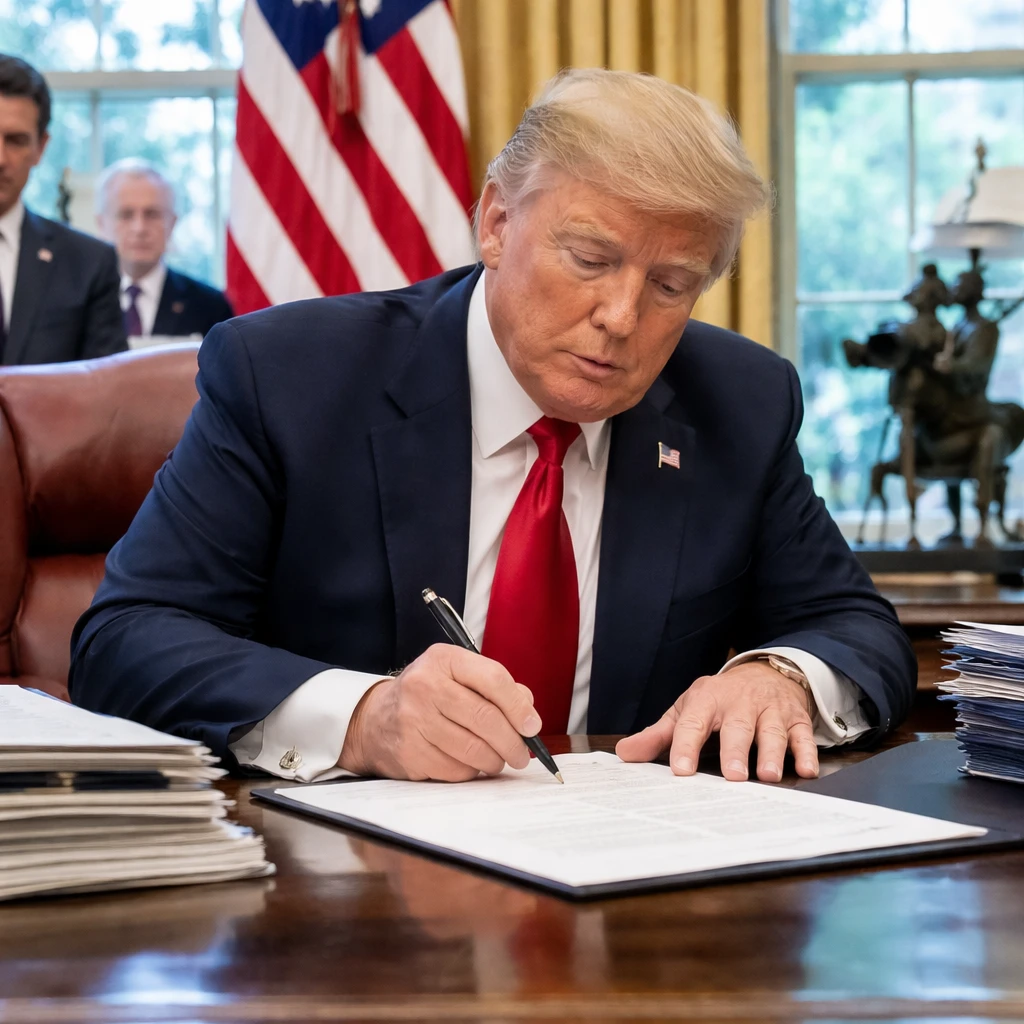

On Tuesday, President Donald Trump authorized a government funding bill approximating $1.2 trillion, bringing an end to a partial federal government shutdown that started the previous weekend. The president acted soon after the House passed the bill by a narrow margin, 217 to 214 votes.
"This legislation is a significant win for the American people," Trump stated following the signing.
The congressional vote marked the completion of fiscal action on 11 annual spending bills that finance government agencies and programs until September 30. Trump had committed to approving the bill once it reached his desk, thereby halting the federal shutdown that commenced on Saturday.
Although this legislation resolved one impasse, it simultaneously initiated another, particularly concerning the Department of Homeland Security (DHS). Democrats secured only a two-week funding extension for DHS, lasting through February 13, motivated by demands for stricter limitations on immigration enforcement following the fatal shooting of Alex Pretti and Renee Good by federal law enforcement officers in Minneapolis.
Contentious Negotiations Ahead on Homeland Security Funding
Upcoming discussions look challenging, especially regarding agencies enforcing immigration laws, such as U.S. Immigration and Customs Enforcement (ICE). House Democratic Leader Hakeem Jeffries promptly cautioned that Democrats would withhold support for any further short-term Homeland Security funding without major reforms to immigration enforcement practices. Jeffries emphasized the need for "dramatic change" to ensure ICE and other DHS agencies behave comparably to other law enforcement organizations across the nation.
Meanwhile, House Speaker Mike Johnson conveyed optimism that an agreement on DHS funding could be reached by the upcoming deadline. "This is no time to play political games with funding. We expect good faith negotiations over the next ten days," Johnson remarked. Furthermore, he acknowledged the president's outreach efforts to facilitate negotiations.
However, Senate Majority Leader John Thune, a Republican from South Dakota, expressed skepticism about the prospects for a deal, telling reporters, "There's always miracles, right?"
Narrow Votes Reflect Deep Divisions
The bill passed in a context of bipartisan concessions. Republicans avoided bundling appropriations into a large omnibus bill, a practice they argue contributes to rising government spending, especially during holiday seasons when legislators often hurry to adjourn. Democrats successfully opposed some of the president’s more severe proposed cuts and incorporated measures to ensure Congressional intent guides spending.
Still, Speaker Johnson required almost unanimous Republican support for the final vote, which was hesitant and extended as leaders sought to persuade holdouts with unrelated concerns to the funding measure.
Ultimately, the final tally saw 21 Republicans voting against the measure alongside most Democrats, while the same number of Democrats broke ranks to vote in favor. President Trump had earlier urged Republicans via social media to maintain unity and declared that "There can be NO CHANGES at this time."
Differences From Previous Shutdown and Broader Impact
The current shutdown was shorter and affected fewer agencies than the prior federal shutdown in the fall, which lasted a record 43 days and involved a debate focused on extending pandemic-related subsidies under the Affordable Care Act, which Democrats failed to include in the funding deal then.
Congress had already passed six appropriations bills before Tuesday that helped mitigate the impact of the current shutdown by funding critical programs such as nutrition assistance and national parks through the fiscal year.
With the passage of the remaining funding bills on Tuesday, most of the federal government is now financed. "You could say that with 96% of the government funded, just 4% remains unfunded," Speaker Johnson observed, "but it's a very important 4%."
Contributors to this report included video journalist Nathan Ellgren and writers Lisa Mascaro, Joey Cappelletti, and Mary Clare Jalonick.