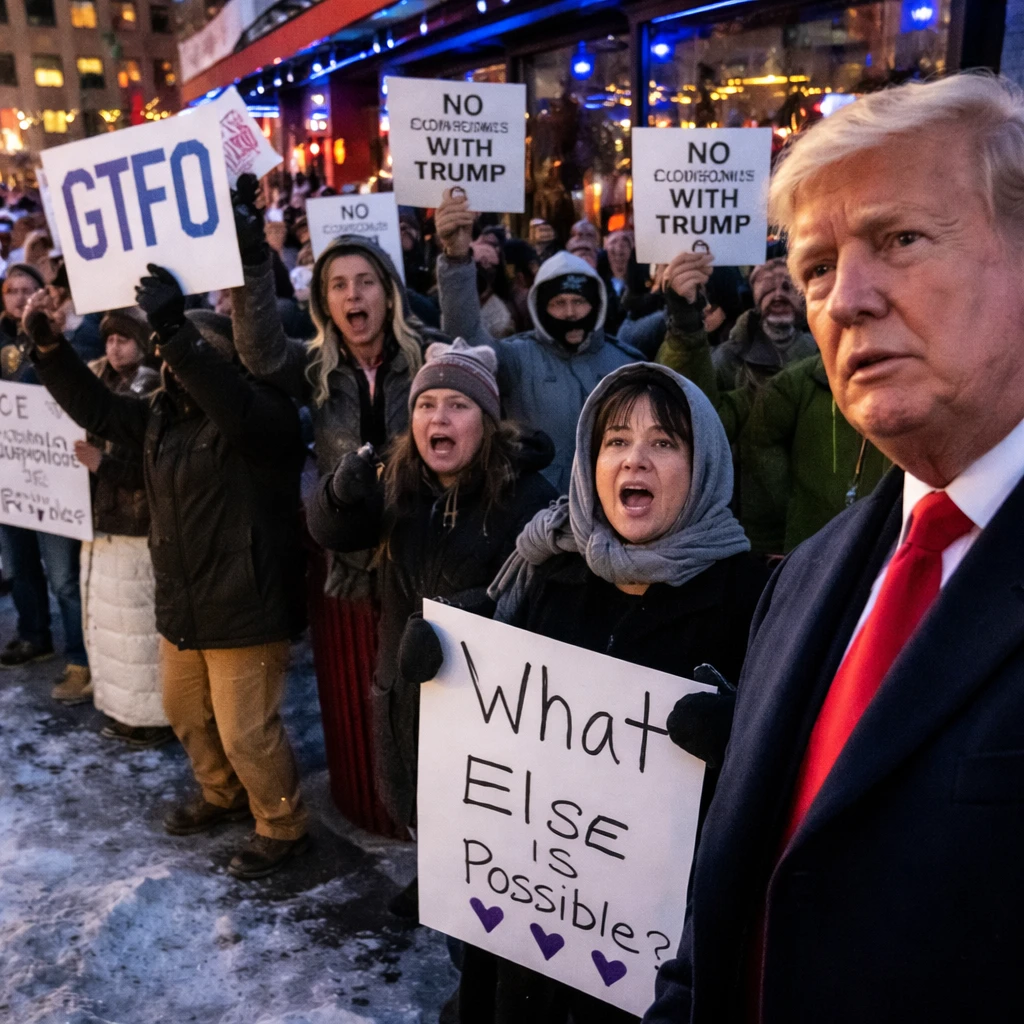

In recent weeks, President Donald Trump has encountered escalating public resistance to his administration's immigration enforcement strategy, particularly the federal immigration raids. This dissent is no longer confined solely to political adversaries and activists but has permeated several facets of American society, including business, entertainment, and sports.
The music industry voiced its condemnation through Bruce Springsteen, who unveiled a new song on Wednesday criticizing the "Trump federal bullies." In the tech sector, OpenAI’s CEO Sam Altman expressed his disapproval to employees regarding the actions of Immigration and Customs Enforcement (ICE), stating these measures "have gone too far." Lifestyle icon Martha Stewart also shared her concern on Instagram, lamenting that "we can be attacked and even killed," urging for swift and peaceful change.
More than a year into his second term, President Trump confronts an intensifying societal revolt that threatens to undermine his key national agenda item, the Republican majority in Congress, and his political standing in the run-up to the midterm elections.
Amid this turbulent atmosphere, Trump attempted to shift the narrative by dispatching Tom Homan, his "border czar," to Minnesota to replace Greg Bovino, a Customs and Border Protection commander who had become a lightning rod for criticism. However, the impact of this leadership change remains uncertain.
Federal agents continue their presence in Minnesota, where operations have been marred by the deaths of two American citizens following shootings by federal officers, leaving communities feeling besieged by the president’s law enforcement initiatives. Furthermore, immigration raids have expanded geographically, reaching into states like Maine.
Political insiders perceive a growing unease within the administration. Republican strategist Doug Heye noted communication with GOP leaders nationwide expressing concern that the current situation may jeopardize prospects of retaining congressional control in the upcoming midterms.
"It’s clear the administration is scared," Heye remarked, although Trump’s MAGA-supporting base remains firmly behind the president and his promised crackdown on immigration, exerting pressure for even more aggressive deportations.
Supporters like Laura Loomer are advocating for intensified efforts, recommending mass deportations, including targeting specific religious groups — a stance at odds with the rising chorus of opposition within broader society.
This broadening array of critique includes public figures from various sectors. Podcast host Joe Rogan, once a Trump campaign supporter, questioned whether the country has descended into a "Gestapo" mentality with demands like "Where are your papers?" becoming normalized.
After the fatal shooting of Alex Pretti, a 37-year-old Veterans Affairs nurse in Minneapolis, over 60 corporate executives, including leaders from Target, Best Buy, and UnitedHealth, signed a letter urging the federal government to de-escalate.
Apple CEO Tim Cook echoed this sentiment in an internal memo expressing sorrow over the Minneapolis events and calling for dignity and respect for all people, emphasizing America's strength through shared humanity.
Tech investor Vinod Khosla condemned what he termed "ICE bullies running wild empowered by a conscience-less administration." Meanwhile, prominent technology podcaster Jason Calacanis warned Trump that failure to overhaul the leadership conducting the raiding operations could endanger his policy agenda and political prospects.
The entertainment industry, traditionally aligned with liberal causes, has increasingly vocalized its criticism. Bruce Springsteen’s new track "The Streets of Minneapolis" directly references Pretti’s death, portraying a grim scene of federal agents' actions. Other actors and musicians such as Natalie Portman, Elijah Wood, Olivia Rodrigo, Billie Eilish, and Mark Ruffalo have publicly condemned the enforcement tactics.
Sports figures have joined the critique as well. Minnesota Timberwolves’ coach Chris Finch called the shootings "inconceivable," extending his support to protestors. NBA star Steph Curry highlighted the need for significant change, sharing his attention to the incident, while New York Knicks player Guerschon Yabusele emphatically denounced the killings, urging governmental reform.
Responding to mounting criticism, President Trump signaled a minor shift in rhetoric, stating in a Fox News interview his intention to "de-escalate a bit" but maintained the right to enforce immigration laws. He criticized former official Bovino as excessively extreme and warned Minneapolis Mayor Jacob Frey for refusing to enforce federal immigration statutes.
Public opinion polls reflect a declining approval of Trump’s immigration management, with just 38% of American adults endorsing his approach compared to 49% several months earlier, following the initial fatal shooting incident in Minnesota. Disapproval is also creeping into the Republican base, dropping from 88% approval to 76% in the same period. Additionally, a Fox News poll indicates a majority of voters see ICE’s tactics as too aggressive, signaling potential political ramifications.
In sum, the confluence of societal critiques from diverse sectors—business, technology, entertainment, and sports—forms a challenging backdrop for President Trump as he navigates his immigration policy agenda amid shifting public sentiment and political pressures.