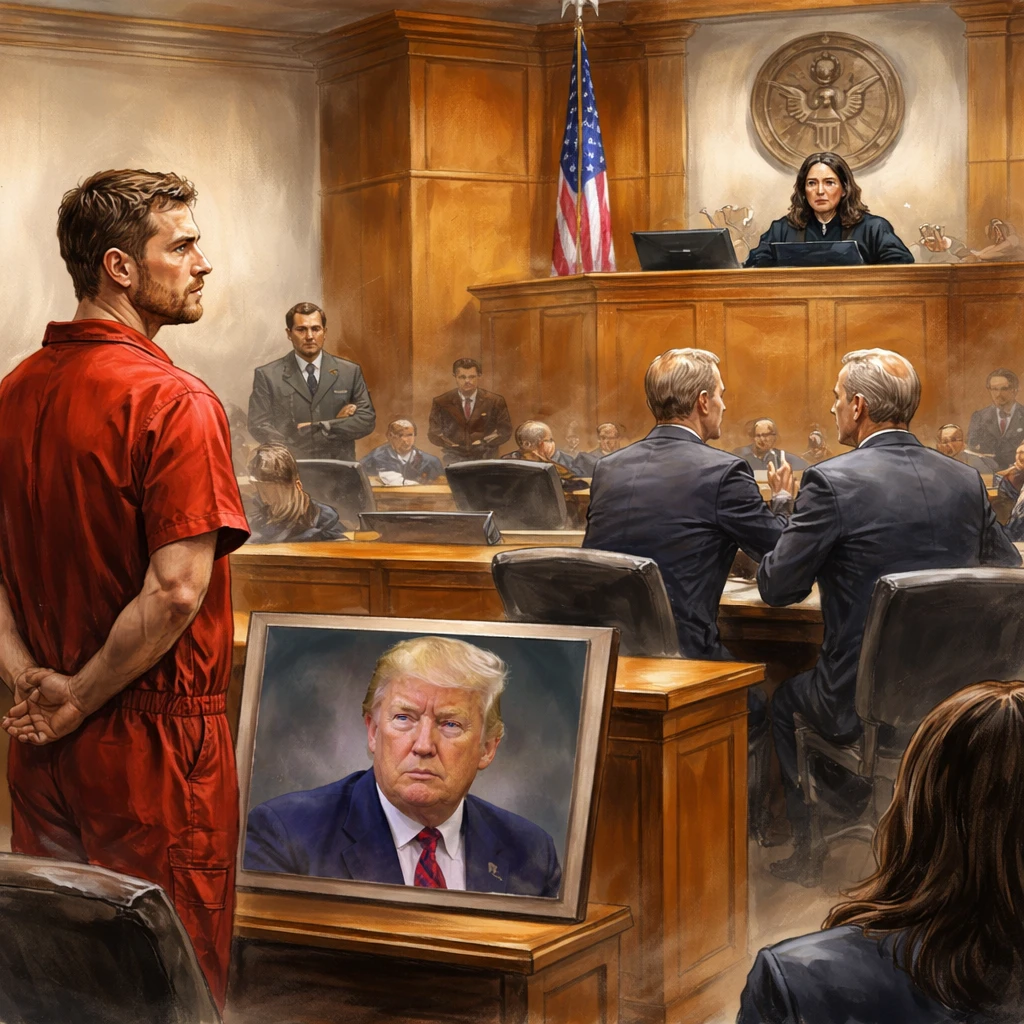

Federal prosecutors are preparing to recommend a life sentence for Ryan Routh, who was found guilty of attempting to assassinate former President Donald Trump during a 2024 incident at a Florida golf course. The sentencing hearing is scheduled for Wednesday in Fort Pierce, where U.S. District Judge Aileen Cannon will preside.
The courtroom erupted into disturbance last September shortly after jurors convicted Routh on multiple counts, including charges related to attempted murder of a presidential candidate and various firearms offenses. In a dramatic moment, Routh tried to stab himself in the neck with a pen; responding officers swiftly removed him from the courtroom.
Originally, Routh's sentencing was set for December. However, following his decision to retain legal counsel for the sentencing phase—contrasting his earlier self-representation—Judge Cannon agreed to postpone the sentencing.
In their sentencing memorandum filed the preceding month, prosecutors state that Routh has not accepted responsibility for his conduct. They argue for a life sentence aligning with federal sentencing guidelines, highlighting Routh's continued lack of remorse and disregard for the law. "Routh remains unrepentant for his crimes, never apologized for the lives he put at risk, and his life demonstrates near-total disregard for law," the memorandum asserts.
Routh's newly appointed defense attorney, Martin L. Roth, has petitioned for a reduced sentence variance. He suggests a 20-year term above the mandatory seven-year sentence tied to one of the firearms convictions. Roth's filing underlines Routh's age, noting, "The defendant is two weeks short of being sixty years old. A just punishment would provide a sentence long enough to impose sufficient but not excessive punishment, and to allow defendant to experience freedom again as opposed to dying in prison."
The background of the case involves weeks of planning Routh undertook to kill Trump. On September 15, 2024, during a golf outing at Trump's West Palm Beach country club, Routh concealed himself in shrubbery and aimed a rifle at Trump.
Testimony during the trial included a Secret Service agent’s account, who was protecting Trump at the time. The agent observed Routh prior to Trump's entrance onto the course and stated that when Routh aimed his rifle at him, the agent fired, prompting Routh to drop his weapon and flee without firing.
During the proceedings, Routh sought permission to switch from self-representation to counsel, submitting a motion that included unconventional proposals such as offering his life in exchange for the release of individuals detained in foreign countries. He also made a pointed comment for Trump to "take out his frustrations on my face" and expressed frustration over his failed plan.
Judge Cannon criticized the motion as a "disrespectful charade," underscoring its negative impact on the dignity of the process. Despite this, she authorized Routh to be represented by an attorney to ensure proper legal rights. It's notable that Judge Cannon, who was nominated by Trump in 2020, had earlier approved Routh's decision to act as his own counsel after determining his competence to waive legal representation, consistent with Supreme Court precedents.
Throughout the trial, Routh’s federal public defenders served as standby counsel and attended proceedings to assist if necessary.