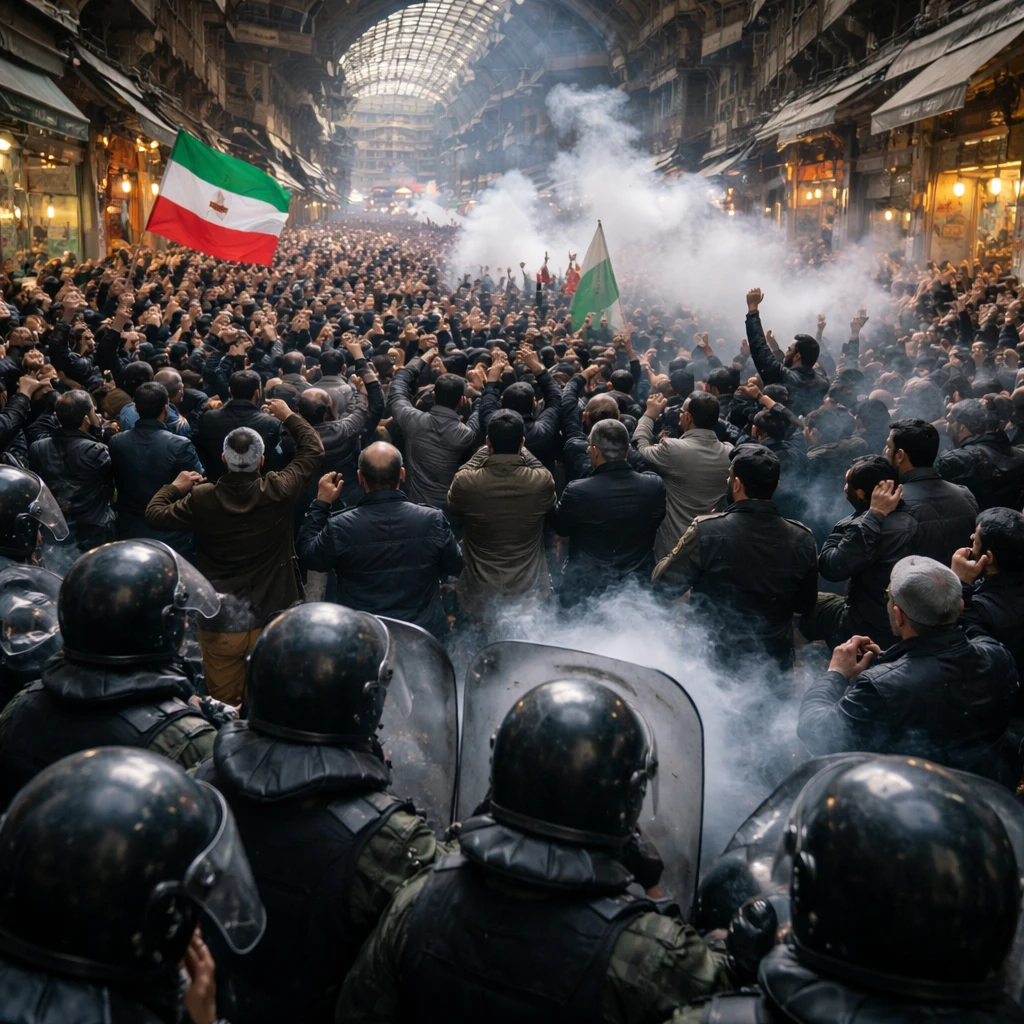

In Tehran, Iran, a significant protest unfolded Tuesday within the Grand Bazaar, a historic and vital center of commerce and political activity. Eyewitnesses reported that groups dissatisfied with the country's economic challenges engaged in a sit-in amidst the bazaar's intricate network of corridors. Security personnel responded by deploying tear gas to break up the gathering as business activities ceased throughout the market.
The demonstrators voiced opposition to the economic turmoil gripping Iran, underscored by the national currency, the rial, plunging to unprecedented lows on the same day. This depreciation intensifies economic pressures on the populace, many of whom have endured a prolonged erosion of their savings, partly due to ongoing international sanctions that have constrained the nation's financial stability.
Authorities have detained over 1,200 individuals amid the protests, which have resulted in at least 36 fatalities according to activist organizations outside of Iran. The escalation in violent confrontations between protesters and security forces signals a volatile situation that appears unlikely to resolve shortly.
Further compounding economic distress, Iran’s Central Bank implemented a sharp reduction in the subsidized exchange rates available to importers and producers, excluding only wheat and medicine. This adjustment is expected to drive up costs for goods, with merchants anticipated to transfer these increases to consumers, who are already grappling with diminished purchasing power.
President Masoud Pezeshkian, identified as a reformist voice, has ordered an official investigation into a recent incident involving the protests. In a televised address, Pezeshkian admitted the government lacks the capacity to manage the crisis single-handedly, signaling a recognition of escalating instability and potential challenges in governance.
During the unrest at the Grand Bazaar, demonstrators staged a sit-in within one of its covered streets, while many vendors closed their shops in solidarity or fear of the chaos. This tactic mirrored previous protests where images had circulated showing individuals peacefully confronting police forces by sitting down before them.
Despite the government's attempt to suppress these protests, including the use of tear gas, state media has not immediately acknowledged these confrontations. Videos surfaced later appearing to show tear gas being used at locations including hospitals and metro stations across Tehran. The unrest joins earlier rounds of nationwide dissent that have intensified following the rial’s significant devaluation against the U.S. dollar, which hit a new low exchange rate of approximately 1.46 million rials to one dollar on Tuesday.
Historically, prior to the 1979 Islamic Revolution, the rial remained relatively stable near 70 per dollar. The currency was valued around 32,000 rials to the dollar during the 2015 nuclear agreement era, highlighting the dramatic decline in purchasing power Iranian consumers currently face.
The Central Bank’s recent policy shift to end the subsidized exchange rate for most goods except essentials has sparked concern for increased inflation. Previously, importers and producers had access to a more favorable exchange rate designed to maintain the supply of essential products despite sanctions. However, this mechanism was reportedly exploited by some entities, increasing profit margins while ordinary citizens bore the brunt of worsening currency depreciation.
On the consumer front, prices for staple items have surged significantly; for instance, cooking oil prices doubled, and reports indicate shortages and price increases in dairy, poultry, and rice products. These developments have contributed to growing public dissatisfaction and economic anxiety.
In his speech, President Pezeshkian attributed the currency’s decline to factors including inflation and the impact of sanctions, cautioning that without practical decision-making, the country risks advancing to a full-scale crisis. He emphasized the necessity for realistic policies to avoid further destabilization.
In Ilam province, located some 515 kilometers southwest of Tehran and predominantly inhabited by Kurdish and Lur communities grappling with economic hardship, protests have turned violent. Security forces reportedly fired on civilians in Malekshahi County, with videos emerging of clashes and police raids inside hospitals seeking demonstrators. The government has tasked the interior ministry to conduct a comprehensive investigation into these events.
Official semiofficial sources alleged armed resistance from protesters involving firearms and grenades, though evidence for these claims was not substantiated publicly. Following a funeral for victims, furious crowds reportedly attacked several banks, resulting in additional casualties and injuries.
The ongoing demonstrations have proliferated widely, occurring in over 270 locations across 27 of Iran’s 31 provinces. Activist monitoring groups have provided casualty figures, including deaths among protesters, children, and security personnel alike. Reports also indicate injuries among police and paramilitary forces, reflecting the escalating confrontation's toll on Iran’s internal security apparatus.
The international dimension of the crisis has escalated tensions further. U.S. leadership has issued warnings that interference might occur should Iranian authorities continue to violently suppress peaceful protesters. Iran’s Supreme Leader has simultaneously demanded strong measures against what he termed rioters, exacerbating the potential for heightened conflict and even military posturing in the region.