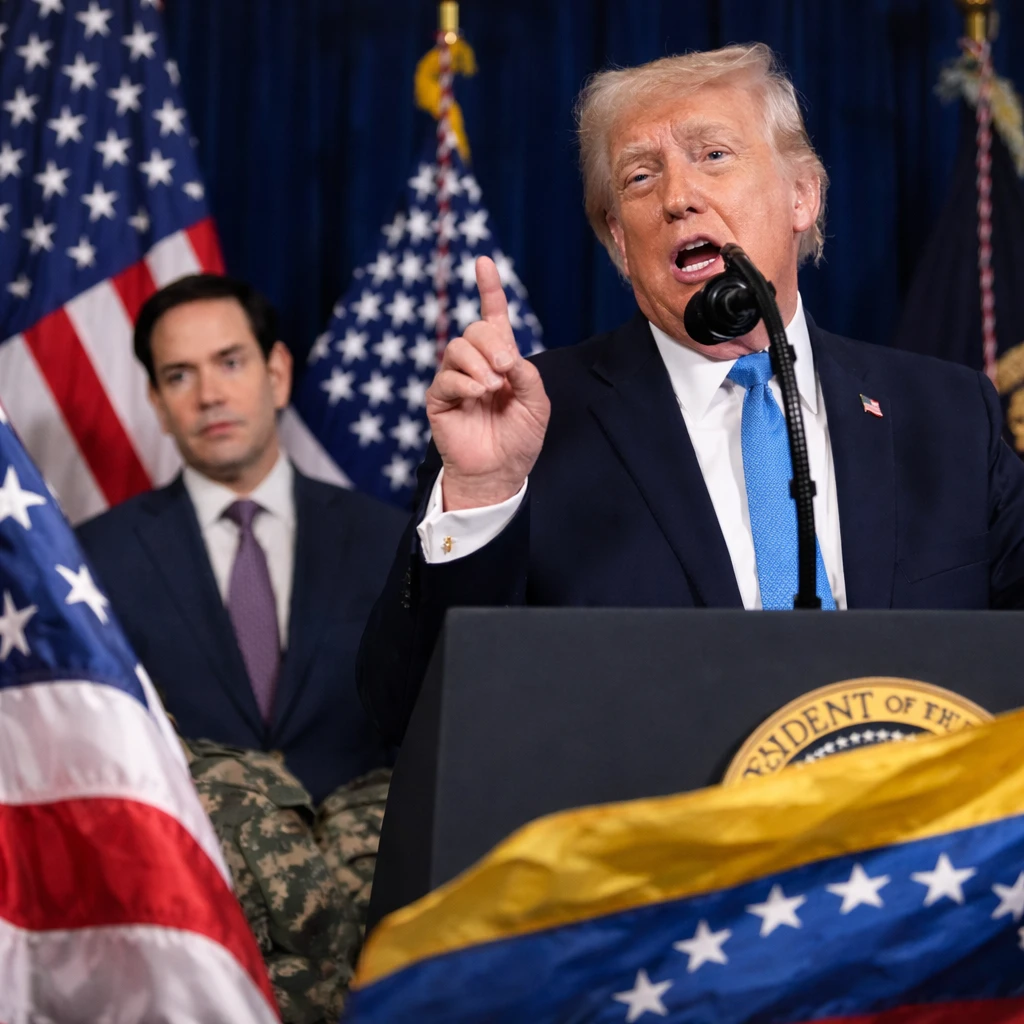

In the lead-up to the recent military operations in Venezuela involving the capture of President Nicolás Maduro, public sentiment in the United States displayed limited enthusiasm for deeper foreign engagements. An Associated Press-NORC poll conducted in late 2025 underscored a prevailing inclination among Americans to concentrate governmental efforts on domestic priorities, including health care reform and addressing rising living costs, rather than focusing on international affairs.
This trend is exemplified by the fact that only approximately 25% of U.S. adults identified foreign policy concerns, such as ongoing conflicts in regions like Ukraine or Israel or broader overseas involvement, as top issues for government action in 2026. This represents a decline from prior years, where such topics attracted attention from roughly one-third of the population. Notably, Venezuela was rarely mentioned as a significant issue warranting governmental focus.
Compounding this perspective, despite the Trump administration's recent focus on drug trafficking tied to Venezuela—highlighted by strikes on vessels alleged to be transporting narcotics from Venezuela to the United States—drug-related concerns have not dramatically risen on the public's priority list. The issue resonated primarily with Republican respondents, with about 10% citing it as a priority, whereas Democrats and independents showed minimal concern. Overall, economic and healthcare issues dominated public interest.
Following the military action to detain Maduro, public opinion regarding American intervention in Venezuela remains divided. A survey from The Washington Post and SSRS, conducted through text messaging immediately after the events, revealed that roughly 40% of respondents supported the U.S. military’s role in capturing Maduro, contrasted by a nearly equal segment opposing the move, and around 20% uncertain. Political affiliation influenced these views, with Republicans generally endorsing the action and Democrats largely opposing it.
Further polling data indicate a clear reluctance among Americans to support U.S. governance over Venezuela. Approximately 45% opposed the idea of American control over the country’s political future, while an overwhelming majority, near 90%, advocated that Venezuelans themselves should determine their leadership.
During December, Quinnipiac University found that about 60% of registered voters were against U.S. military intervention in Venezuela. Republican voters displayed a more divided stance: nearly half supported intervention, about a third opposed it, and 15% were undecided.
Regarding U.S. international engagement more broadly, only about one in ten Republicans in a September AP-NORC poll expressed a desire for America to assume a more active global problem-solving role. This group was notably less interested in increased involvement compared to Democrats and independents. The majority of Republicans, roughly 55%, believed the current U.S. role in global affairs was appropriate. Similarly, data from AP VoteCast indicated that among 2024 Trump voters, about 70% preferred the U.S. taking a reduced role internationally.
These public attitudes present a complex environment for President Trump, who campaigned on the "America First" platform emphasizing a scale-back in foreign military commitments. A Fox News poll from December showed a split in opinion on whether Trump had upheld this promise, with about half of Americans believing he had and half dissenting. However, among Trump’s supporters, a substantial majority felt he remained true to his campaign pledge.
Overall, while the administration’s military ventures in Venezuela reflect a willingness to assert U.S. influence in the Western Hemisphere, a sizable proportion of the American public continues to favor prioritizing domestic challenges. The evolving opinions on foreign intervention juxtaposed against ongoing economic and healthcare concerns suggest potential difficulties in garnering broad support for expanded international engagements.