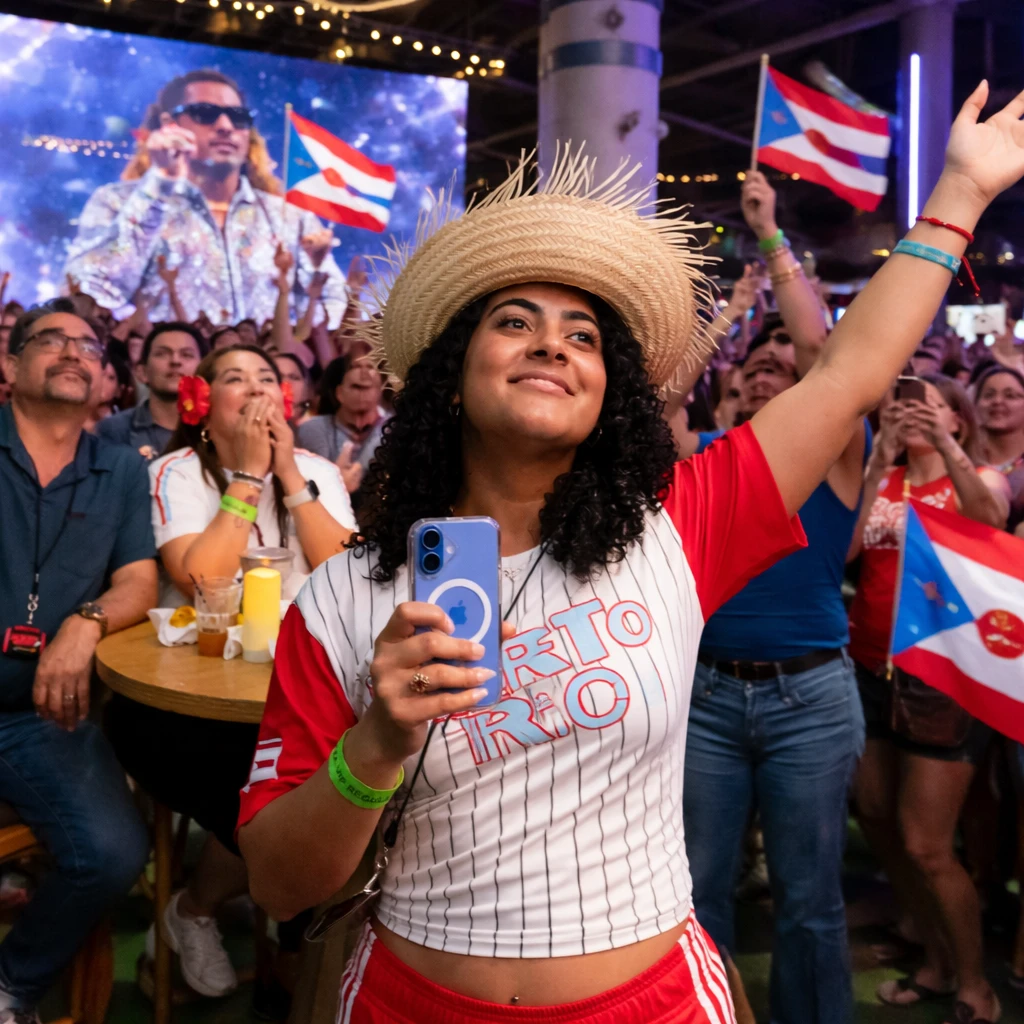

During the recent Super Bowl, a remarkable cultural event unfolded in Puerto Rico as residents across the island momentarily set aside the game's first half to spotlight their native musical artist, Bad Bunny. The 13-minute halftime show became a collective experience, uniting people in San Juan and beyond to embrace their heritage through the artistry of Benito Antonio Martínez Ocasio.
As the first half progressed, many turned off their televisions, filling the spaces with food, conversations, and music, awaiting the halftime performance. This pause in sporting attention underscored the significance of the moment for the island, as Bad Bunny took center stage – a former grocery bagger who emerged a decade ago to become the world’s most streamed artist on Spotify by last year.
His rise has been marked not only by musical success but also by his vocal support for immigrants, his exploration of Puerto Rican identity and struggles, and his criticism of U.S. immigration policies. Marielys Rojas, 39, originally from Venezuela and a Puerto Rico resident for more than two decades, remarked, “He appeared at the right moment in the history of Latin America.” She was among hundreds gathered on a grassy knoll along a beach in San Juan to watch the performance on a large screen, surrounded by the rhythmic sounds of waves and the native coquí frogs.
Attendees like Amarilys Reyes, 55, who came with her 22-year-old daughter to the seaside screening, underscored the event’s broader appeal. Reyes, a first-time Super Bowl viewer unfamiliar with the competing teams, was drawn solely by Bad Bunny’s presence. She described the occasion as “the biggest show of his life,” acknowledging the excitement that had been mounting since the announcement by the NFL, Apple Music, and Roc Nation of Bad Bunny’s headline role at the Super Bowl XL Halftime Show.
The announcement sparked a wave of watch parties across Puerto Rico and the U.S. mainland. These gatherings were given nicknames reflecting Puerto Rican culture and pride, such as “Super Bori Sunday,” a nod to “Boricua,” the term for those of Puerto Rican descent, and “The Benito Bowl,” combining beloved local foods and reggaetón music with football. Individuals shared plans on social media, including one woman preparing to dance with her elderly mother and another creating an educational presentation titled “Bad Bunny 101” for friends unfamiliar with the artist.
In the days leading up to February 8, creative promotions flourished. A Puerto Rican bar advertised with an image of NFL quarterbacks seated on chairs inspired by Bad Bunny’s album cover, while the Teletubbies danced to his track “Baile Inolvidable.” Even public figures like Lynda Carter, known for her role as Wonder Woman, expressed admiration, noting Bad Bunny’s American citizenship and emphasizing, “Make no mistake.”
However, the event also drew criticism. Jake Paul, a YouTuber and boxer with ties to Puerto Rico, publicly condemned the performance, labeling Bad Bunny a “fake American citizen” who expressed anti-American views. This elicited swift rebuttals from Puerto Ricans who highlighted their U.S. citizenship and questioned Paul’s stance, emphasizing the artist’s rightful place in American culture and identity.
Among the crowd was Luke Lavanway, a New York resident vacationing in Puerto Rico, who welcomed the Spanish-language halftime show. He appreciated the cultural inclusivity, stating, “That’s part of us. That’s what makes us great, and we should just enjoy it.”
As the halftime concluded and the second half of the game commenced, attendees gradually dispersed from the watch party, reflecting on the cultural milestone they had witnessed. Carlos Ayala, 36, from San Juan, praised the show for uniting Latinos and representing their diverse identities equally, calling it “an important moment for Latino culture.” He also highlighted Ricky Martin’s participation, singing Bad Bunny’s song “Lo que le pasó a Hawaii,” which addresses gentrification challenges on the island — a pressing concern given the over 40% poverty rate. Additionally, visual elements like light posts and exploding transformers recalled Puerto Rico’s persistent power outages, bringing the island’s everyday struggles to a broader audience.
Juliana Santiago, 35, expressed deep pride, asserting that Bad Bunny’s success embodied the American dream and demonstrated what residents could achieve. This powerful message and shared experience left a lasting impression across the island, underscoring the transformative impact of Bad Bunny’s historic Super Bowl halftime show.