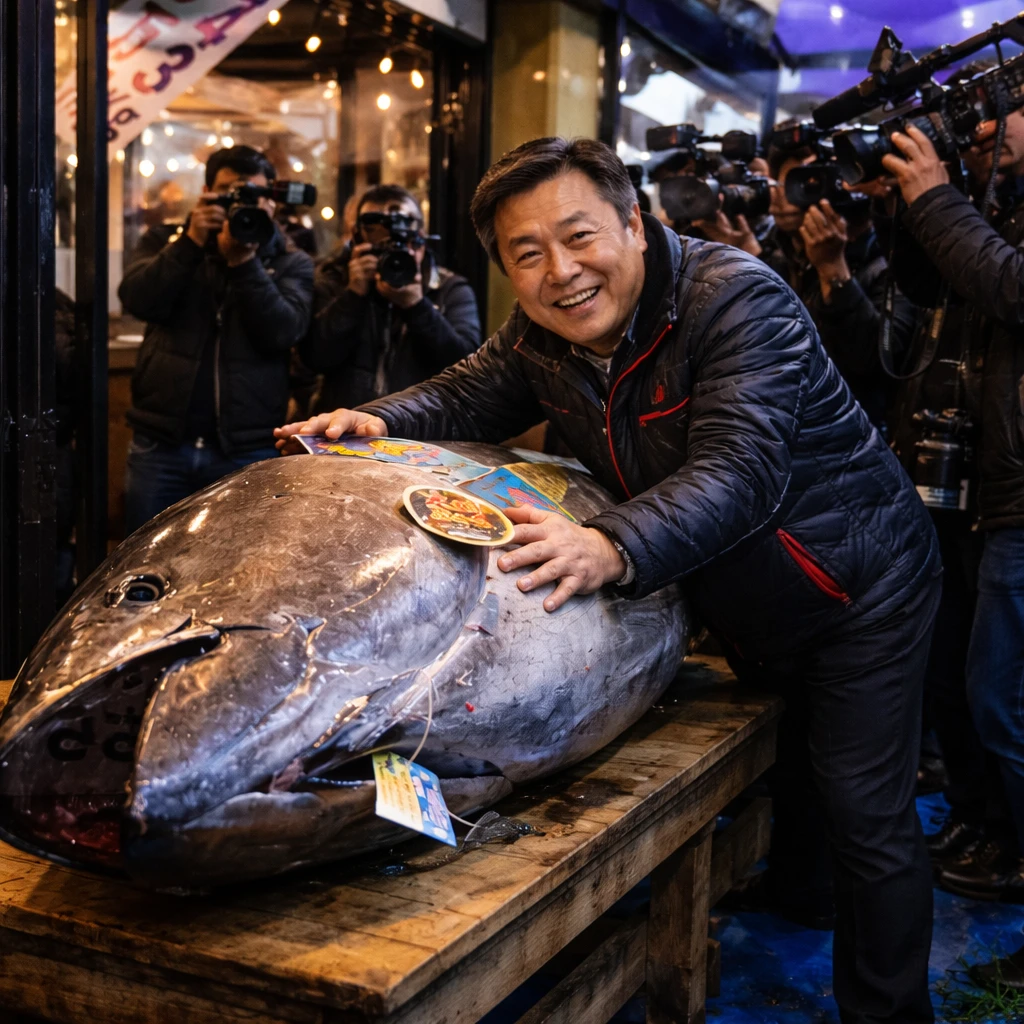

At the dawn of 2026, Tokyo’s Toyosu fish market hosted its first and most anticipated tuna auction of the year, witnessing a landmark sale. A bluefin tuna weighing an impressive 243 kilograms, or roughly 535 pounds, was sold for an extraordinary 510 million yen, equivalent to about $3.2 million. This sale set a new record for the species at this prestigious market.
The highest bidder was Kiyomura Corp., a company helmed by Kiyoshi Kimura, renowned for operating the famous Sushi Zanmai restaurant chain. Kimura has established a history of securing prized tunas in these annual auctions, and with this purchase, he surpassed the former record he set in 2019, when he paid 334 million yen ($2.1 million) for a similarly exceptional specimen.
Kimura later shared with journalists that his initial budget for the tuna was lower than the final amount paid. "The price shot up before you knew it," he remarked, highlighting the competitive spirit of the auction. As the session commenced with a bell ringing to signal the start, rows of torpedo-shaped tuna, tails removed for better inspection, filled the floor. Potential buyers closely examined the fish, assessing critical qualities including color, texture, and fat content—factors crucial to determining the fish’s culinary value.
This particular bluefin was caught in the coastal waters near Oma, located in the northern region of Japan. This area is widely celebrated for producing some of the nation’s top-grade tuna. Notably, this tuna commanded a price of approximately 2.1 million yen per kilogram, translating to nearly $13,360 per kilogram or $6,060 per pound.
Reflecting on the purchase, Kimura indicated the significance of this acquisition beyond mere business, describing it partly as a gesture intended for good luck at the start of the year. He expressed enthusiasm for the anticipated quality of the fish, saying, "When I see a good looking tuna, I cannot resist... I haven’t sampled it yet, but it’s got to be delicious."
While hundreds of tuna are sold at the early morning auction daily, the prices—particularly for tuna of Oma origin—tend to spike during the celebratory New Year auction. Tuna holds a vital place in Japanese cuisine, predominantly featured in sushi and sashimi, which bolsters demand and influences market pricing.
It is noteworthy that the Pacific bluefin tuna, once classified as a threatened species due to pressures from climate change and overfishing, has seen its populations begin to recover, thanks to ongoing conservation measures. This recovery plays a critical role in maintaining the supply chain and market dynamics significant to Japan’s seafood industry.