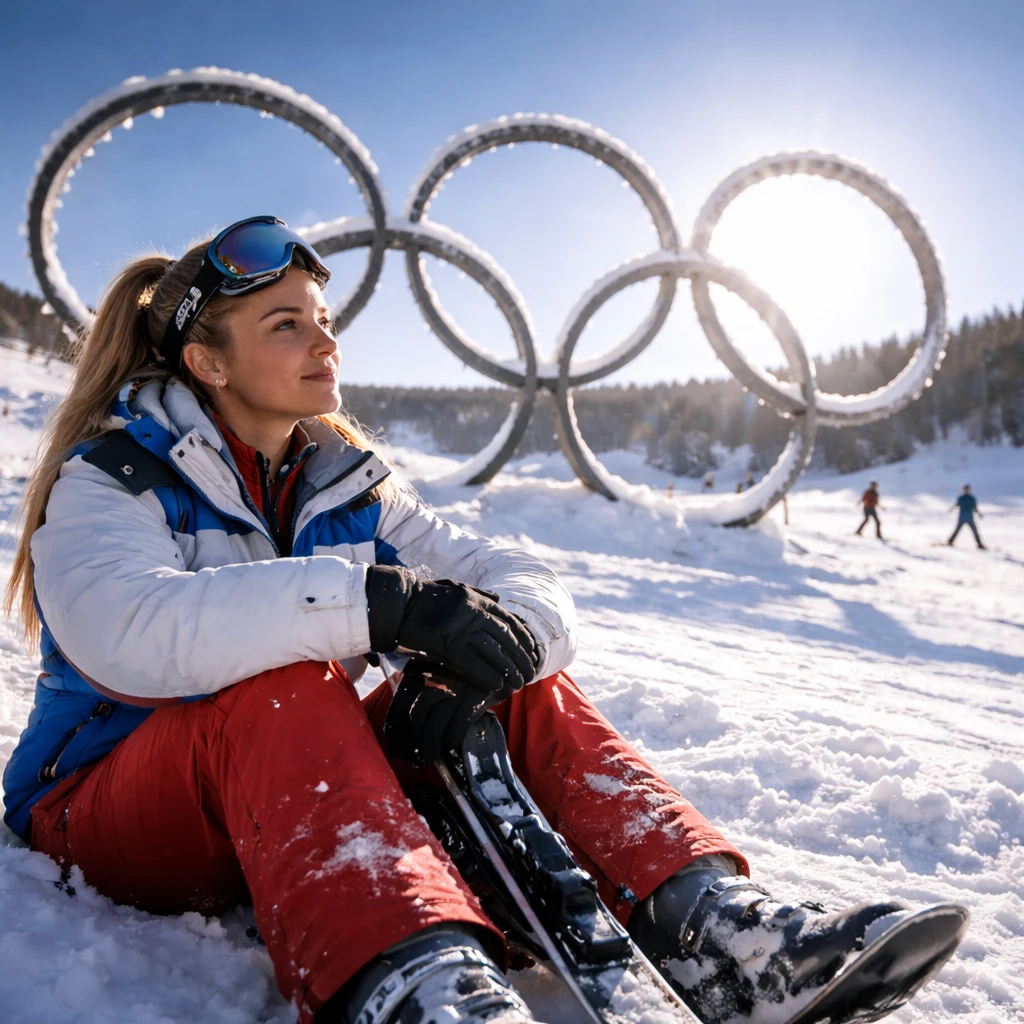

As the Winter Olympic Games prepare to begin in Italy, the spotlight turns to the athletes who have dedicated years to their sports, many of whom confront the daunting possibility of not earning a gold medal. Emily Clark, a clinical psychologist affiliated with the United States Olympic and Paralympic Committee (USOPC), plays a crucial role in guiding these elite competitors through understanding and defining what success means in such a high-stakes environment. Clark's focus during the Games—which commence on February 6—is to help athletes move beyond the simplistic notion that winning gold is the sole indicator of achievement.
Clark is part of a 15-person team within the USOPC dedicated to providing psychological services tailored to the athletes' diverse needs. Their scope includes addressing mental health and enhancing mental performance by tackling subjects such as motivation, anger management, anxiety, eating disorders, family dynamics, trauma, depression, sleep quality, handling competitive pressure, and logistical challenges related to travel. Within this team, Clark specializes in stress management and optimizing sleep, aiming to help athletes maintain peak performance levels while resisting the urge to focus narrowly on outcomes rather than the performance process.
"Many athletes today recognize that mental health plays a vital role not only in sports but in overall life satisfaction," Clark commented. "Developing skills in this domain can extend an athlete’s career and enhance enjoyment of the experience."
The United States delegation for the Winter Olympics is expected to include around 235 athletes, with an additional 70 anticipated for the Paralympics. However, Clark stresses the sobering reality that gold medals will be awarded to only a few. Referencing data, she noted that in Beijing 2022, the U.S. secured gold in nine events. Moreover, research by Dr. Bill Mallon, a renowned Olympic historian, indicates that more than 70% of athletes across both Summer and Winter Games participate in only one edition of the Olympics during their careers.
While athletes like swimmer Michael Phelps and skiers Mikaela Shiffrin and Lindsey Vonn have attained fame and repeated success, many competitors have different experiences. Clark encourages athletes to embrace the uniqueness of the opportunity presented by the Olympics by focusing on the process and savoring the moment rather than fixating solely on medal outcomes.
"Your job isn't to win a gold medal; it’s to perform to the best of your ability, and the gold medal is the result of doing your job well," Clark explained. "This requires a realignment of what defines success and fosters resilience when confronted with setbacks or failure."
Clark promotes maintaining focus under pressure and viewing challenges and defeats as opportunities for growth. She explained, "Athletes build strength by pushing their limits to maximum capacity followed by recovery. Stress can disrupt concentration, so training to stay aligned with essential tasks is critical."
Athlete Perspectives on Psychological Support
Kendall Gretsch, a Paralympian with four gold medals spanning Summer and Winter Games, attributes part of her achievements to the mental health support offered by the USOPC. Gretsch emphasized the value of having a sports psychologist accompany the team during most of their competitive season, offering a touchpoint for reflection and grounding.
Similarly, American figure skater Alysa Liu, the 2025 world champion and sixth-place finisher in the 2022 Olympics, attested to the benefits of sports psychology sessions, describing her psychologist as the "Most Valuable Psychologist (MVP)." Liu pointed out this support as instrumental in her growth and preparation for upcoming events in Italy.
On the other hand, Lindsey Vonn, a six-time Winter Olympian, approaches mental preparation differently. At 41, and returning from nearly six years of retirement to compete with a titanium-reinforced knee, Vonn shared she did not utilize sports psychology services growing up. Instead, she relied on self-directed mental strategies such as taped motivational cues on her skis and internal self-talk routines at the start gate. Vonn’s approach demonstrates one pathway by which athletes navigate the mental challenges of elite sports.
Sleep and Performance
Clark identified sleep as a frequent challenge for athletes, complicated by travel demands, late-night practices, injuries, and personal stressors, including parenting responsibilities. She promotes recognizing sleep as a fundamental pillar of performance, cautioning against deprioritizing it amid busy schedules.
"Some practical guidelines we suggest include avoiding caffeine after mid-afternoon, reducing pre-sleep stress, maintaining consistent sleep schedules, sleeping in dark environments, and aiming for 7 to 9 hours of restful sleep each night," said Clark.
Dani Aravich, a two-time Paralympian who has competed in both Summer and Winter Games and will participate in the upcoming Paralympics, discussed tracking her sleep and working with Clark as a counselor. She emphasized the critical nature of sleep for mental clarity, especially while balancing multiple professional roles.
Clark summarized the position concisely: "Sleep is the cornerstone of healthy performance." This holistic approach to athlete wellness underscores the USOPC's commitment to supporting competitors not just physically but also psychologically, recognizing the multifaceted nature of success at the Olympic level.
As the Games unfold, these insights into psychological strategies and mental wellness form a vital backdrop to the pursuit of athletic excellence, shaping how athletes understand and achieve success on the world’s biggest stage.