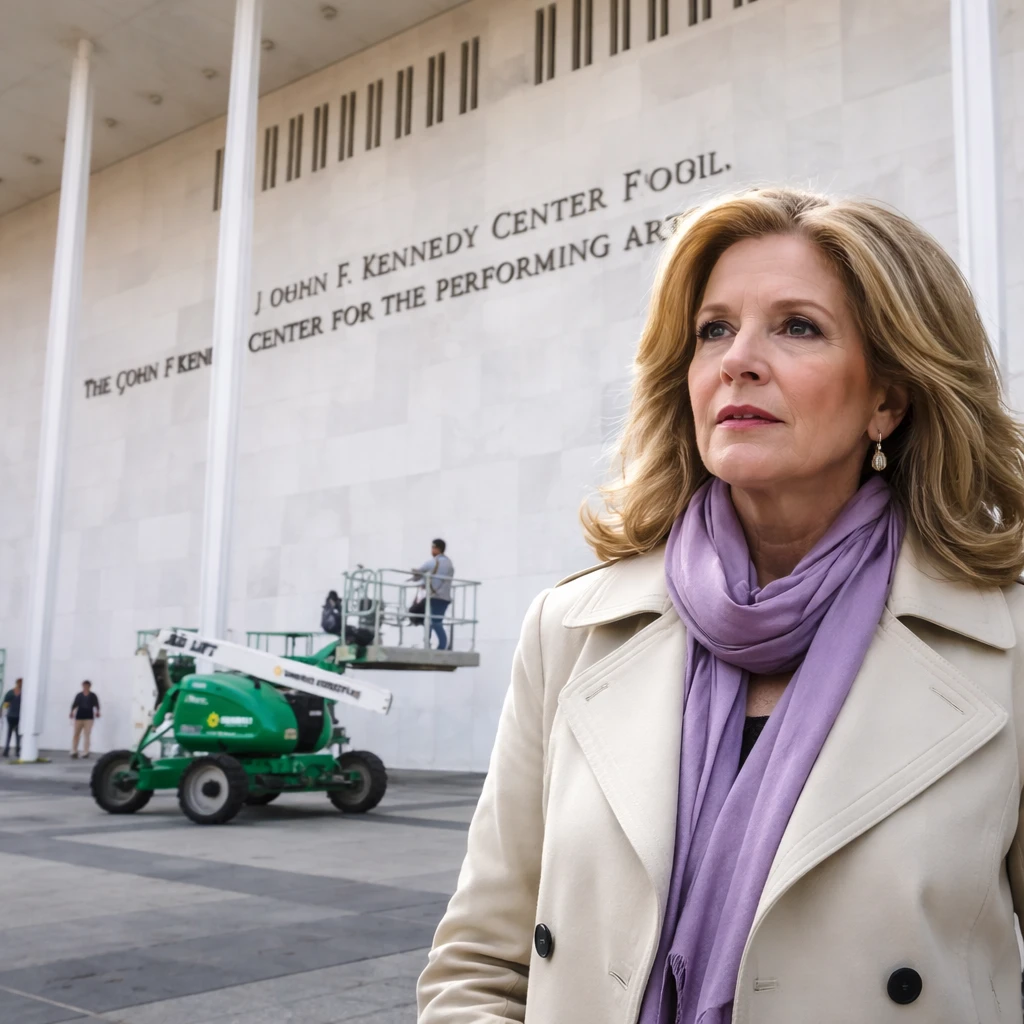

Acclaimed soprano Renée Fleming has officially withdrawn from her planned May concerts at the Kennedy Center, marking the latest departure among artists in response to significant administrative changes at the institution. Fleming had been slated to perform alongside conductor James Gaffigan and the National Symphony Orchestra, but her cancellation follows a pattern of artist reticence amid the Kennedy Center's recent transition.
The catalyst for these developments can be traced back to last year, when Fleming stepped down from her role as "Artistic Advisor at Large". This resignation came after the forced exit of the center's Chair, David Rubenstein, and its president, Deborah Rutter. These leadership upheavals have precipitated discomfort among performers, viewing the center's future with increased uncertainty.
While the Kennedy Center has officially attributed Fleming's May withdrawal to a "scheduling conflict," this explanation contrasts with the broader climate of discontent. The center's website noted that a replacement soloist and updated repertoire will be announced at a later date, assuring that the remainder of the program remains unaffected. As of now, Fleming has not issued a public statement to elaborate on her decision.
Fleming's departure is part of a wider trend of cancellations and dissociations involving the Kennedy Center under the present administration. Notable figures such as Lin-Manuel Miranda, Bela Fleck, and Issa Rae have also rescinded their engagements. This wave of retractions coincides with President Trump's broader critique of what he terms as "woke" cultural influences, a stance that has manifested in several institutional adjustments.
In a significant development earlier this month, the Washington National Opera announced its disassociation from the Kennedy Center, after a longstanding partnership stretching back to 1971. This severance underscores the growing ramifications within the performing arts community relating to the Kennedy Center's leadership and branding changes.
Further illustrating the shifting landscape, Vocal Arts DC, a presenting organization, recently canceled three concerts originally scheduled at the Kennedy Center citing "financial circumstances." Nevertheless, they subsequently secured alternate venues for artists such as tenor Benjamin Bernheim and pianist Carrie-Ann Matheson. Both artists are set to perform next month at George Washington University, which will concurrently host two new opera productions staged by the Washington National Opera this spring.
Collectively, these events highlight an unsettled period for the Kennedy Center amid leadership transitions, administrative rebranding, and consequent artistic withdrawals, affecting programming continuity and organizational partnerships within the cultural sector.