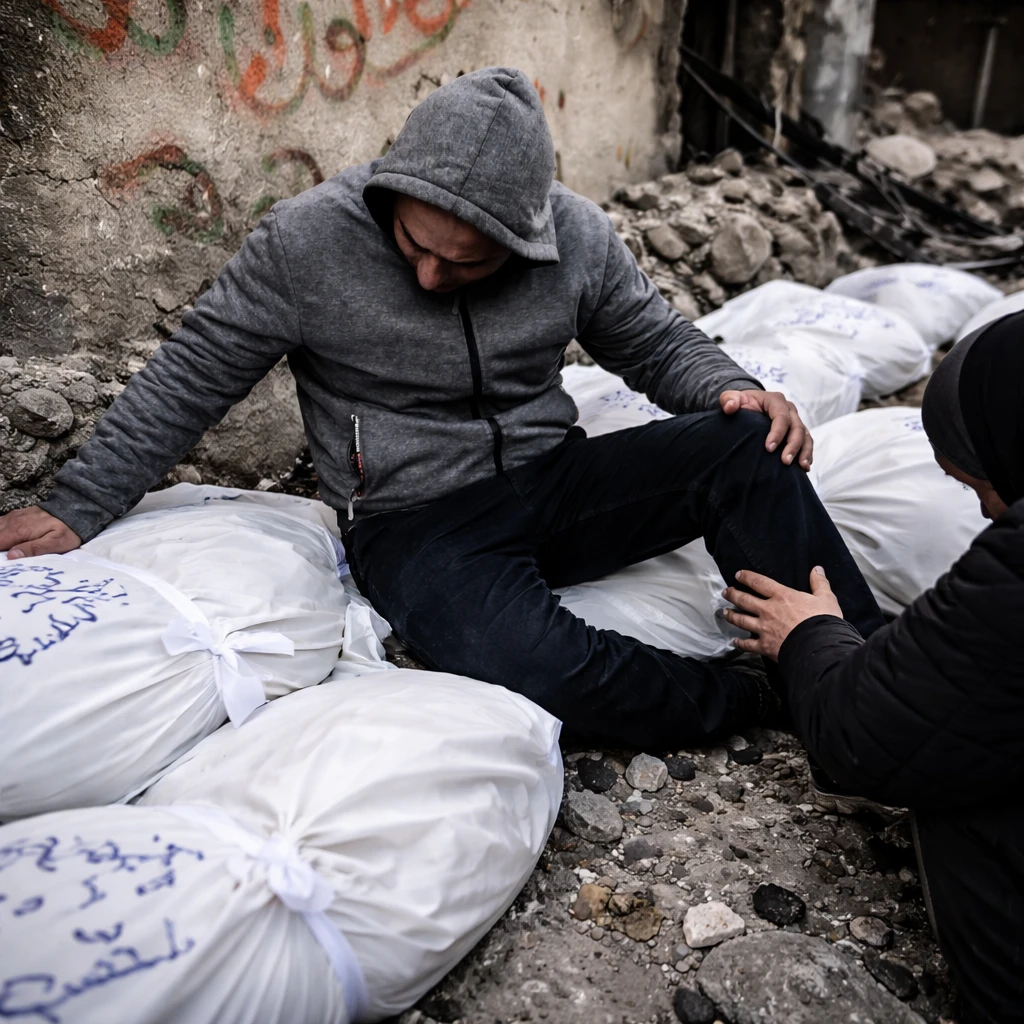

On Saturday, Israeli airstrikes across various locations in the Gaza Strip resulted in the deaths of at least 30 Palestinians, a casualty count among the highest since the ceasefire was established in October. Those killed included multiple children and women, as reported by medical officials who received the bodies at Gaza hospitals.
The air raids struck several sites including an apartment complex in Gaza City and a tent camp near Khan Younis. Hospital sources confirmed that the fatalities encompassed two women and six children from two separate families. An additional attack targeted a police station in Gaza City, resulting in at least 14 deaths and injuring others, according to Dr. Mohamed Abu Selmiya, director of Shifa Hospital.
The timing of these airstrikes is notable as they occurred just prior to the scheduled reopening of the Rafah crossing on the border with Egypt, Gaza’s southernmost entry point. Since the war's outset, all border crossings—excluding Rafah—have remained closed, cutting off Gaza’s access to external medical facilities and aid. The reopening of Rafah, initially limited in scope, holds critical importance for tens of thousands of residents reliant on life-saving treatments abroad, especially given the widespread destruction of Gaza’s healthcare infrastructure.
Political progress remains complicated as the U.S.-brokered ceasefire plan moves into its subsequent stages, with contentious issues lingering such as the demilitarization of Gaza after nearly two decades of Hamas rule, alongside the establishment of a new governance body responsible for reconstruction efforts.
Egypt, a key mediator in the ceasefire negotiations, publicly condemned the recent Israeli strikes in strong terms, highlighting them as a direct threat to the political trajectory of the truce. Similarly, Qatar described the attacks as a "dangerous escalation," cautioning that continuation of such operations endangers the stability of the political process.
“We do not know if we are at war or peace,” lamented Atallah Abu Hadaiyed, referencing the strike at the Khan Younis tent camp. Following his prayers, he discovered cousins injured amid raging fires triggered by the explosions. The attack claimed the lives of seven individuals from one family, including a father, his three children, and three grandchildren.
In Gaza City, another airstrike destroyed an apartment building, killing three children as well as their aunt and grandmother, according to Shifa Hospital reports. Samir Al-Atbash, a relative, emphasized the civilian status of the victims, asserting no connection to Hamas. Names of the deceased were inscribed on body bags displayed outside the hospital.
The attack on the police station further contributed to the rising death toll, taking at least 14 lives, including four female officers, civilians, and detainees. Elsewhere in the Jabaliya refugee camp, a man was fatally wounded in a separate strike.
Hamas condemned the attacks as "renewed flagrant violations," calling upon the United States and other intermediaries to exert pressure on Israel to cease hostilities. Senior Hamas official Bassem Naim expressed skepticism regarding the peace prospects, suggesting current actions aligned more with warfare than negotiation. He questioned the legitimacy of the international governance body proposed by the Trump administration to oversee Gaza.
Responding to the allegations of ceasefire breaches, the Israeli military asserted that their strikes since October have been reactive, targeting violations of the agreement. Saturday’s air raids followed two reported ceasefire infringements the previous day, during which Israeli forces killed militants emerging from a tunnel in the Rafah-controlled area and others approaching near the border.
The casualties from Saturday’s strikes represent a considerable increase compared to the average daily fatalities recorded since the ceasefire commencement. Official data from Gaza’s Health Ministry, part of the Hamas-led governance structure, indicate that at least 520 Palestinians have been killed by Israeli fire since the ceasefire began. This ministry is recognized by U.N. agencies and independent observers for maintaining detailed and generally reliable casualty records.
The broader conflict traces back to the initial Hamas-led assault on southern Israel, which resulted in approximately 1,200 deaths, predominantly civilians, and the abduction of 251 hostages. The remains of the last hostage were recovered in Gaza earlier this week.
The cumulative impact of these developments continues to threaten stability and humanitarian conditions in the region, underscoring the fragile and volatile nature of the ceasefire agreement as political efforts toward peace and reconstruction persist amid ongoing violence.