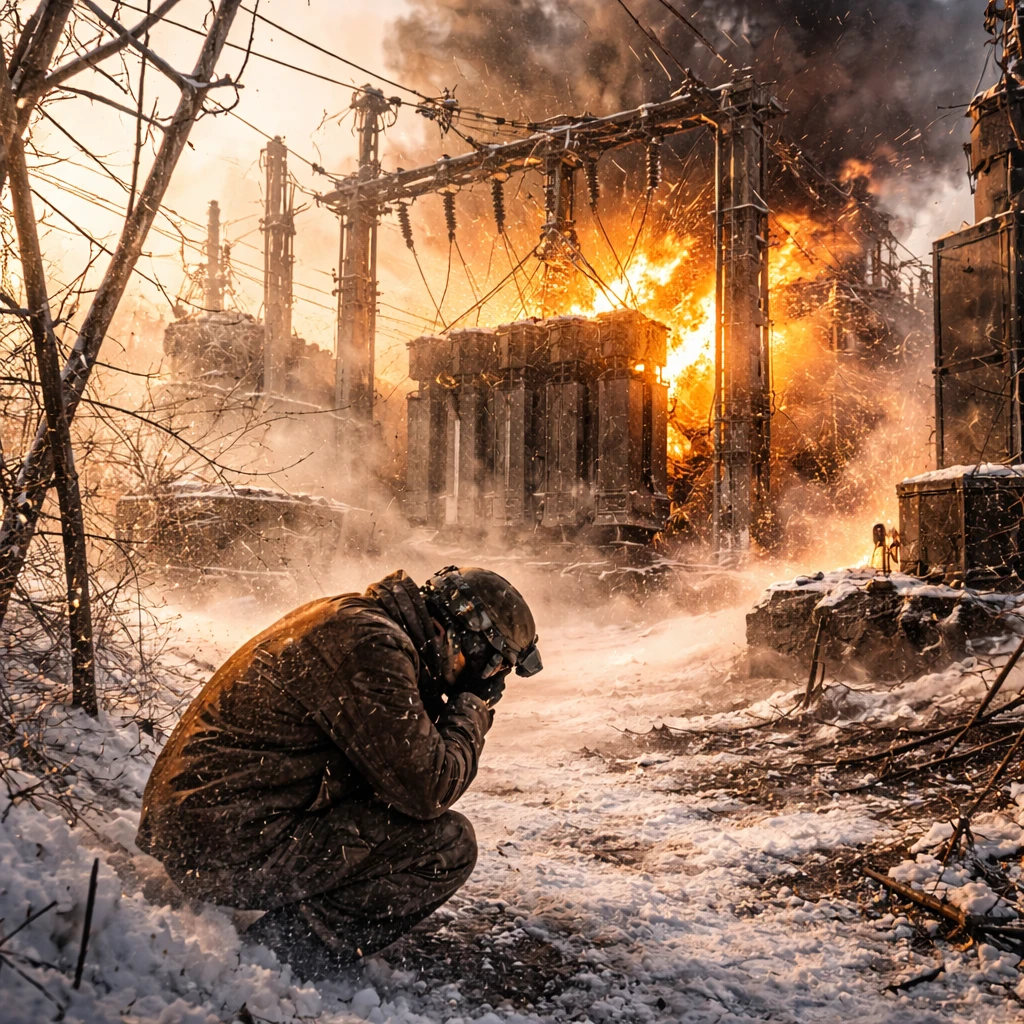

KYIV, Ukraine – Ukraine endured a vigorous overnight assault on its power infrastructure as Russia unleashed a barrage exceeding 300 drones, along with ballistic and cruise missiles, according to President Volodymyr Zelenskyy. This aggressive campaign severely disrupted heating services for more than 5,600 residential buildings in Kyiv, impacting many that had only recently regained heat following an earlier extensive attack on January 9, noted Kyiv Mayor Vitali Klitschko.
The assaults worsen conditions during one of Ukraine's harshest winters in years, with the capital experiencing temperatures as low as –20 degrees Celsius (–4 degrees Fahrenheit). The Russian military's intensified aerial offensives specifically target energy supplies with the intent to deprive Ukrainians of heating and water, aiming to weaken their resolve nearly four years after the invasion commenced on February 24, 2022.
Amid this military backdrop, a Ukrainian delegation arrived in the United States last Saturday to sustain diplomatic momentum in US-led peace negotiations. President Zelenskyy emphasized the delegation's purpose to communicate how persistent Russian strikes undermine the diplomatic process.
Furthermore, Zelenskyy revealed that the delegation is tasked with finalizing documents related to future security assurances and economic recovery plans post-conflict. These agreements, pending approval by US officials, could be signed during the upcoming World Economic Forum in Davos, Switzerland.
Ukraine’s air force reports defensive successes, claiming to have intercepted or jammed 27 missiles and 315 drones during recent attacks. Nevertheless, five missiles and 24 drones managed to strike 11 different targets. The volume and regularity of these attacks have stretched Ukrainian air defenses thin, with some systems temporarily depleting their ammunition supplies before resupply arrived, as noted by Zelenskyy.
In response to evolving threats, the Ukrainian military has announced a strategic shift in air defense management through the appointment of Pavlo Yelizarov as the new deputy air force commander. Zelenskyy indicated that this change signals upcoming transformations within air defense operations, although further specifics were not disclosed.
Ukraine’s defensive capabilities depend heavily on sophisticated air defense technology supplied by Western allies, particularly the United States, to counter missile and drone attacks launched by Russia.