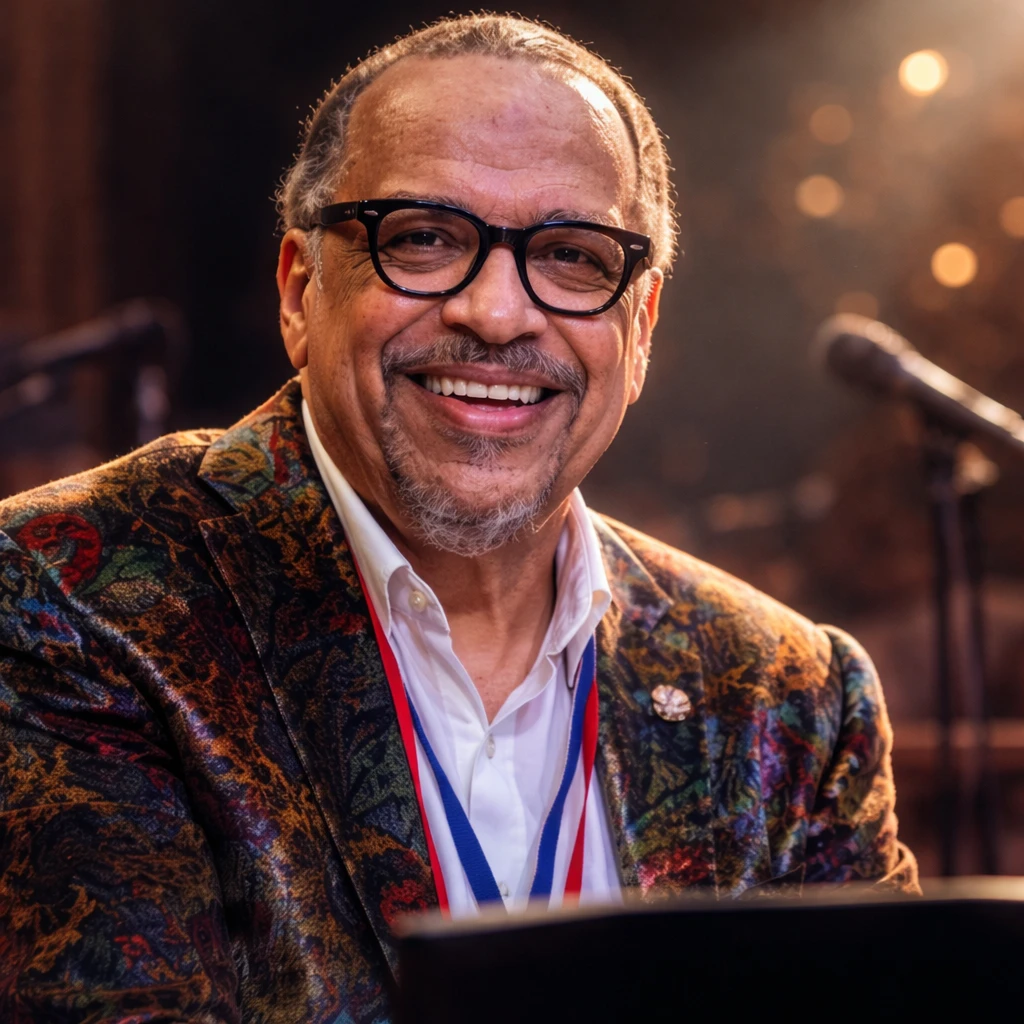

Richard Smallwood, a gospel music luminary and eight-time Grammy Award nominee, died at the age of 77. His passing was confirmed by his representative, Bill Carpenter, who reported that Smallwood succumbed on a Tuesday at a rehabilitation and nursing facility in Sandy Spring, Maryland, following complications related to kidney failure.
Smallwood had battled health issues for an extended period, but his dedication to music provided him with a source of strength and resilience throughout those years, according to Carpenter. He emphasized in an interview that Smallwood's commitment to his artistry was a central motivation for his endurance.
"Richard's devotion to creating music that connects deeply with listeners was what inspired him to continue living and breathing despite his health struggles," Carpenter remarked. "His music was not only an expression but also a reason for perseverance."
Smallwood's influential songwriting has been embraced and performed by a spectrum of eminent artists across the music industry, including Whitney Houston, Stevie Wonder, Destiny's Child, and Boyz II Men. Notably, Whitney Houston introduced his song "I Love the Lord" to broader audiences through its feature in the 1996 film "The Preacher's Wife," as documented by the Gospel Music Hall of Fame.
Following Smallwood's death, singer and songwriter Chaka Khan acknowledged his impact on her career and the wider gospel music landscape. In a Facebook post, Khan stated that Smallwood's compositions provided not just inspiration but also transformation, citing his exceptional skills as a pianist and a guiding figure who shaped numerous musical journeys, including her own.
Born on November 30, 1948, in Atlanta, Smallwood demonstrated an early aptitude for music, playing the piano by ear at the age of five. He began formal piano lessons by seven and had established his own gospel ensemble by eleven, reflecting both prodigious talent and early leadership within gospel music circles.
Raised predominantly in Washington, D.C., Smallwood was guided by his mother, Mabel, and his stepfather, the Reverend Chester Lee "C.L." Smallwood, who served as pastor at Union Temple Baptist Church. Smallwood's formative years were nurtured in an environment where music and spirituality intertwined deeply.
Educationally, Smallwood was a trailblazer in gospel music at Howard University, where he earned a music degree with cum laude honors. He was an active pioneer in the university's gospel scene, participating in its inaugural gospel group, the Celestials, and playing a foundational role in establishing Howard's gospel choir. Post-graduation, he contributed academically as a music instructor at the University of Maryland.
In 1977, Smallwood founded the Richard Smallwood Singers, through which he blended contemporary elements with traditional gospel music. Later, he initiated the group Vision, a substantial choir responsible for producing some of his biggest hits, including the celebrated anthem "Total Praise."
"Total Praise" transcended denominational and cultural divides, becoming a modern hymn cherished across diverse Christian communities. Carpenter highlighted how the song's presence is ubiquitous in varied worship settings, marking it as a seminal work that would secure Smallwood's place in the modern hymnody tradition even if it were his sole composition.
Stevie Wonder notably performed "Total Praise" at the funeral service for Dexter Scott King, son of Martin Luther King Jr., at Ebenezer Baptist Church in Atlanta in early 2024, underscoring the song's profound cultural and spiritual relevance.
In recent years, Smallwood's ability to actively record was hindered due to mild dementia and other health challenges, with members of his Vision choir providing support and care. Nevertheless, his musical legacy remains intact and continues to influence and inspire.
Reflecting on Smallwood's impact, Chaka Khan expressed confidence that his influence would endure through the souls and notes he touched over his lifetime, expressing a hopeful sentiment about reuniting in the afterlife through music.