
Republican officials in Washington are increasingly uneasy about the political consequences of aggressive immigration enforcement actions just months before the midterm elections, following two fatal incidents involving federal agents in Minneapolis. The deaths of Alex Pretti and Renee Good, both 37 years old, during federal immigration operations have intensified scrutiny and criticism directed at the Trump administration’s policies.
Despite the general reluctance among GOP members to openly break with President Donald Trump, the level of dissatisfaction is rising quietly within party ranks. These concerns culminate as Congress faces a critical deadline at the end of the week to approve government funding, including budget allocations for the Department of Homeland Security (DHS). Democrats have pledged to block funding measures without substantial amendments addressing enforcement tactics, while Republicans search for a clear, unified response.
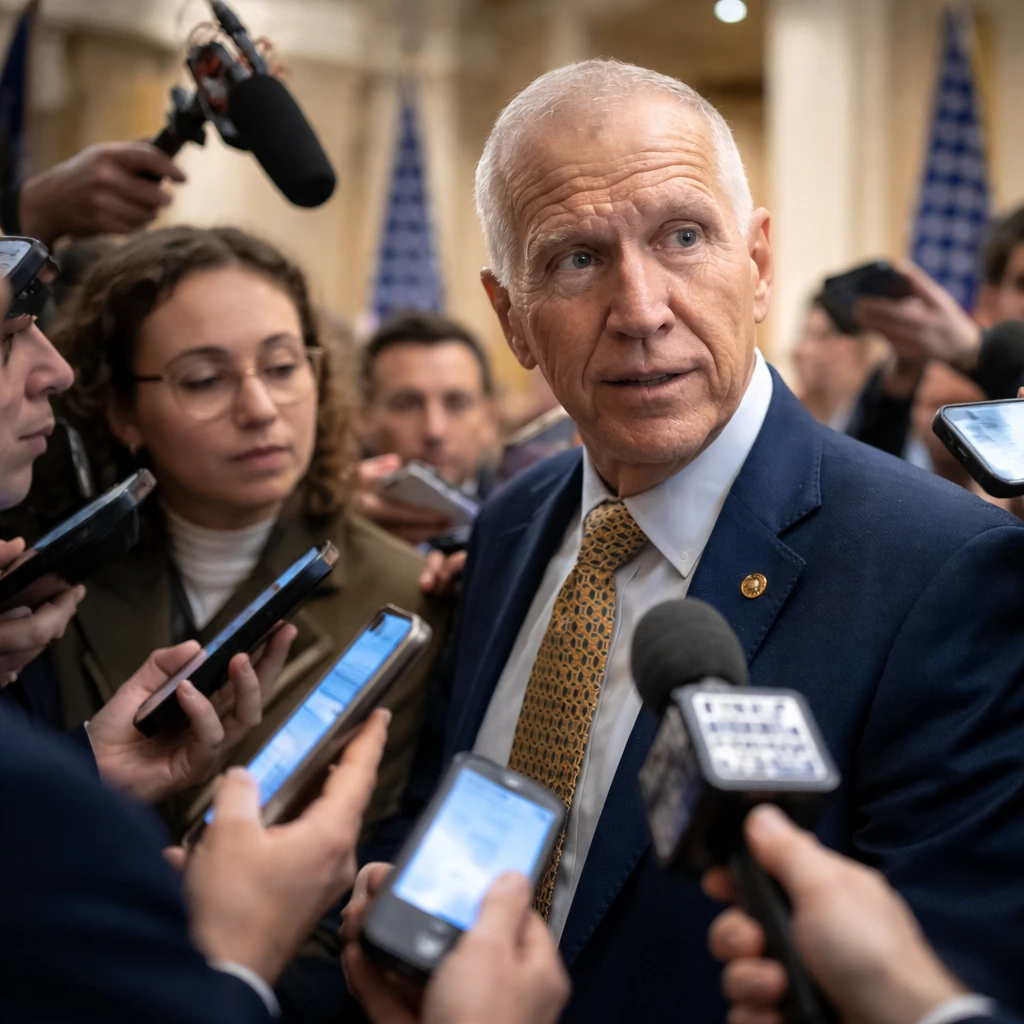
Senator Thom Tillis, a North Carolina Republican who is stepping down at the end of his term, openly acknowledged the risks, emphasizing the need to regain public trust on immigration issues. "This is about regaining the trust of the American people on this issue, and I really think we're losing on an issue that we should be winning on," Tillis stated at a press briefing on Capitol Hill.
This concern over the political impact of enforcement operations is shared by campaign strategists. Jason Roe, a Republican strategist active in midterm campaigns, described the administration as having lost control over the immigration narrative. "We can't get out from underneath what's happening in Minneapolis," he remarked, pointing out that Democratic voter enthusiasm is notably high, while Republican mobilization appears comparatively subdued.
Traditionally, the party occupying the White House faces setbacks in Congress during midterms. The Republican Party’s recent experiences in state elections, such as in New Jersey and Virginia without Trump on the ballot, have mirrored this trend. Roe indicated that Democrats are particularly energized to vote due to current issues, including immigration enforcement controversies, whereas Republican enthusiasm remains lacking according to available polling data.
Attention has also turned toward Homeland Security Secretary Kristi Noem, who has become a central figure of frustration for Republicans uncomfortable with the implementation of Trump’s immigration policies but hesitant to directly challenge the president. Senator Lisa Murkowski suggested Noem should be held accountable and potentially step down in response to the confusion and loss of life resulting from the enforcement operations. “We need clarity and accountability for the chaos and tragedy we have seen,” Murkowski asserted.
President Trump nonetheless publicly supported Noem, asserting she was “doing a very good job” and affirming her continued role in the administration. Meanwhile, Democrats have called for her impeachment, though they lack sufficient congressional influence to enact such measures given the Republican majority in the Senate.
Immigration enforcement has been among Trump’s defining campaign issues, with Republican voters generally supporting his stringent approach. According to a January Associated Press-NORC Center survey, Republicans maintain strong backing for Trump’s immigration policies. However, Senator Tillis warned that recent developments threaten to overshadow the administration’s messages on border security. "He won on a strong message about immigration, and now nobody's talking about that. They're not talking about securing the border. They're talking about the incompetence of the leader of Homeland Security," Tillis observed.
The impact of enforcement operations extends to key electoral battlegrounds, including Maine, where Senator Susan Collins seeks reelection. Collins has requested that the administration delay immigration enforcement escalations in her state and in Minnesota, recognizing the political sensitivities involved.
Congressional Republicans are using the impending January 31 deadline for government appropriations as leverage to press for modifications in enforcement strategy. Although President Trump has approved six out of twelve spending bills for the fiscal year, the remaining bills—among them DHS funding—require Senate approval. An increasing number of Senate Republicans have expressed willingness to separate Homeland Security funding from the broader budget bill to allow focused debate and potential changes. Others, such as first-term Senator Ted Budd of North Carolina, have couched their support for enforcement within hopes for more organized and selective operations, particularly after personnel changes in Minnesota.
There has been an evident shift in tone within the White House following Pretti’s death. In an interview with ABC News, President Trump expressed optimism that the appointment of border czar Tom Homan, who recently replaced Border Patrol Chief Gregory Bovino as the administration’s lead on-site official, would bring about calmer, less confrontational enforcement actions in Minneapolis.
Nonetheless, Trump responded sharply on social media to Minneapolis Mayor Jacob Frey’s public call for Homeland Security to halt its operations swiftly, warning the mayor that he was “PLAYING WITH FIRE.” This exchange illustrates the continuing tension between federal enforcement priorities and local officials’ concerns over public safety and political implications.