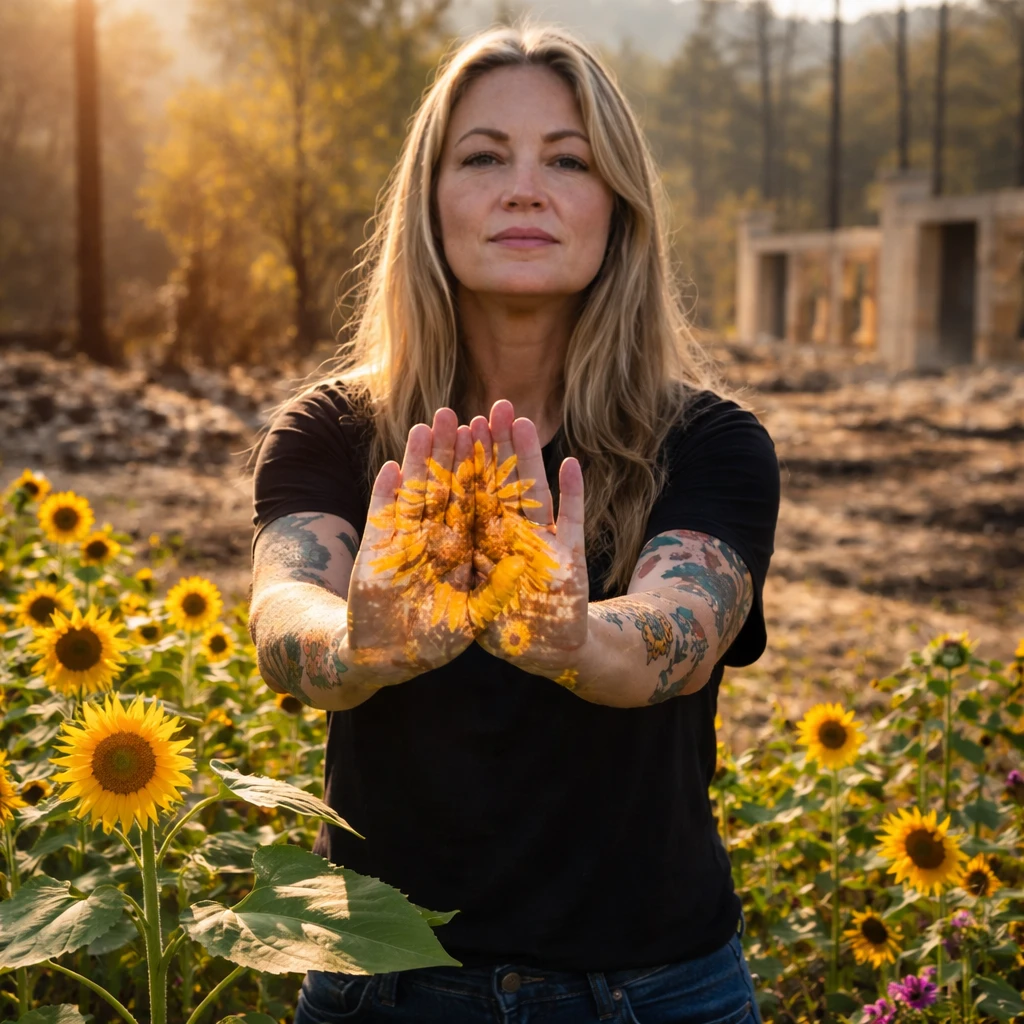

ALTADENA, Calif. - In the wake of last January's destructive Eaton Fire that ravaged parts of Los Angeles, a registered nurse and mother of three, Missi Dowd-Figueroa, has embarked on a personal journey to revive the scorched land where her 1898 farm-style home once stood. The fire, which claimed numerous homes and displaced thousands, wiped out entire neighborhoods, including key community services such as local pharmacies and dental offices.
Dowd-Figueroa, who had lived in her family's four-bedroom, three-bathroom house for a decade, describes her suburb as fundamentally changed yet still retaining a semblance of its identity despite the absence of homes. For many residents, the impact of the fire continues to resonate deeply, with reconstruction efforts still wrestled with numerous obstacles.
Initially engulfed in grief, she frequently visited the bare lot where her home had been, often overwhelmed by emotion upon confronting the void. The loss transcended physical property; precious family items, including her late grandmother's artwork and her father's ashes, were destroyed in the blaze. Searches through the ashes for her father's urn proved fruitless, compounding her sorrow. The only family photographs spared were digitized on her iPad, underscoring the irreplaceable nature of what was lost.
With the debris cleared, Dowd-Figueroa chose to begin a process of healing by sowing seeds of sunflowers, zinnias, cosmos, and other flowers on the vacant 2,000-square-foot plot. Beyond their beauty, sunflowers possess properties that can absorb heavy metals such as cadmium, potential residual contaminants from wildfires, providing an ecological benefit to the soil. She prudently removed the plants after they completed their growth cycle to prevent seed dispersal.
Over the ensuing months, the garden blossomed with roughly 500 vibrant flowers, including shades of orange, red, and yellow, creating a vivid tapestry across the formerly barren land. This living tribute not only served as a personal source of renewal but also encouraged the return of wildlife, including butterflies and various insects, which symbolized a gradual ecological recovery.
Parallel to this regenerative effort, Dowd-Figueroa and her husband initiated the construction of a new home on the lot, financed in part through approximately $100,000 raised on a crowdfunding platform. By late September, most of the original sunflowers had completed their life cycle. The anticipation surrounding the new dwelling's completion, scheduled for mid-June, has significantly bolstered her spirits, offsetting previous days filled with profound sadness.
This personal story exemplifies the broader challenges faced by wildfire survivors in the Los Angeles region, where emotional wounds and physical reconstruction intersect. It highlights the complementary roles of community support, environmental stewardship, and personal resilience in overcoming disaster.