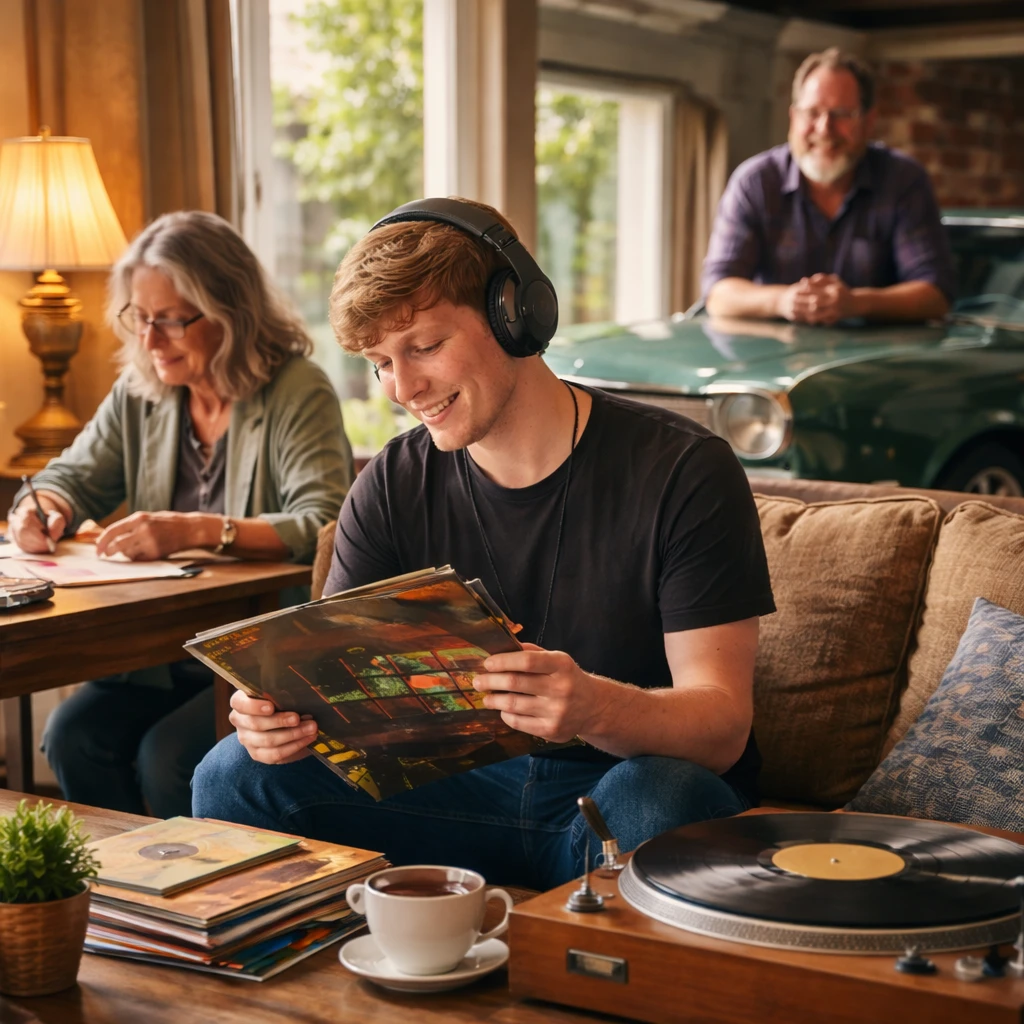

As pervasive digital technologies continue to transform communication, transportation, and entertainment, a parallel trend emerges wherein individuals deliberately seek analog experiences to counterbalance the intangible, fast-paced nature of online life. This phenomenon spans generational lines, uniting those born before widespread internet use with younger generations raised amid digital ubiquity.
Martin Bispels, 57, who once held an executive position at QVC before founding Retroactv, a business catering to rock music enthusiasts of the 1960s and 1970s, observes that nostalgia for the past offers psychological solace. "The past gives comfort. The past is knowable," Bispels states, noting that personal memories enable people to define their own versions of prior eras.
Interestingly, this analog pull also captivates millennials and Generation Z, groups often characterized by their deep immersion in digital environments. Pamela Paul, author of "100 Things We’ve Lost To The Internet," explains that younger people feel a wistful yearning for more concrete and intimate experiences that transcend fleeting digital interactions. This desire drives them to revive physical, low-technology activities that were commonplace for older generations.
Preserving Traditional Correspondence
Handwritten cards, a form of personal communication centuries old, face the threat of obsolescence given the convenience and low cost of digital messaging. The price of a first-class postal stamp in the United States has risen significantly, from 33 to 78 cents over 25 years, highlighting the economic incentives to shift to digital alternatives.
Nevertheless, groups like "Random Acts of Cardness," initiated by Megan Evans a decade ago when she was 21, exemplify efforts to maintain these tactile connections in a fragmented digital world. Evans, residing in Wickliff, Ohio, emphasizes the intentionality expressed by sending physical cards, contrasting it with the impersonal nature of brief text messages.
The community has grown to over 15,000 members including individuals such as Billy-Jo Dieter from Ellsworth, Maine. Dieter sends approximately 100 cards monthly for various occasions, describing the practice as "a dying art" aimed at creating joy through the deliberate act of putting pen to paper.
Manual Transmission’s Enduring Appeal
While advanced technology propels cars toward autonomous driving, manual transmission vehicles, once common, have become increasingly rare. The Environmental Protection Agency reports that cars with manual gear shifts currently represent less than 1% of new U.S. car sales, a steep drop from around 35% in 1980.
Still, enthusiasts like San Jose State University students and brothers Prabh and Divjeev Sohi maintain their preference for stick-shift vehicles, a passion rooted in childhood experiences with video games and exposure to manual cars driven by family members. Despite initial difficulties, such as stalling and frustration, they value the elevated focus and connection to the driving experience that manuals demand.
Divjeev reflects that manual driving promotes full presence and understanding of the vehicle's operation, an engagement lost amid automated alternatives.
Vinyl Records: Analog Music’s Revival
Vinyl albums once appeared doomed by the rise of compact discs in the 1980s, with sales bottoming out at 900,000 units in 2006 compared to a peak of 344 million in 1977, as recorded by the Recording Industry Association of America. Contrary to expectations, vinyl has experienced a vibrant resurgence, with approximately 43 million units sold annually in the last two years, despite the dominance of streaming platforms.
This revival is driven not only by baby boomers expanding their collections, but also by younger listeners drawn to vinyl’s rich audio quality and the distinct experience it offers. Twenty-four-year-old Carson Bispels, son of Martin, expresses feeling a direct, almost personal connection to artists through vinyl records. His collection has grown from an initial ten inherited albums to about 100, a hobby he plans to continue cultivating.
Carson appreciates the tactile and social aspects of vinyl collecting, including the ritual of browsing record stores and interacting with fellow enthusiasts, which contrasts with the instantaneous, often solitary nature of digital music consumption.
According to Pamela Paul, the revival of vinyl may signify a broader cultural return to more human-centered, tangible experiences, potentially warranting further exploration in her future writings.