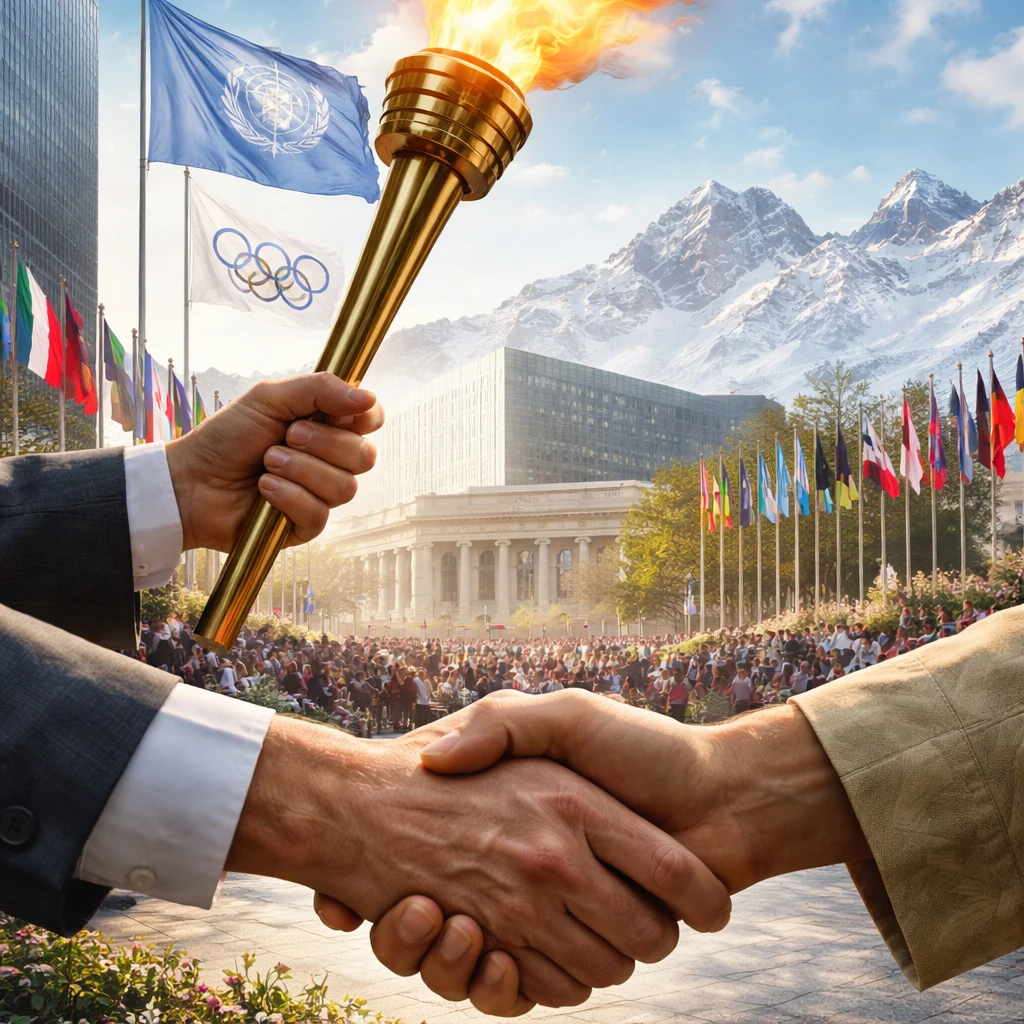
ATHENS, Greece — In a call echoed from the annals of ancient history, organizers of the upcoming Milan Cortina Winter Olympics are urging the cessation of global conflicts in a bid to honor the Olympic tradition of peace. This appeal comes as the United Nations aligns with the Olympic spirit, advocating for a seven-week moratorium on warfare coinciding with the Games, which are scheduled to start one week from now.
Originating from practices in ancient Greece, the Olympic truce once ensured that warring city-states would suspend hostilities, securing safe passage for athletes and spectators to the sacred competitions in Olympia. This tradition, after a hiatus following the revival of the modern Olympics in 1896, was reinstated in 1994 during the Winter Games, a period marked by conflict in the former Yugoslavia. The current truce proposal spans from February 6, a week prior to the Winter Olympics’ opening, through a week subsequent to the March 15 Paralympics closing.
Despite the symbolic resonance of the Olympic truce, history indicates its limited practical effect. For instance, ongoing fighting in Ukraine and other regions as of this week highlights the challenge in enforcing such a global ceasefire, a phenomenon noted in the truce’s previous record of noncompliance.
The International Olympic Truce Center’s director, Constantinos Filis, emphasizes that the truce remains a vital moral benchmark amid escalating global disorder and political fragmentation. He reflects on the significant, although limited, successes of past truces, such as a one-day pause in hostilities in Sarajevo during the 1994 Winter Games that allowed humanitarian aid deliveries. Similarly, the 2000 Sydney Olympics witnessed North and South Korea’s joint participation in the opening ceremony, symbolizing the unifying power of sport.
Filis underscores the ongoing relevance of ceasefire initiatives, particularly as unprovoked aggression threatens international cooperation. "Even when not fully realized, the message resonates globally," he said. Concurrently, academic data from Uppsala University’s Department of Peace and Conflict Research reveal a troubling rise in armed conflicts, with 2024 marking the highest recorded number of 61 hostilities in a single year, a figure projected to grow in 2025. This escalation coincides with a global geopolitical environment characterized by diminished multilateral engagement and increased regional provocations.
Moreover, symbolic indicators such as the "Doomsday Clock," maintained by members of the Bulletin of the Atomic Scientists, have moved closer to midnight, reflecting heightened existential threats to humanity.
The broader international community consistently endorses the Olympic truce through United Nations resolutions, although adherence has been inconsistent. Notably, Russia’s 2022 invasion of Ukraine commenced during a designated truce period, underscoring the limitations of these pledges.
United Nations Secretary-General António Guterres has highlighted the Olympics as a platform to embody peace, respect for international law, and global cooperation. Kirsty Coventry, a decorated Olympic swimmer and current International Olympic Committee president, spoke to the General Assembly, expressing her conviction that sport transcends division and fosters hope in dark times. She framed the Olympic Games as a rare arena where individuals convene as compatriots rather than opponents, reinforcing the importance of the truce.
Despite repeated challenges in ceasing global hostilities, the Olympic truce persists as an aspirational signpost. Its recurring invocation amid the unfolding crisis in Ukraine and numerous other conflicts calls attention to enduring aspirations for peace in a fractured world.
Key Points
- The Olympic Truce, with roots in ancient Greece, is once again promoted for the 2026 Winter Games, urging a seven-week global cessation of hostilities.
- Despite its symbolic importance, the truce has historically struggled to affect actual conflict cessation, as seen in ongoing wars including the conflict in Ukraine.
- The increasing number of global conflicts, documented by peace research institutions, accentuates the challenges faced by international peace initiatives, highlighting shifts in geopolitical dynamics and multilateral cooperation.
Risks and Uncertainties
- Repeated breaches of truce agreements, such as Russia’s invasion of Ukraine during a designated ceasefire period, showcase the risk of noncompliance undermining international peace efforts.
- The continued rise in the number of active armed conflicts threatens global stability, impacting sectors related to defense, humanitarian aid, and international relations.
- The geopolitical fragmentation and reduced multilateral engagement could complicate enforcement and realization of ceasefire initiatives, affecting global markets sensitive to geopolitical risks.
Disclosure
This article provides a cultural and geopolitical perspective on the Olympic Truce initiative and does not constitute financial advice or investment recommendations.
Tags: Olympics, Peace, Conflict, United Nations, Geopolitics