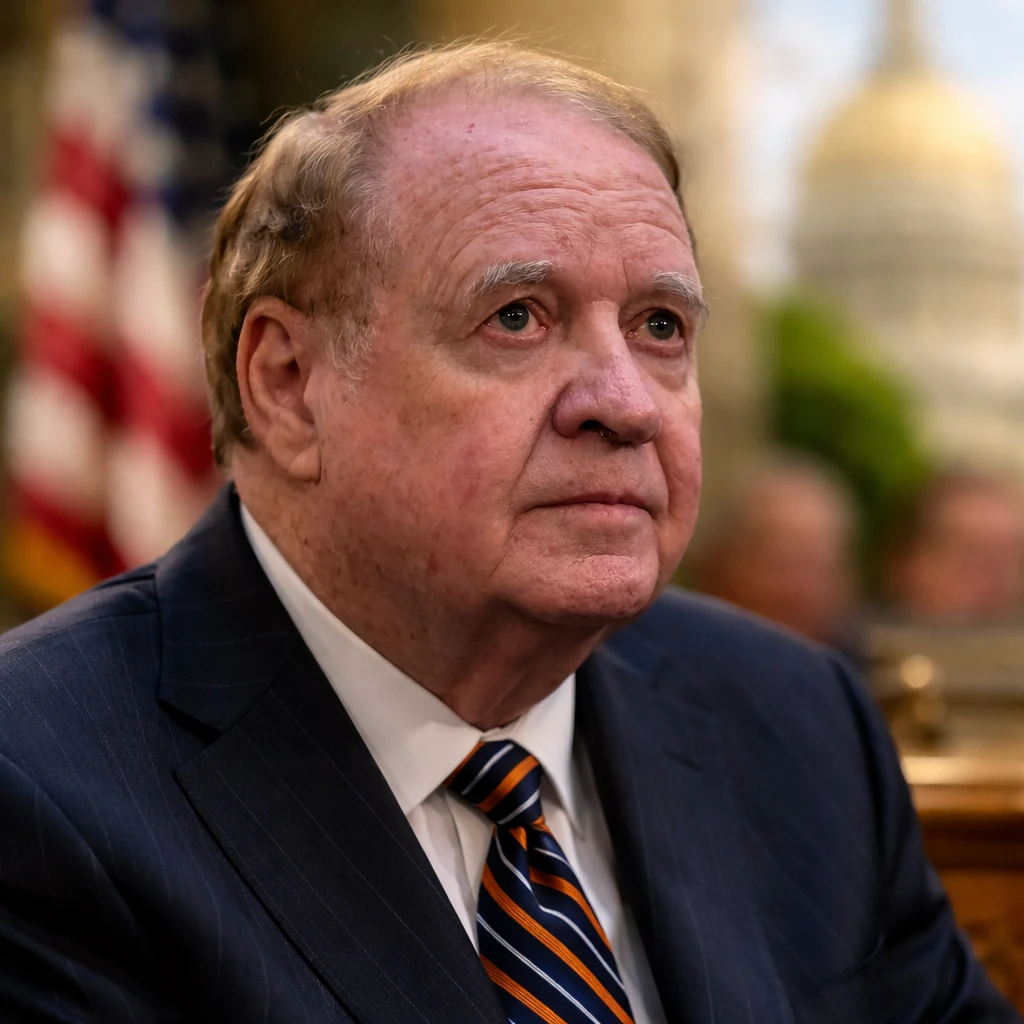

Richard "Dick" Codey, a prominent figure in New Jersey politics and the state’s longest-serving legislator, has died at 79. His wife, Mary Jo Codey, confirmed his passing, noting that he died peacefully at home with family after a short illness. The family released a statement on his official Facebook page expressing their profound loss and acknowledging Codey’s profound impact on the state and those who knew him personally.
Throughout his career, Codey was widely recognized for his approachable and vigorous personality. He was a committed advocate for mental health, tirelessly working to improve awareness and the delivery of care. As a Democratic leader, he championed significant public health initiatives including legislation aimed at prohibiting smoking in indoor public spaces and securing increased funding for stem cell research.
Born into a family operating a funeral home in northern New Jersey, Codey began his political journey in 1974 when elected to the New Jersey General Assembly. He served there until 1982, after which he was elected to the state Senate, where he would remain a fixture for decades. His peers elected him Senate president, a position he held from 2002 through 2010.
Codey first stepped into the role of acting governor in 2002 following Christine Todd Whitman’s resignation to take a federal post. He resumed the governorship from late 2004 through 2005 after Jim McGreevey resigned. Under New Jersey law at the time, the Senate president assumed the governor's duties whenever the office was vacated, serving until the next gubernatorial election.
Despite widespread respect reflected in public opinion polls and considering a gubernatorial bid in 2005, Codey deferred to party preference, which favored Jon Corzine, a candidate with significant financial resources who later won the governor's office. When Corzine was temporarily incapacitated due to serious injuries from a car accident in April 2007, Codey once again acted as governor for nearly a month until Corzine could resume office.
After his tenure as acting governor concluded, Codey returned to his Senate role and authored a memoir recounting his extensive public service career and personal life insights. His family noted that Codey lived with humility and compassion and was equally comfortable in conversation with presidents or strangers in everyday settings.
Codey and his wife openly discussed her battles with postpartum depression, an openness that occasionally stirred controversy. In early 2005, a radio host made disparaging jokes about Mary Jo's mental health struggles, which led to a confrontation with Codey. While the host alleged that Codey threatened him, Codey denied these claims and defended his stance to protect his family and support his wife's advocacy work. Mary Jo Codey emphasized that her husband supported her commitment to raising awareness on this issue irrespective of political consequences.