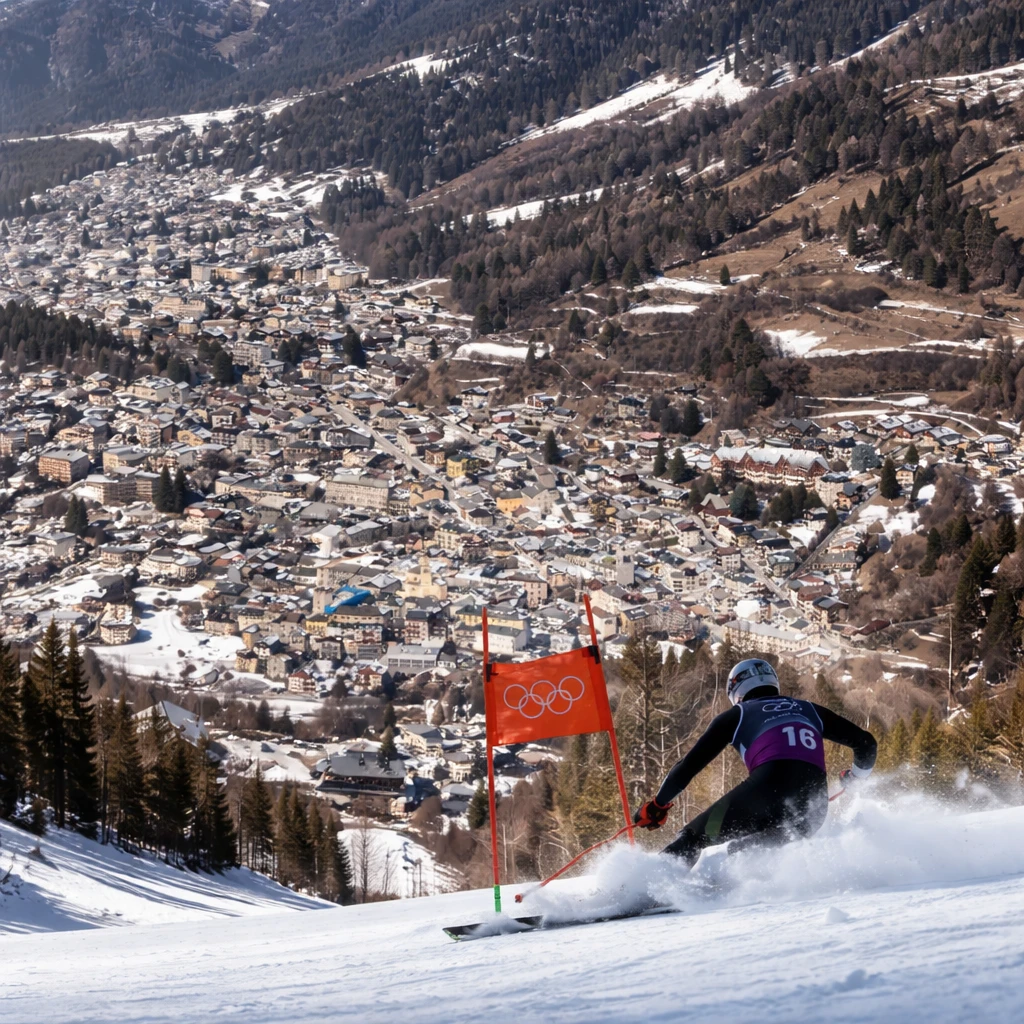

Cortina d’Ampezzo, Italy, is witnessing an unusual twist during the 2026 Winter Olympics as attendees find themselves shedding layers in conditions uncharacteristic of traditional winter sporting events. Spectators, who arrived expecting frigid weather and heavy snow, are instead encountering temperatures that climb into the mid-30s and 40s Fahrenheit (around 4-8 degrees Celsius), reflecting a broader trend of global warming impacting winter climates.
Jay Tucker, a supporter from Virginia, who prepared with multiple layers and warming accessories, found little need for gloves or bundled clothing as rooftops shed their snow and the afternoon sun warmed the streets. Meteorologist Shel Winkley of Climate Central explains that such warmth in February has become increasingly likely, estimating that chances have tripled due to ongoing climate change. He notes a 6.4-degree Fahrenheit (3.6-degree Celsius) increase in February temperatures in Cortina over the last seven decades.
Despite the initial wintery snow cover at the start of the Games, temperatures continued to rise, exacerbated by radiant sunlight. This phenomenon illustrates the difficulties in maintaining consistent winter conditions amid a warming planet—a reality that the International Olympic Committee has acknowledged by proposing to start future Winter Games earlier, shifting from February to January to better align with colder periods.
Complicating matters, the 2026 Olympics are spread across multiple locations, including Cortina, Milan, Bormio, and Livigno. These venues are situated close geographically but experience markedly different weather due to mountainous terrain and elevation differences. The organizing committee collaborates with a coalition of regional and provincial weather agencies, deploying sensors at critical points like ski jumping ramps, alpine tracks, and biathlon ranges. When automated data collection is insufficient, designated experts, termed 'scientists of the snow,' manually gather essential environmental observations.
The primary objective is to secure favorable race-day conditions: clear skies, gentle winds, and consistently low temperatures to maintain visibility and preserve snow integrity. Yet, the reality in the early phases of the Games has been warmer than anticipated. Karli Poliziani, an American resident of Milan visiting Cortina, remarked on the unexpectedly mild climate as she and her father pared down their winter attire to lighter clothing more suited for spring than winter, forecasting further instances of above-average temperatures during the competition period.
Weather influences every facet of winter sports competition, impacting participant safety and event fairness. According to Filippo Bazzanella, head of sport services and planning for the organizing committee, elevated temperatures can undermine the snow layer quality on alpine skiing routes and degrade ice conditions in indoor arenas and sliding tracks. Two critical weather-related factors that can disrupt competition schedules are visibility and wind. Strong or shifting winds can jeopardize safety or create equitable challenges, notably in disciplines like biathlon, where precision shooting is integral. Athletes are adapting to these uncertainties, with US alpine skier Jackie Wiles acknowledging the challenges posed by variable weather and emphasizing mental resilience to contend with unpredictable conditions.
These developments at the Winter Olympics underscore the broader implications of climate change for winter sports, necessitating enhanced environmental monitoring, flexible scheduling, and strategic adaptation to evolving climatic realities.