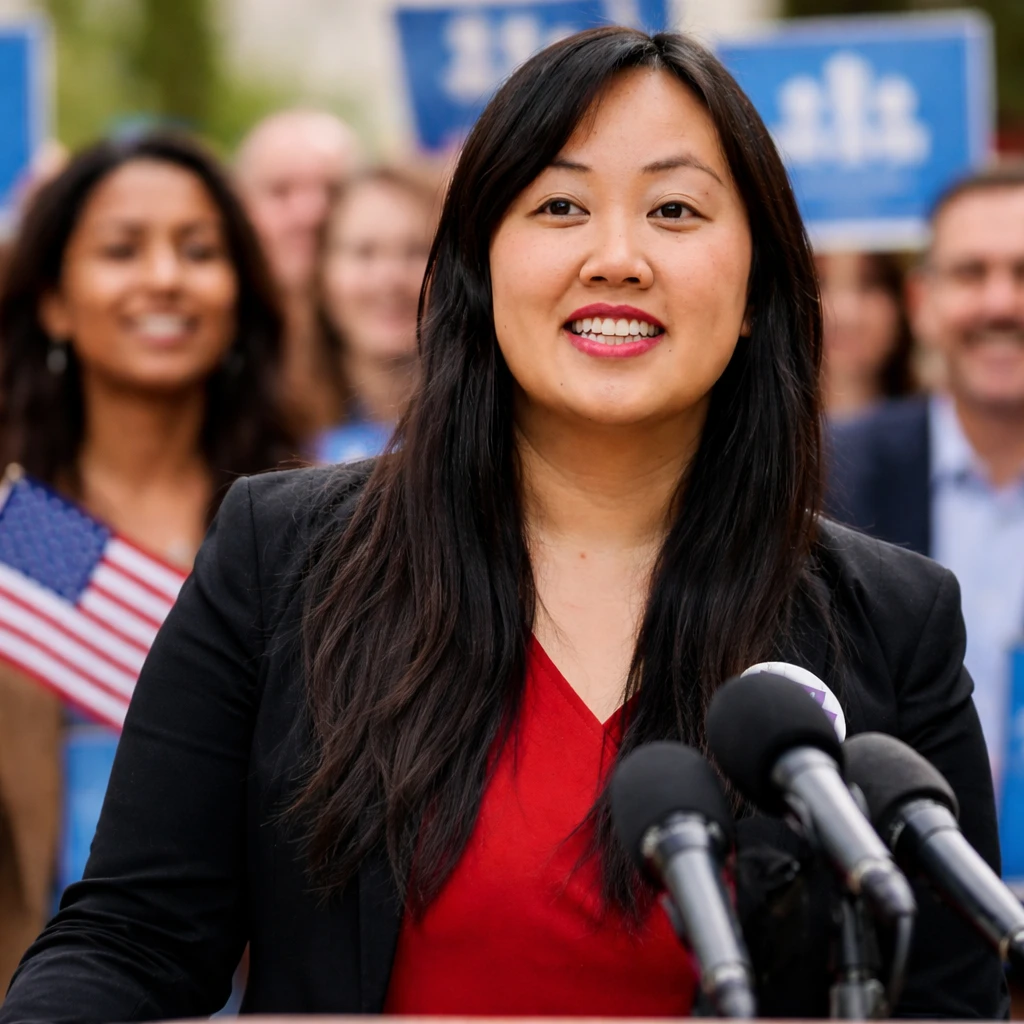

In Sacramento, California, Mai Vang, currently a member of the Sacramento City Council, is mounting a significant primary challenge against Doris Matsui, a long-serving representative aged 81 who has held office for over two decades. Vang, 40 years old and rooted in local government and academic backgrounds in biology and sociology, represents a younger cohort within the Democratic Party eager to introduce new leadership. She articulates a sense of urgency, stating she is not waiting for permission to act on behalf of communities she believes are under threat, underscoring a focus on the everyday struggles of working families.
This contest in Sacramento exemplifies a broader national phenomenon where younger Democrats are aiming to displace seasoned incumbents whom they perceive as insufficiently combative against Republican opposition, particularly former President Donald Trump. The sentiment driving these challenges extends from frustration with entrenched leadership's responses to contemporary political demands.
During President Trump's initial term, grassroots Democratic efforts mainly targeted him. However, with President Joe Biden, who is 81, showing reluctance to step aside in the approaching 2024 election, a shift has occurred among activists who now view veteran party members as part of the problem. The elections have brought to light internal tensions about the party's direction and generational representation.
At a recent gathering near downtown Sacramento, Vang engaged with approximately two dozen mostly young professionals urging transformative policies, including the dismantling of U.S. Immigration and Customs Enforcement (ICE). Attendees like Abbie Morrissey, from the University of California, Davis, expressed the need for vibrant and energetic leaders who resonate with younger populations.
Conversely, Doris Matsui, with deep personal and historical ties to civil rights struggles and a history of directing substantial funding to her district, defended her record against criticism. She emphasized effectiveness over mere tenure, pointing to her opposition to Trump's immigration policies as evidence of her commitment to her constituents.
Financially, Matsui holds a significant advantage, concluding 2025 with approximately $785,000 in campaign funds compared to Vang's reported $200,000.
In Mississippi, a similar narrative unfolds as Evan Turnage, age 33 and an antitrust lawyer with experience working with prominent Senate Democrats, challenges Rep. Bennie Thompson, 78, a venerable civil rights figure with a long congressional tenure. Turnage emphasizes economic rights alongside civil rights, inspired by the economic populism championed by Senator Elizabeth Warren. He argues the necessity for representatives who grasp modern tools like social media and artificial intelligence to enact transformational change.
Turnage faces financial constraints, having reported only $54,000 in campaign funds at the end of 2025, starkly contrasted with Thompson's $1.7 million. Thompson, who previously chaired the House committee investigating the January 6 Capitol attack, relies on his extensive record and affirming voter trust in his tenure.
Meanwhile, generational transition is also occurring due to retirements among party stalwarts. Former House Speaker Nancy Pelosi (85) and Maryland's Steny Hoyer (86), along with Representatives Jerry Nadler (78) and Jan Schakowsky (81), are stepping down after decades of service. These retirements open paths for newer candidates in future elections.
However, several veterans remain intent on maintaining their seats. Tennessee Representative Steve Cohen, 76, seeking an 11th term, faces challenge from Justin Pearson, 31, a former intern for Cohen, notable for his advocacy in gun control and leadership in Tennessee’s state legislature. Pearson criticizes longstanding incumbents, including Biden and Senator Dianne Feinstein, for overstaying and not serving contemporary community interests adequately.
Cohen compares tenure to effectiveness, highlighting significant achievements post-70 and branding himself as a longstanding progressive force. Financially, Cohen begins 2026 with $1.8 million against Pearson's $350,000.
In Connecticut’s 1st Congressional District, Representative John Larson (77) confronts challenges from younger Democrats, including former Hartford Mayor Luke Bronin (46). Larson, in office since 1999, publicly disclosed health issues related to a seizure event but asserts his fitness for continued service. Bronin criticizes the party’s reticence toward generational change, contending that new leadership is critical to address national crises. Both candidates have amassed substantial campaign resources, with Bronin slightly trailing Larson financially.
Community voices express mixed opinions, acknowledging Larson's accomplishments yet advocating for infusion of new ideas, suggesting a readiness among constituents for change at the congressional level. Larson counters by emphasizing his progressive credentials and experiential advantages over opponents whom he characterizes as corporate-funded.