In the context of nearly four years of conflict in Ukraine, Russia is actively seeking new combatants without instituting a comprehensive military draft. The government is using a variety of incentives to replenish its armed forces while avoiding widespread mobilization, which remains politically sensitive.
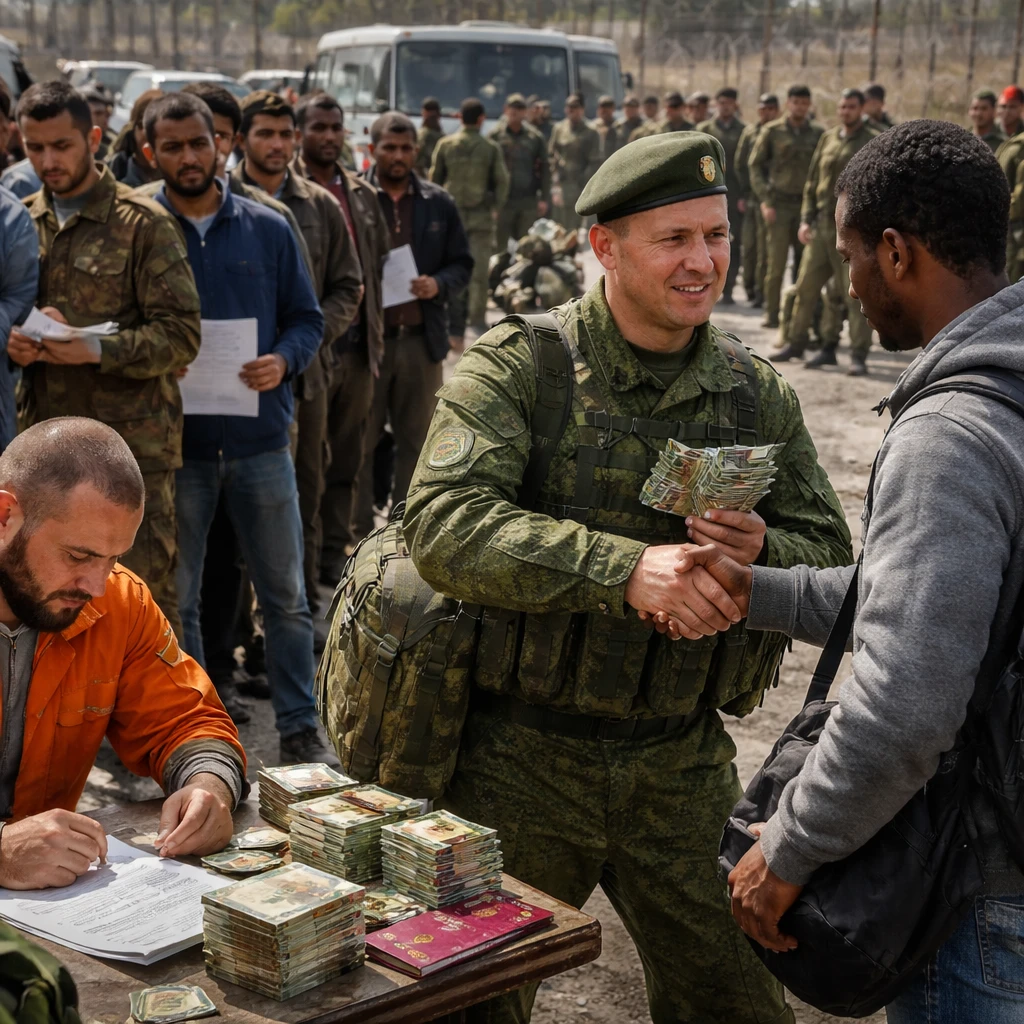
For many Russian citizens earning average wages, military service offers a financial uplift, sometimes substantially improving their income. Similarly, individuals incarcerated in prisons or detention centers view military contracts as pathways toward earlier release or escape from harsh conditions. Immigrants and foreign nationals are also targeted, enticed by the prospect of easier acquisition of Russian citizenship in exchange for their service.
Following the mutual defense agreement signed by North Korea and Russia in 2024, thousands of North Korean soldiers were dispatched to the strategic Kursk region to bolster defenses against Ukrainian advances. Additionally, men from South Asian countries such as India, Nepal, and Bangladesh report being misled regarding military enlistment, often recruited under the promise of civilian employment and subsequently compelled to serve. Similar reports have surfaced from Kenya, South Africa, and Iraq, indicating a multinational dimension to recruitment challenges.
Russian authorities proclaim that voluntary enlistment forms the backbone of troop numbers, with President Vladimir Putin estimating approximately 700,000 personnel actively engaged in Ukraine as of recent statements. Independent verification of these figures remains elusive, and casualty numbers are similarly opaque, with estimates from external intelligence suggesting significant Russian losses exceeding one million in wounded or killed.
Unlike Ukraine's early implementation of martial law and universal military service following the 2022 invasion, Russia prohibited a full-scale draft to avoid domestic unrest. Instead, a limited conscription of 300,000 men in 2022 led to significant emigration while the initiative was curtailed shortly thereafter. Legally, all military service contracts were modified to be effectively indefinite, restricting soldiers’ ability to terminate service prematurely.
Enlistment incentives are substantial. For example, in Russia's Khanty-Mansi Autonomous Okrug, bonuses for recruits can total up to $50,000—far exceeding the roughly $1,600 average monthly earnings in the region during the initial months of 2025. Benefits extend beyond cash, including tax exemptions and debt forgiveness. Despite these inducements, reports indicate that conscripts legally exempt from combat roles are pressured to sign contracts for deployment to Ukraine.
The recruitment scope extends into correctional facilities and detention centers, initially orchestrated by the late mercenary leader Yevgeny Prigozhin and adopted by Russia’s Defense Ministry. New legislation permits military enlistment of both convicted prisoners and those awaiting trial, effectively broadening the pool of recruits under legal sanction.
Foreign nationals are increasingly targeted both within Russia and beyond its borders. Accelerated citizenship is offered as part of recruitment packages, and migrant populations often face coercive tactics, including raids in their communities. In November, a presidential decree made military service compulsory for selective foreign applicants seeking residency.
Intelligence from various countries highlights recruitment challenges and abuses: Cuba has dismantled human trafficking rings implicated in funneling recruits to Russia; Nepal has requested repatriation of hundreds of its citizens recruited under questionable circumstances and barred future travel to Russia and Ukraine for work; India uncovered and suppressed a trafficking operation that coerced at least 35 nationals into combat roles; and Iraq reports thousands of its citizens enlisted, some voluntarily but others deceived.
Foreign recruits often face particularly hazardous conditions due to limited language proficiency, lack of prior military experience, and perceived disposability by commanders, as noted by activists assisting soldiers seeking to desert. The use of foreigners represents only a fraction of Russia’s military manpower but illustrates ongoing recruitment complexities.
Although external analysis underscores the evolving and creative nature of Russia’s enlistment methods, the economic toll of such expansive recruitment efforts is significant amid a slowing Russian economy. The financial burden of incentives, combined with the social and political effects of extended conflict, presents ongoing challenges for Russia’s military sustainability.