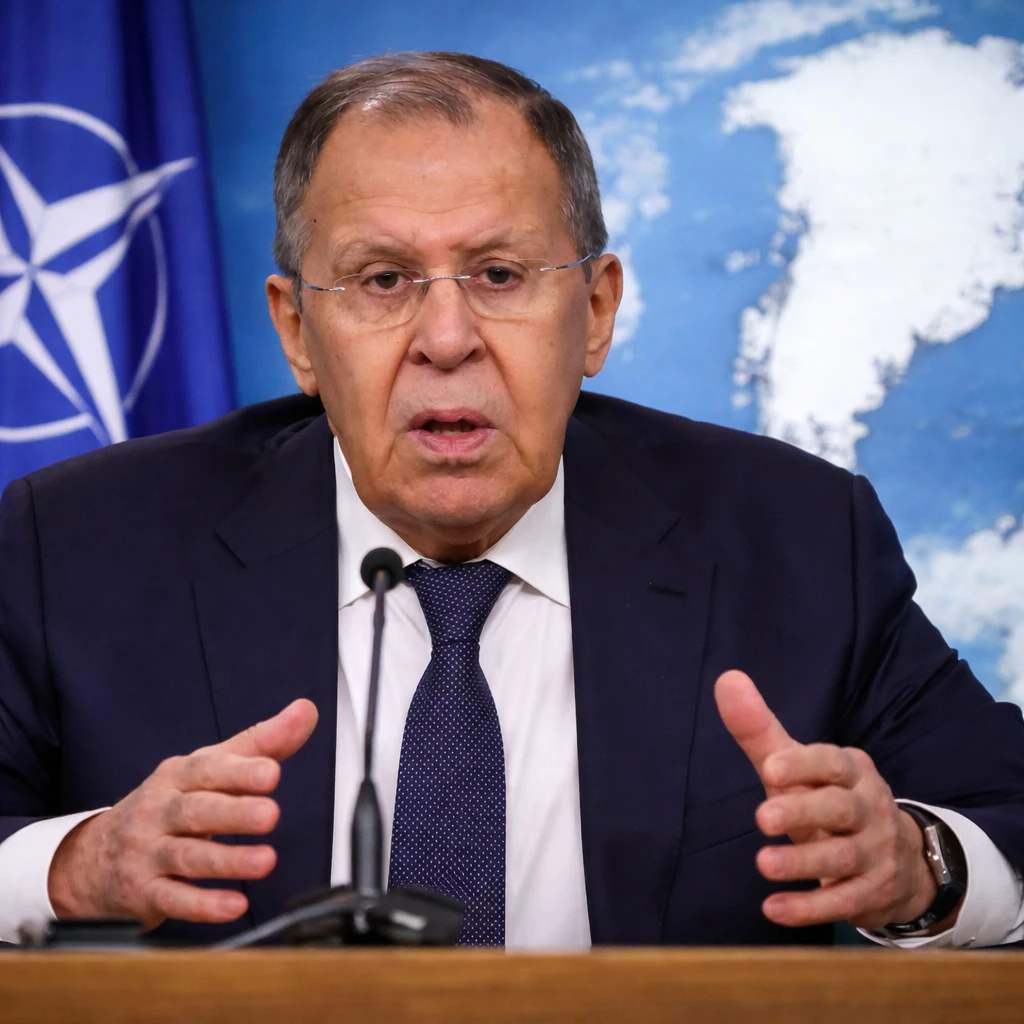
MOSCOW - Sergey Lavrov, Russia's Foreign Minister, expressed deep concerns about the future coherence of the NATO alliance, pointing to the American president's attempt to purchase Greenland as a symptom of an internal crisis. According to Lavrov, such developments threaten the conventional unity underpinning the military-political bloc, raising the prospect of conflict between NATO members themselves.
"It was previously difficult to contemplate such a scenario," Lavrov remarked during a press conference on Tuesday, emphasizing that the idea could lead to unprecedented tensions within the alliance. He criticized these actions for disrupting the so-called Western-led "rules-based global order," a concept Russia has long challenged, particularly since Moscow deployed troops to Ukraine nearly four years ago.
Lavrov sarcastically noted, "Now it is not the collective West that sets the rules but essentially a single one of its representatives," underscoring the destabilizing effects this has on Europe. He concluded that the Euro-Atlantic security model has lost its credibility.
Addressing the status of Greenland, Lavrov described Denmark's sovereignty over the island as a remnant of colonial history, asserting that Greenland does not naturally belong to Denmark. Concurrently, he vehemently rejected claims made by the U.S. president suggesting intentions from Russia and China to pose military threats to Greenland, clarifying, "We have no connection with that matter." Nevertheless, Moscow remains attentive to the geopolitical situation and reserves judgment until further developments unfold.
During the session outlining Moscow's foreign policy objectives, Lavrov gave restrained approval to the U.S. president's initiative to form a Peace Council. Initially aimed at resolving the Israel-Hamas conflict in Gaza, this body is evolving with ambitions to manage a broader spectrum of global crises, potentially competing with the United Nations.
The Kremlin is currently reviewing the invitation extended by Washington for Russia to join the council, awaiting more details. Lavrov characterized the initiative as indicative of the U.S. acknowledgment that fostering cooperation among nations is necessary even within its own foreign policy framework.
He praised U.S. efforts to negotiate an end to the conflict in Ukraine, portraying the U.S. as the sole Western country showing understanding toward Russian interests and advocating for solutions addressing the fundamental causes of the crisis.
Simultaneously, Lavrov criticized Ukraine's European allies for attempting to modify America’s proposals amidst Russia’s ongoing military offensives, noting that initial protections for Russian-speaking populations and the Ukrainian Orthodox Church linked to Moscow were excluded in the version supported by Kyiv and its partners. Moscow has rejected such changes, warning against allowing Kyiv to reorganize and rearm.
While not ruling out dialogue with European leaders, Lavrov suggested that entrenched hostility toward Russia makes agreements unlikely. He further censured the United States over the apprehension of Venezuelan leader Nicolás Maduro on narcotics charges, deeming it a stark example of military interventionism. Moscow is also awaiting the U.S. to release two Russian crew members from a seized tanker and condemned threats directed at Cuba and other Latin American nations.
Lavrov highlighted Washington’s refusal to extend the New START nuclear arms control treaty limits beyond its upcoming expiration, contrasting this decision negatively against previous Russian proposals.
Concluding, Russia remains prepared to engage in respectful dialogue with the U.S. Lavrov recalled discussions in Riyadh where State Secretary Marco Rubio emphasized collaboration where interests align to avoid conflict escalation, a philosophy with which Lavrov expressed full agreement.