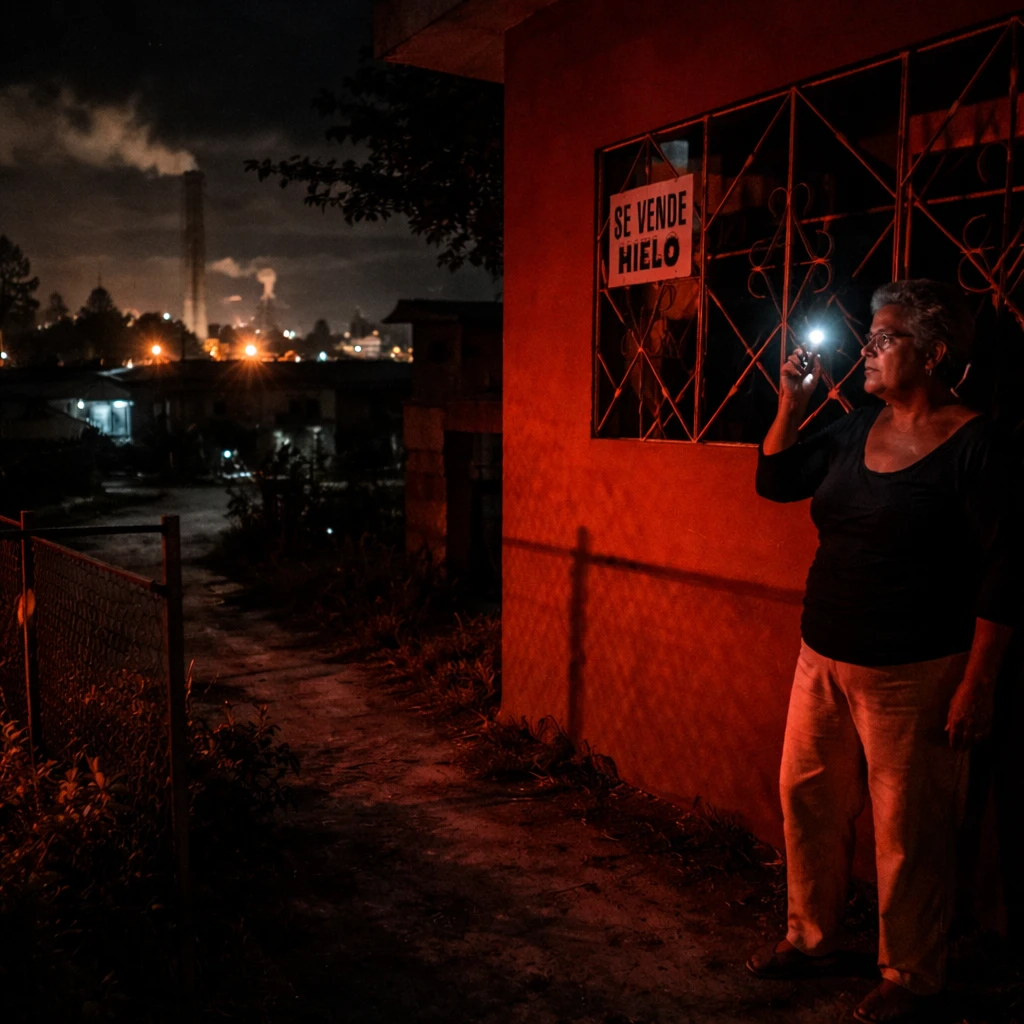

In Santa Cruz del Norte, a key coastal Cuban community hosting significant petroleum production and one of the nation’s largest thermoelectric power plants, daily life is marked by an intense sulfur smell and persistent power outages. Even as the Antonio Guiteras thermoelectric plant attempts to increase output, frequent blackouts plunge residents into darkness, creating a stark contrast between the availability of energy resources and the unfulfilled needs of the population.
The ongoing crisis in this town east of Havana reflects a broader deteriorating situation across Cuba, influenced significantly by escalating tensions between Havana and Washington. The recent U.S. offensive on Venezuela, which disrupted critical oil shipments, has further strained Cuba’s energy security and economic stability.
Many households, confronted with the interruption of electrical power, are compelled to shift to rudimentary fuel sources such as coal and firewood to meet basic cooking needs, a transition not accessible to all due to rising scarcity and costs. The strain is evident in personal testimonies; for example, 50-year-old Kenia Montoya resorted to dismantling the wooden bathroom door of her dilapidated home to gather firewood, underscoring the severity of resource shortages.
The absence of reliable petroleum supply and reduced availability of foodstuffs contribute to a deteriorating quality of life. As Montoya lamented, “Things are getting worse for us now. They don’t supply us with petroleum. They don’t supply us with food. Where does that leave us, then?” This bleak reality reflects a widespread uncertainty among Cuban towns grappling with the fallout of U.S. threats to impose tariffs on nations supplying oil to Cuba.
At the entrance to Santa Cruz del Norte, a large mural proclaims, “NO ONE GIVES UP HERE. LONG LIVE A FREE CUBA,” symbolizing resilience amid adversities. Yet, residents question the endurance of their community under current hardships, which include rolling blackouts, surging prices, and a critical shortage of essentials.
The Cuban government has maintained a taciturn stance regarding its oil reserves and future supply prospects, offering no definitive information on support from allies such as Russia, especially in light of the diminished Venezuelan shipments following U.S. actions against Venezuelan leadership. President Miguel Díaz-Canel acknowledged the complexity of the situation and denounced U.S. policies as “aggressive and criminal,” citing their adverse effects across sectors such as transportation, healthcare, education, tourism, and agriculture.
Although Cuban officials highlighted a recent high-level communication with Russian Foreign Minister Sergey Lavrov, the specifics were not disclosed. Meanwhile, Mexico has committed humanitarian assistance, including food, following U.S. requests to halt oil exports to Cuba. Despite these developments, anxieties persist among residents about worsening conditions, as encapsulated by 67-year-old Gladys Delgado’s question: “With all those tariffs they’re going to impose on countries, no oil will come in, and how are we going to live?”
Life continues amid hardship in Santa Cruz del Norte. Delgado supplements her $6 monthly pension by sewing small area rugs from clothing scraps. Nearby, 53-year-old Minorkys Hoyos manages with minimal food supplies, using a small improvised grill for cooking cassava. The failure of rechargeable lighting devices leaves her navigating darkened interiors until neighbors provide makeshift lanterns crafted from fuel containers.
Even during daylight hours, electricity scarcity limits everyday activities. Children divert their attention to simple games outdoors, as indoor lighting and energy-dependent conveniences remain unreliable.
For several months, Santa Cruz del Norte had experienced power availability while much of Cuba suffered relentless outages caused by aging infrastructure and fuel shortages. However, outages recurred recently, undermining hopes for stabilization. Local resident Iván Amores described the intermittent power supply as “truly torture,” recounting how he now depends on a small, self-built barbecue with more expensive, low-smoke coal for cooking for his family. Amores also invested in an innovative, Cuban-made rechargeable tube light with USB charging capabilities, exploiting resourcefulness borne of necessity.
Nonetheless, such adaptations are beyond the reach of many. Mariela Viel, 67, who spent over four decades working at Cuba’s power company cafeteria, subsists on an $8 monthly pension and struggles to afford basic upgrades to her home. Once unfamiliar with blackout conditions, she reflects somberly on deteriorated living standards, unable to purchase even low-cost food items like chicken.
Community resilience is observed in small moments: neighbors warming water for showers during an early year cold snap; celebrations starting earlier due to limitations posed by energy rationing. A boy’s 15th birthday—a culturally significant milestone—is held mid-afternoon before continuing under moonlight. Nearby, a group sings and dances beside a scooter broadcasting music, embracing joy amid hardship.
“I’m telling you, whatever’s meant to be, let it be, because we can’t stop it,” said Olga Lilia Laurenti, 61, embodying a philosophical acceptance commonly found in the community. “You’re not going to waste part of your life on something that’s out of your control. If only we could do something, but what are we going to do? We can’t suffer. You need laughter, you need joy.”