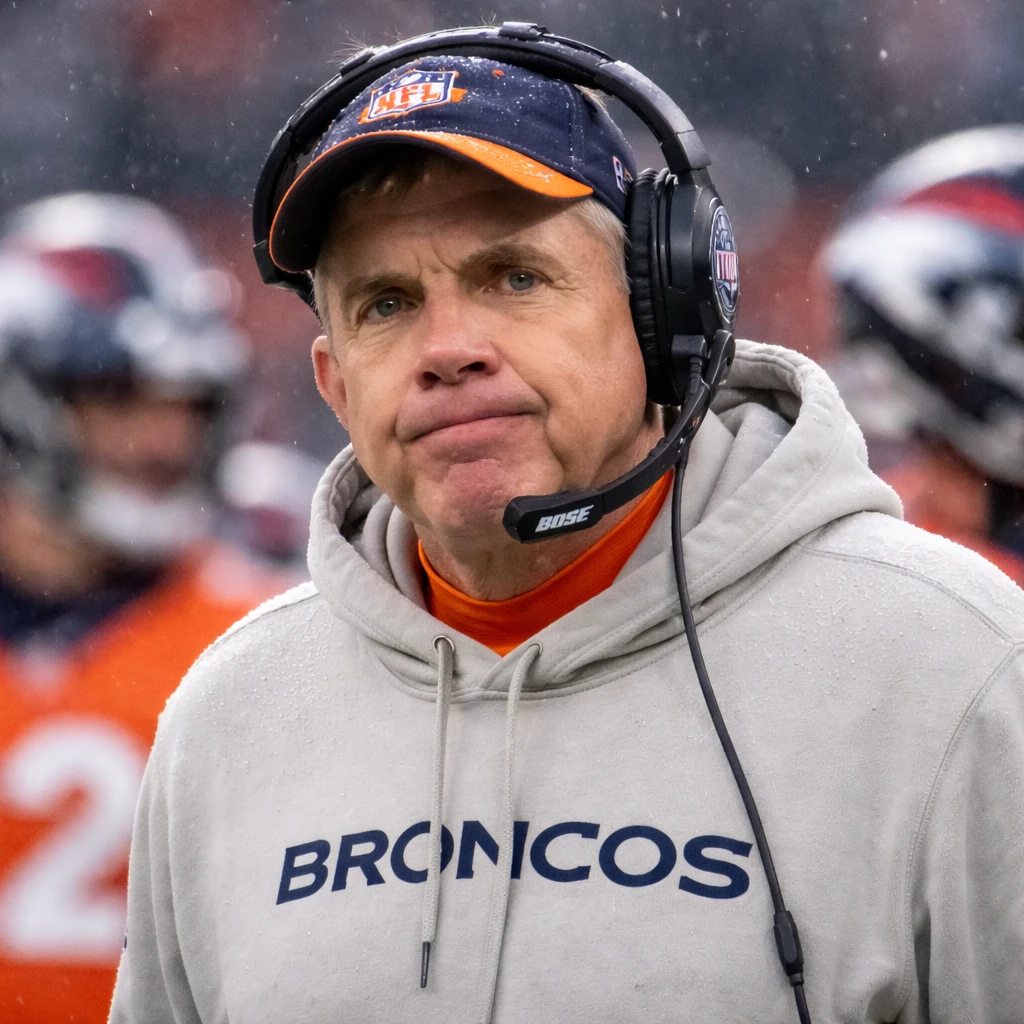

As a heavy snowstorm began enveloping Empower Field at Mile High, the Denver Broncos' journey to Super Bowl 60 was significantly affected by a high-stakes decision made by coach Sean Payton. The Broncos ultimately succumbed 10-7 to the New England Patriots in the AFC Championship game, with Payton later confessing to lingering doubts over his choice.
Backup quarterback Jarrett Stidham, whose last completion had been nearly two years prior, connected on a 52-yard pass to Marvin Mims Jr., setting up an early touchdown catch by Courtland Sutton. The Broncos subsequently advanced to the Patriots' 14-yard line early in the second quarter, igniting hopes among fans of reaching the franchise’s first Super Bowl in ten years.
Faced with a fourth-and-1 situation at the 14-yard line, Payton opted not to call for a 31-yard field goal attempt by kicker Wil Lutz. This field goal would have extended Denver's lead to 10-0, two scores ahead of their opponent. Instead, he chose to keep the offense active on the field, bypassing both the attempt and a play designed to draw an offside penalty.
Initially intending to execute a straightforward run behind a highly regarded offensive line featuring All-Pro members Quinn Meinerz and Garett Bolles, Payton instead directed Stidham — a quarterback with only one career victory in six NFL seasons — to run a bootleg to the right and throw the ball.
During this play, Stidham had an opportunity to pass to wide receiver Lil’Jordan Humphrey, who appeared open over the middle, but instead focused on running back R.J. Harvey. Under pressure, the quarterback’s throw fell incomplete at Harvey’s feet.
The failed conversion deprived the Broncos of a two-score advantage over an opponent who had been limited to just 12 yards of offense until that point, and as the weather deteriorated with a blizzard approaching, Denver’s early momentum began to fade. Following this play, the Broncos did not manage to penetrate the Patriots' 30-yard line again for the remainder of the game.
Reflecting on the call, Payton admitted, “Hindsight, the initial run thought was a better decision. There’s always regrets. Look, I felt like here we are fourth-and-1. I felt close enough. Also, it’s a call you make based on the team you are playing and what you are watching on the other side of the ball. But, there will always be second thoughts.”
The decision has been subjected to intense scrutiny by analysts and commentators. ESPN’s Booger McFarland criticized the choice, stating that securing a 10-0 lead would have preserved momentum, particularly given the worsening weather conditions that would complicate kicking attempts later in the game. He suggested that if Payton was intent on going for it, running a simple play might have been more advisable than the risky rollout pass executed.
Fox Sports NFL analyst Mark Schlereth recounted that even Peyton Manning, Mike Shanahan, and Brandon Stokley, who were watching the game together, anticipated that Payton would opt to kick the field goal. Schlereth remarked, “You’ve got a backup quarterback, you’ve got a chance to go up 10-0 and your defense is balling out of control. All of us were in agreement at that point: just kick the field goal, just kick the field goal. And you come out with a little roll-out pass and it was a debacle to begin with.”
Schlereth further highlighted the Broncos’ struggles in the running game during the contest, noting the absence of significant yardage over short distances, making a conservative run play less credible to the defense. “They were kicking our (behind) up front,” he said, emphasizing the advantage the Patriots’ defense had established.
Schlereth expressed preference for a more traditional approach and voiced skepticism toward the emerging analytics trend that promotes aggressive fourth-down attempts. McFarland referenced a similar coaching choice in the NFC Championship game involving the Los Angeles Rams and Seattle Seahawks, questioning the rationale for going for it on a doubtful fourth-down opportunity instead of attempting a high-probability field goal.
The trend in playoff games shows NFL coaches converting on fourth downs 25 times in 51 attempts, yet McFarland cautioned against applying this statistical inclination without considering contextual factors such as quarterback readiness, opponent strength, weather conditions, and game timing.
While the Broncos’ loss ended their season, the aftermath of Payton’s decision continues to provoke debate, highlighting the nuance and consequence of coaching choices in high-pressure environments.