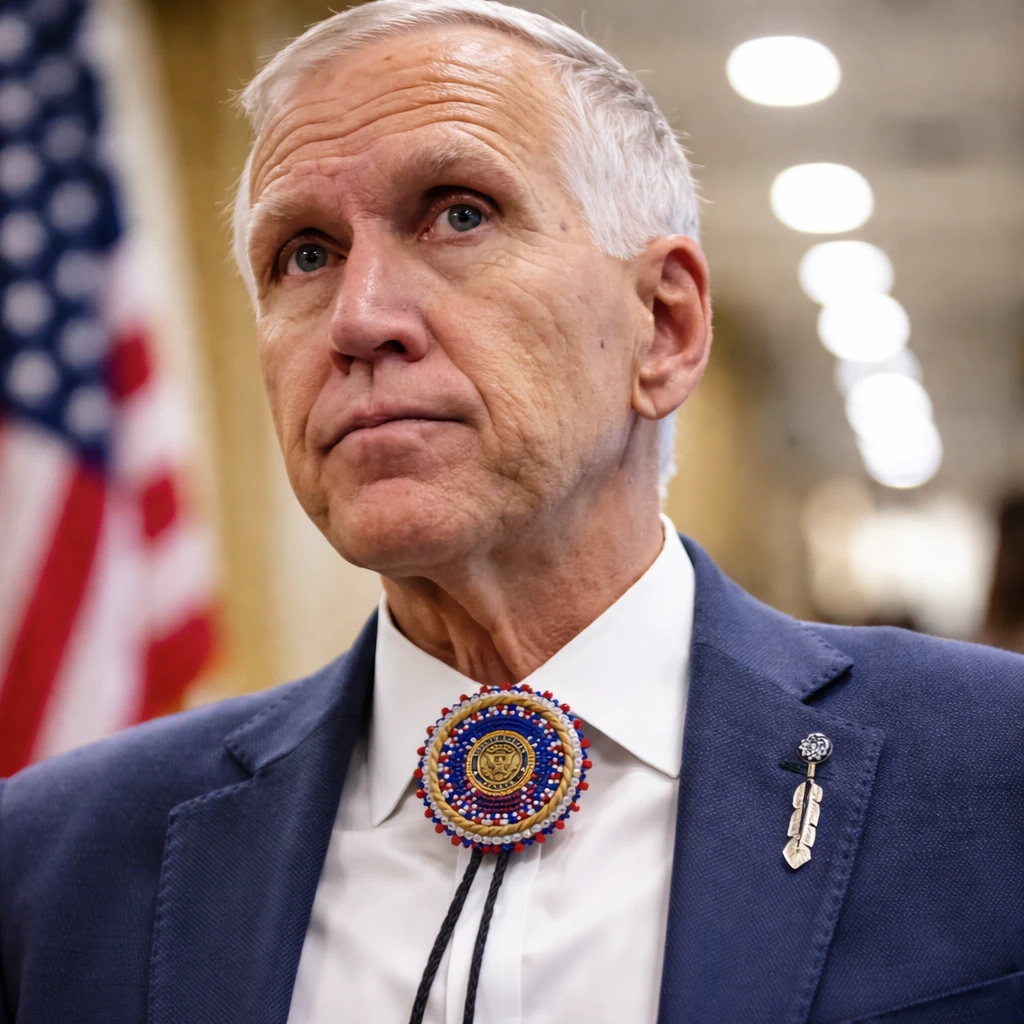

Senator Thom Tillis, representing North Carolina, has emerged as a vocal figure in his final year in the Senate, candidly criticizing the administration’s internal advice without hesitation. In a recent Senate floor statement, Tillis openly expressed frustration with certain White House figures, notably rebuking advisers of President Donald Trump for encouraging a potential U.S. military approach toward Greenland. His declaration, “I’m sick of stupid,” was directed at what he perceives as ill-considered counsel within the White House.
Unlike many of his Republican colleagues who often avoid publicly contravening the White House, Tillis has demonstrated a readiness to raise objections on a range of issues. He is one of only two Republicans in a congressional delegation visiting Denmark during a period of heightened concerns regarding Greenland’s geopolitical status. Tillis has also voiced disapproval of the Justice Department’s investigation into Federal Reserve Chairman Jerome Powell. Amid efforts by Trump and his allies to reshape the narrative around the January 6, 2021 Capitol riot, Tillis advocated for the installation of a commemorative plaque honoring officers who defended the Capitol on that day.
Central to Tillis’s critique is his discontent with senior White House staff, in particular deputy chief of staff Stephen Miller. After Miller publicly suggested on CNN that Greenland should be annexed by the United States, Tillis asserted his autonomy in setting his own positions, stating, “I don’t want some staffer telling me what my position is on something,” and disparaged Miller’s statements as made “out of his depth.” This stance illustrates Tillis’s commitment to independent judgment rather than deference to administration spokespersons.
Tillis’s boldness in questioning the administration’s inner circle appears motivated by his impending retirement, a dynamic that journalists have noted while tracking his candid commentary in congressional corridors. Support for Tillis’s approach among other Republicans is limited but notable, with Alaska Senator Lisa Murkowski endorsing him during a recent Capitol interaction. While Tillis expresses genuine support for President Trump, he remains skeptical about the quality of advice guiding the president, especially as the GOP confronts the challenges of an upcoming election year. ‘‘I really want this president to be very, very successful,’’ Tillis remarked, emphasizing the importance of wise counsel in shaping the president’s legacy.
With a professional background in accounting and consulting, and experience as speaker of the North Carolina House of Representatives, Tillis applies a businesslike perspective to his political assessments. He highlighted the necessity of objecting to proposals or decisions that are ‘‘not a good idea, not in our best interest, hard to implement.’’ This approach reveals a pragmatic focus on effectiveness and organizational success, drawn from his 25-year tenure in the private sector.
Extending beyond Miller, Tillis has questioned responses from other administration officials, including Homeland Security Secretary Kristi Noem’s immediate statements regarding the fatal shooting of Renee Good by an ICE officer in Minneapolis. Tillis expressed surprise at Noem’s quick certainty that Good intended to run over the officer, while the FBI’s investigation was still ongoing. According to Tillis, such early declarations likely influenced President Trump’s public defense of law enforcement in this case, proposing that the president’s remarks were shaped by his advisers’ input.
Tillis’s nuanced position was especially evident on the fifth anniversary of the January 6 Capitol attack. He facilitated agreement to publicly display a plaque commemorating officers who defended the Capitol, a tribute delayed due to political disputes. From the Senate floor, Tillis condemned the events as ‘‘one of the worst days’’ in his Senate tenure and praised law enforcement’s role in preserving the certification of the 2020 presidential election. Nevertheless, he critiqued Democrats for supporting police defunding movements and censured media portrayals of simultaneous violent protests in 2020. Characterizing the riot as a testing moment for democracy, Tillis argued that the Biden administration had gone ‘‘overboard’’ in prosecuting some individuals who entered the Capitol, differentiating them from the primary orchestrators. He also criticized President Trump’s pardoning of Jan. 6 defendants, especially those who assaulted officers, though his focus remained on the advisers who influenced such decisions rather than on Trump personally.
When addressing the White House’s silence on his criticisms, Tillis dismissed speculations that his critical tone is a result of his upcoming retirement as ‘‘hysterical.’’ His relationship with Trump experienced strain last summer when Tillis opposed a major tax and spending cut proposal championed by the president. Trump publicly rebuked him as a ‘‘talker and complainer,’’ labeling Tillis ineffective. Shortly after voting against the package, Tillis announced he would not seek another Senate term, joining only one other Republican senator in opposing the measure.
Although Trump’s recent reactions to Tillis’s critiques have been mild, the former president remarked, ‘‘That’s why Thom’s not going to be a senator any longer, I guess,’’ when asked about Tillis’s opposition to the Federal Reserve inquiry. He added, ‘‘Look, I like Thom Tillis, but he’s not going to be a senator any longer because of views like that.’’ Tillis’s stance distills a complex interplay between loyalty to the president and skepticism about the guidance he receives within his administration, illustrating ongoing tensions within the Republican Party as it strategizes for future elections.