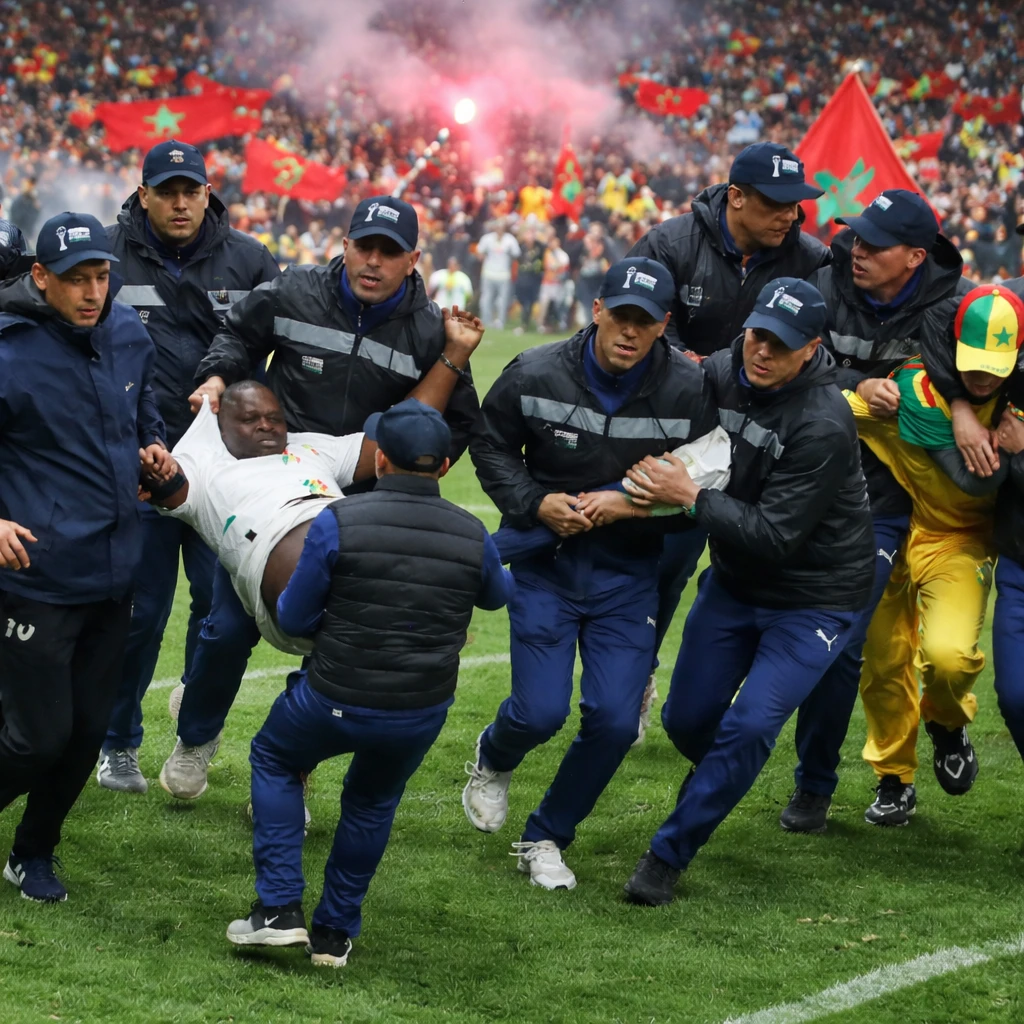

On January 18, the Africa Cup of Nations final in Rabat, Morocco, unfolded into a chaotic affair culminating in a series of penalties, fines, and suspensions issued to Senegal and Morocco. The Confederation of African Football (CAF) took disciplinary action after the match, which saw Senegal clinch the title with a 1-0 victory in extra time.
The match was marked by a dramatic incident in stoppage time during regular play. The referee awarded Morocco a penalty in a goalless match, a decision that provoked Senegal's coach Pape Thiaw to lead his players off the pitch in protest. This walk-off delayed the game by 15 minutes. Morocco failed to convert the penalty, and Senegal secured the win during extra time.
Following these events, CAF announced financial penalties totaling $615,000 for the Senegalese Football Association. The Moroccan Football Association was fined $315,000. Pape Thiaw received a $100,000 fine and a suspension for five Africa Cup matches, cited for actions that brought the game into disrepute. These sanctions apply only to CAF-governed African competitions and do not extend to the World Cup tournaments for which both teams have qualified.
Player suspensions were also imposed amid the disorder. Senegalese players Iliman Ndiaye and Ismaila Sarr each received bans spanning two African games. Morocco's Achraf Hakimi was suspended for two matches with one ban suspended, while teammate Ismael Saibari was suspended for three matches and fined $100,000 due to unsporting conduct.
The match included further incidents contributing to disorder. Spectators attempted to breach the field barricades, prompting security concerns. In addition, players from both sides engaged in altercations along the sidelines. An unusual occurrence involved Moroccan ball boys attempting to confiscate a towel from Senegal's goalkeeper Edouard Mendy, presumably to unsettle him. This behavior resulted in a $200,000 fine levied against the Moroccan Football Association.
Commenting on the outcome and conduct during the final, Morocco's coach Walid Regragui expressed regret, stating the tournament's conclusion cast a “shameful” image over African football. This perception is particularly significant as Morocco is preparing to co-host the 2030 FIFA World Cup alongside Spain and Portugal. FIFA President Gianni Infantino labeled the incidents as “ugly” and anticipated substantial disciplinary measures from CAF.
The Africa Cup finale's tumultuous nature has also impacted broader contexts beyond sport. Morocco's hopes of hosting the 2030 World Cup final at the under-construction Hassan II Stadium—which aims to be the world's largest soccer stadium with a 115,000-seat capacity upon completion in 2028—face reputational challenges. Spain, a co-host, recently indicated it will stage the 2030 final.
Morocco appealed to CAF to rescind the match outcome and declare Morocco the winner due to Senegal's on-field walk-off, but CAF dismissed this appeal. The match tensions even caused diplomatic strain between Senegal and Morocco. Officials from both countries have publicly committed to maintaining amicable relations and encouraging calm. In Morocco, human rights groups have voiced concerns over alleged hate speech targeting sub-Saharan African residents in the country in the aftermath of the event.
Senegal's Prime Minister Ousmane Sonko, visiting Morocco shortly after the match on an investment mission, characterized reactions to the final as emotional responses stemming from passionate support rather than indicators of political or cultural divisions.
This sequence of events represents a significant moment in African football, drawing attention to governance, sportsmanship, and regional relations ahead of major international competitions.