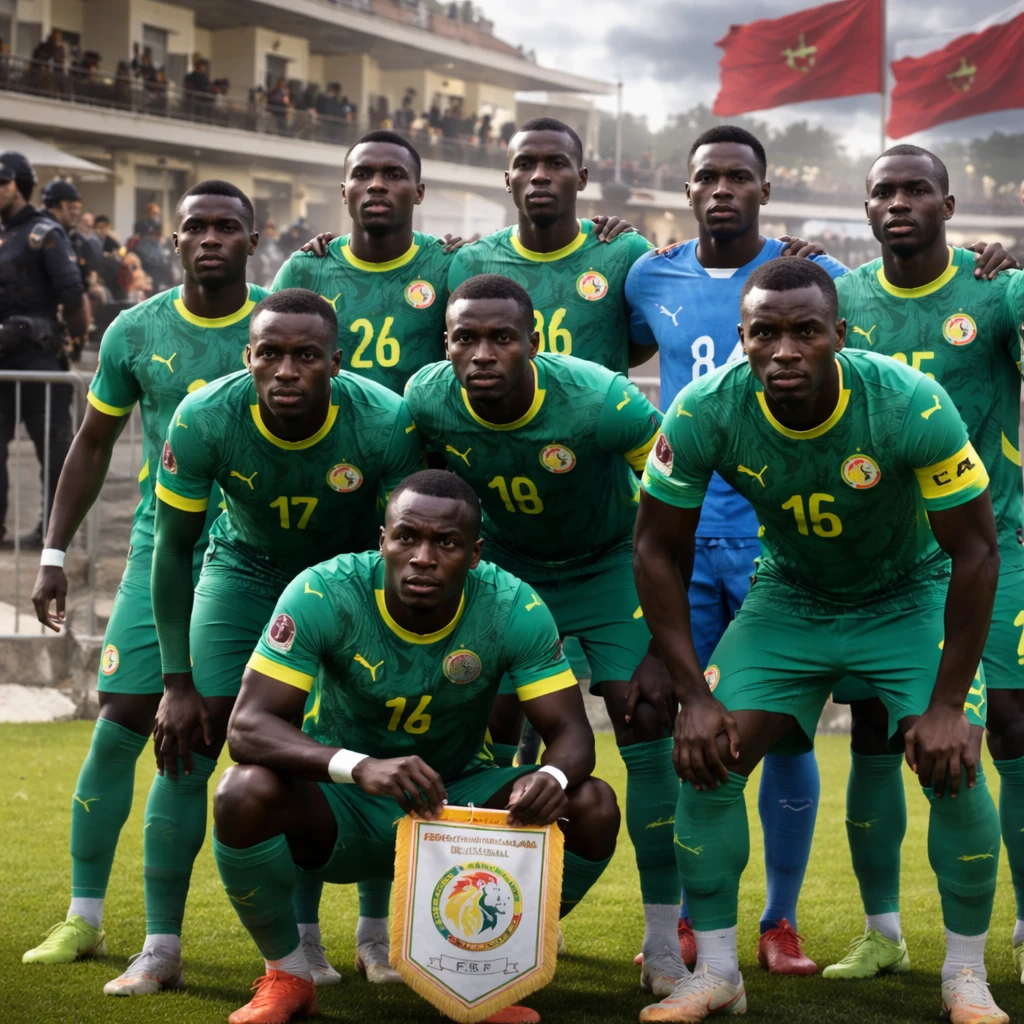

On the eve of the Africa Cup of Nations decisive final in Rabat, Senegal’s national football team has publicly expressed dissatisfaction regarding their treatment upon arrival and stay in Morocco. The criticisms stem from various logistical and organizational grievances, including insufficient security measures during the team’s arrival, problems with accommodation, challenges related to training locations, and a restricted allotment of tickets for Senegalese fans.
In a statement issued in the early hours of the tournament’s penultimate day, the Senegalese Football Federation (FSF) voiced these concerns directly, urging the Confederation of African Football (CAF) along with the local organizing committee to promptly address these issues. They underscored the necessity for strict adherence to principles of fair play, equitable treatment, and essential security protocols, which they regard as fundamental to the event’s success as a showcase of African football.
CAF's Response to Senegal’s Grievances
CAF responded later on the same day, assuring that together with the local hosts, they have maintained uniform conditions for all participating teams. The governing body acknowledged the FSF's complaints about logistical matters and confirmed that Senegal was given the autonomy to select its preferred hotel accommodations. Additionally, CAF stated that the Senegalese federation’s requests for alternative training facilities were forwarded to the organizing committee for consideration, and the ticket quotas for Senegalese supporters were allocated as per tournament guidelines.
Security Concerns During Team Arrival
Senegal’s players journeyed by train from Tangier to Rabat, arriving on Friday. However, the FSF described a notable lack of adequate security during this transfer. Video footage circulating on social media depicted the team and staff engulfed by crowds attempting to capture selfies and photographs, impeding their movement toward the team bus. The chaotic scenes raised fears for the safety of the players and staff.
Coach Pape Thiaw articulated the seriousness of the situation during a pre-final press conference, characterizing the experience as "abnormal" and emphasizing that the players were exposed to potential harm from unruly individuals. This resulted in heightened tension during the conference, where a Moroccan journalist’s remarks attributing responsibility to CAF rather than the local organizers were met with objections from Senegalese media representatives.
The federation maintains that the insufficient security at the train station presented safety risks that are unacceptable for a competition of this stature, citing the potential dangers associated with overcrowding and inadequate crowd management.
Accommodation and Training Facility Difficulties
Further frustrations for Senegal emerged regarding lodging and training arrangements. The federation indicated that it had to lodge a formal written complaint before securing hotel accommodations deemed adequate for the team in Rabat, though they did not detail the initial conditions offered.
Regarding training facilities, Senegal expressed categorical refusal to train at the Mohammed VI Complex, the venue serving as Morocco’s base throughout the tournament and initially proposed for Senegalese sessions. This sparked questions about competitive fairness. Eventually, the Olympic Stadium was designated as the alternative training site only approximately ninety minutes before the team's scheduled practice time.
Ticket Allocation Concerns for Senegalese Fans
The FSF also voiced unease about the ticket distribution for its supporters. They were able to purchase 2,850 tickets, which aligns with the maximum authorized by CAF. Given reportedly higher demand from Senegalese fans, the federation described this allocation as insufficient and lamented the resulting penalties imposed on their public’s opportunity to attend.
The final match is set to take place at the Prince Moulay Abdellah Stadium, which accommodates up to 69,500 spectators. Morocco has benefited from fervent home support in its matches, as it vies to secure its second Africa Cup title after a five-decade-long gap.
Final Reflections from Senegal's Coach
While acknowledging that the event organization has been exemplary overall, earning wide acclaim, Senegal’s coach Pape Thiaw emphasized that the security lapses observed should not recur. Framing his remarks beyond national interest, Thiaw highlighted the broader implications for Africa’s image in international football. Following the resolution of these issues, the focus for Senegal remains on the final match with ambitions to claim the coveted trophy for a second time, having won it previously in 2021.