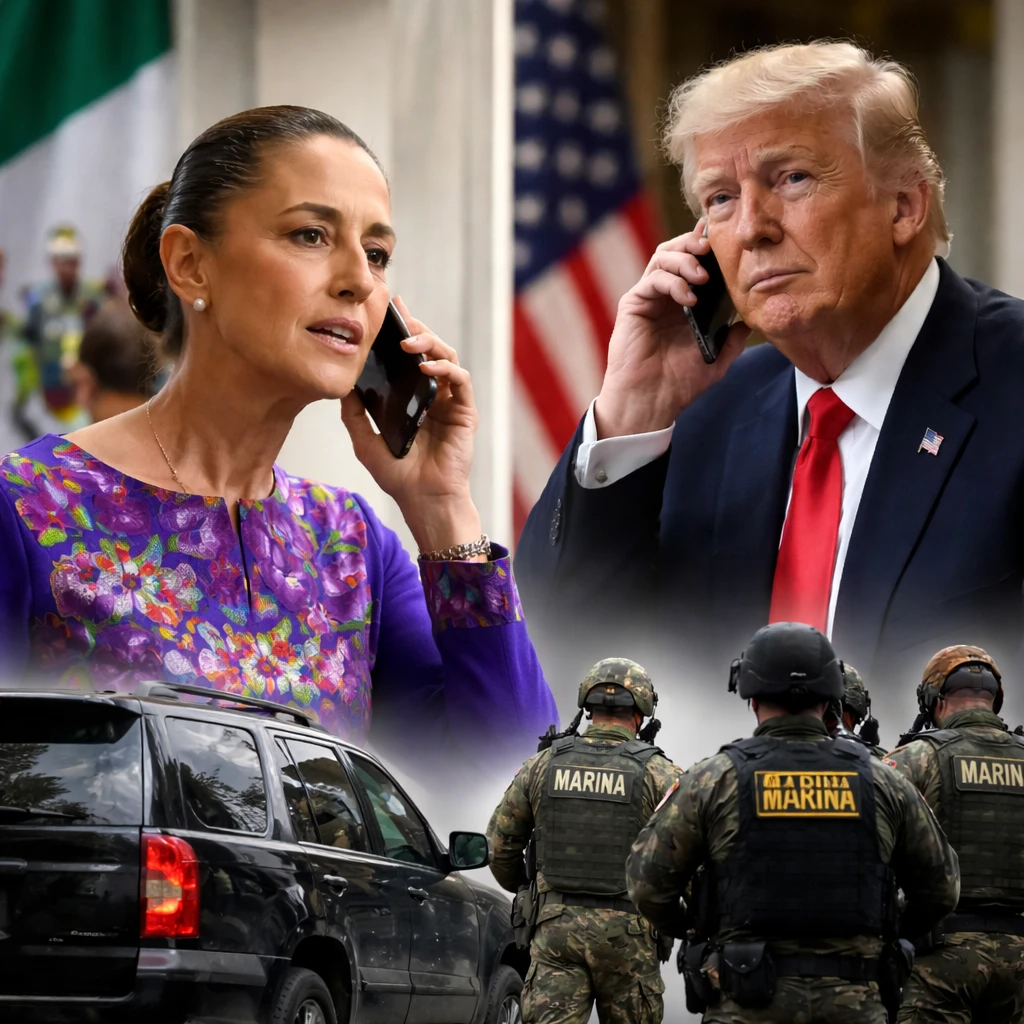

Mexican President Claudia Sheinbaum has reiterated Mexico’s stance that any law enforcement actions conducted on Mexican territory are exclusively carried out by Mexican authorities, amid rising concerns about potential U.S. encroachment on national sovereignty. Her remarks were made during her routine press briefing on Thursday, following the arrest and extradition to the United States of Ryan Wedding, a former Olympic snowboarder who faced charges related to drug trafficking.
There has been notable dispute over the circumstances of Wedding's detention. While both President Sheinbaum and U.S. Ambassador Ronald Johnson have maintained publicly that Wedding voluntarily surrendered at the U.S. embassy in Mexico last week, the defense attorney for Wedding challenges this narrative. FBI Director Kash Patel countered their statements by declaring that Wedding was apprehended during a "high-risk" operation conducted collaboratively and directly on Mexican soil by U.S. and Mexican forces working "hand-in-hand."
On Thursday, President Sheinbaum held a phone call with then-President Donald Trump as part of ongoing communication between the two leaders regarding trade and security topics. She clarified that the matter of Wedding's detention was not addressed during their conversation. Earlier in the week, Sheinbaum admitted to not being fully informed about the specifics of the capture and expressed her reluctance to dispute the FBI director’s version of events.
Nevertheless, Sheinbaum firmly stated at her press conference that Mexico will never permit joint U.S. military operations within its borders, emphasizing that "operations on our territory are carried out by Mexican forces," a message she asserted is consistently conveyed to President Trump.
The dialogue between the two presidents focused primarily on the broader issues of drug trafficking, border security, and trade matters. This interaction takes place in the context of growing tensions following threats by Trump to initiate military actions against drug cartels operating in Mexico.
The controversy surrounding the apprehension of Wedding has heightened apprehensions regarding the operational presence of U.S. agencies in Mexico, particularly in light of recent events such as the U.S. military operation in Venezuela that resulted in the ousting of former President Nicolás Maduro. Following these developments, Trump has reiterated his intent to intensify cartel confrontations on Mexican soil, marking an escalation from previous campaigns that were primarily maritime in nature along the Caribbean and Pacific coasts.
President Sheinbaum has consistently rejected the possibility of unilateral U.S. military interventions within Mexico, underscoring the importance of respecting Mexican sovereignty. Concurrently, she has advocated for enhanced bilateral cooperation between Mexico and the United States. In the latest exchange, she indicated that Trump did not seek approval for any operational actions within Mexico but discussed Mexico’s recent transfer of numerous incarcerated cartel members to U.S. custody, a move analysts interpret as part of the current administration's efforts to bolster cooperation with the United States on cartel-related enforcement measures.
The ongoing debate highlights the complexities of U.S.-Mexico relations in areas of law enforcement collaboration, sovereignty, and security policy. It underscores the delicate balance between cooperative efforts to combat transnational crime and the imperative for Mexico to maintain autonomous control over activities conducted on its territory.