
Shifting Holiday Spending Patterns: Thrift Shops Gain Popularity as Returns Decline
December 26, 2025
News & Politics

Shifting Holiday Spending Patterns: Thrift Shops Gain Popularity as Returns Decline

Economic pressures and tariffs reshape U.S. consumer habits during the 2025 holiday season

Summary

The 2025 holiday shopping season has seen notable shifts in consumer behavior, with increased patronage of thrift and discount stores and a decline in product returns. Economic uncertainty and higher prices linked to tariffs have influenced many Americans to approach holiday shopping with more caution and research. Traditional retailers face intensified competition as shoppers favor value and variety at alternative outlets. Despite overall spending exceeding last year's totals, holiday shopping dynamics reveal new patterns with implications for retail sectors.

Key Points

Holiday spending through cash and card payments surpassed last year, reflecting overall strong consumer activity despite economic concerns.
Economic uncertainty and tariffs have prompted more shoppers to choose thrift and discount stores over traditional malls, changing foot traffic patterns.
Department stores and traditional clothing retailers experienced traffic declines compared to 2024 during the crucial pre-Christmas shopping week.
Off-price retailers and thrift stores saw significant increases in shopper visits, indicating a consumer shift toward value and unique items.
Thrift store demographics are shifting with slightly higher average household incomes and increased younger clientele, reflecting broader appeal.
Return rates have decreased early in the holiday season, likely due to consumers researching and adhering more strictly to shopping lists.
Online holiday sales grew by 6% through early December, suggesting continued strength in e-commerce amid changing buying behaviors.
Returns are expected to surge in the final week of December and remain elevated into January, consistent with historical trends.

As the Christmas shopping rush winds down, a new phase of holiday activity begins: consumers turning toward post-holiday bargains and returning ill-fitting or unsuitable gifts. Spending through cash and card payments up to Sunday has surpassed last year’s levels according to aggregated data from Visa’s Consulting & Analytics and Mastercard SpendingPulse.

However, apprehension about economic conditions in the U.S. paired with rising costs—partially attributed to tariffs enacted under President Donald Trump—has revised some consumer habits. Evidence from Placer.ai, a firm that monitors foot traffic via cellphone data, indicates a noticeable shift toward thrift shops and discount retailers instead of traditional malls. Customers are also more disciplined in adhering strictly to shopping lists and conducting diligent research before making purchases, which likely contributes to a fall in return rates compared to the previous year, as reported by Adobe Analytics.

Several key patterns have emerged over the holiday period so far:

  • While overall holiday spending has increased compared to last year, traditional gift-buying avenues, such as department stores, are contending with diminished traffic relative to 2024.
  • Clothing and electronics sales, prominent in prior years' holiday spending and often reliant on imports subjected to tariffs, experienced growth yet struggled to outperform previous seasons.
  • Visits to department stores more than doubled in the week before Christmas compared to a typical shopping week this year, but declined 13.2% compared to 2024's corresponding period.
  • Shoppers frequented off-price retailers like TJ Maxx with an 85.1% seasonal traffic increase, while thrift stores saw an 11% surge in visits over the same timeframe compared to last year.

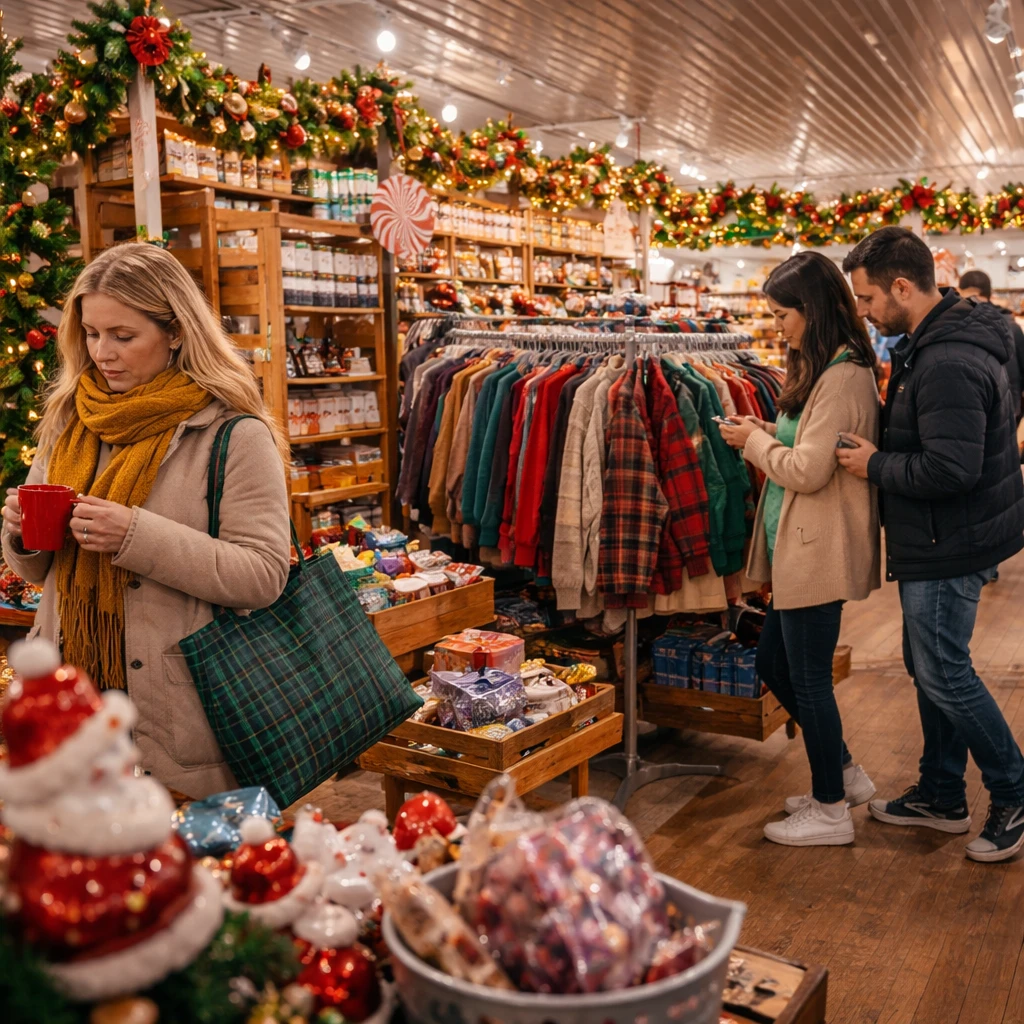
The rise in thrift shopping reflects broader consumer preferences, with individuals seeking unique or designer items in less conventional shopping environments. Shira Petrack of Placer.ai highlighted these choices as a move toward “discovery-driven experiences” rather than the usual standardized inventory offered by mainstream retailers.

Economic uncertainty and escalating prices have normalized gifting second-hand items, a trend supported by at least a 10% increase in thrift store visits through the latter half of 2025 compared to the previous year. This rise contrasts with historical patterns where holiday traffic to thrift shops typically remained flat. During Black Friday weekend, thrift sales grew 5.5%, while clothing store foot traffic decreased over 3% in November, with thrift visits jumping 12.7% in the same month.

Shifts in thrift store demographics were also identified, with average household income of customers rising slightly from $74,900 last year to $75,000 for October and November of 2025, increasing steadily since 2022. Executives from thrift chain Savers Value Village reported a 10.5% increase in U.S. sales through late September, continuing into October. CEO Mark Walsh commented on the expanding share of higher-income and younger consumers among their clientele, signaling ongoing consumer trade-down behavior.

Regarding returns during the holiday season, Adobe Analytics observed a 2.5% decrease from November 1 through December 12 compared to the same timeframe last year. This trend suggests shoppers are more selective and strategic, aligning purchases more closely with researched needs or desires. Following the Cyber Week shopping period—from Thanksgiving through Cyber Monday—returns were virtually flat, down 0.1%. Online sales within this period grew by 6% to $187.3 billion, positioning the season to exceed forecasted expectations.

Nonetheless, Adobe anticipates a rise in returns between December 26 and 31, potentially increasing by 25% to 35% relative to earlier holiday weeks, with elevated return rates expected to linger into January. This marks the first year Adobe has maintained return tracking data, confirming that the final week of December historically accounts for a disproportionate share—one in eight—of holiday returns, a pattern likely to persist.

Risks
  • Economic uncertainty and inflationary pressures may further shift consumer spending away from traditional retail sectors, impacting sales forecasts and retail profitability.
  • Tariffs on imported goods, especially clothing and electronics, could continue to depress sales growth in sectors reliant on global supply chains.
  • Retailers in traditional malls and department stores face heightened competition from off-price and thrift sectors, potentially threatening market share.
  • Decreased traffic at conventional stores could translate to financial strain for businesses dependent on holiday season revenue.
  • Rising return rates in late December through January could affect retailers' inventory management and cash flow planning.
  • Changes in consumer spending patterns may disrupt forecast models for sectors such as apparel, electronics, and department stores.
  • Dependence on data from cellphone tracking and analytics firms can carry uncertainties in estimating precise foot traffic and consumer behavior shifts.
  • Increased thrift store popularity may signal long-term changes in consumer preferences influencing retail market dynamics and demand.
Disclosure
This article is based solely on information provided by Visa’s Consulting & Analytics, Mastercard SpendingPulse, Placer.ai, Adobe Analytics, and statements from relevant retail executives as reported. No additional assumptions or external information has been added beyond the presented data.
Search Articles
Category
News & Politics

News & Politics

Related Articles
Eddie Bauer Seeks Chapter 11 Protection Amid Rising Tariff and Inflation Challenges

Eddie Bauer LLC has filed for voluntary Chapter 11 bankruptcy protection in the District of New Jers...

Kroger Rally After CEO Buzz - Tactical Long With Tight Risk Controls

Shares of The Kroger Co. (KR) have rallied on management noise and portfolio moves. The fundamentals...

Dow Advances More Than 200 Points as Coca-Cola Reports Varied Q4 Performance

U.S. equity markets experienced a mixed session with the Dow Jones Industrial Average rising over 20...

FDA Initiates Review of BHA Food Additive Safety

The U.S. Food and Drug Administration (FDA) has announced plans to conduct a comprehensive reassessm...

Partisan Divide Deepens as White House Excludes Democratic Governors from NGA Meeting

The longstanding bipartisan forum of the National Governors Association (NGA) is facing disruption a...

Using Fireplace Ashes in Your Garden: Benefits and Considerations

Amidst a notably cold winter leading to increased fireplace use, many homeowners are seeking sustain...