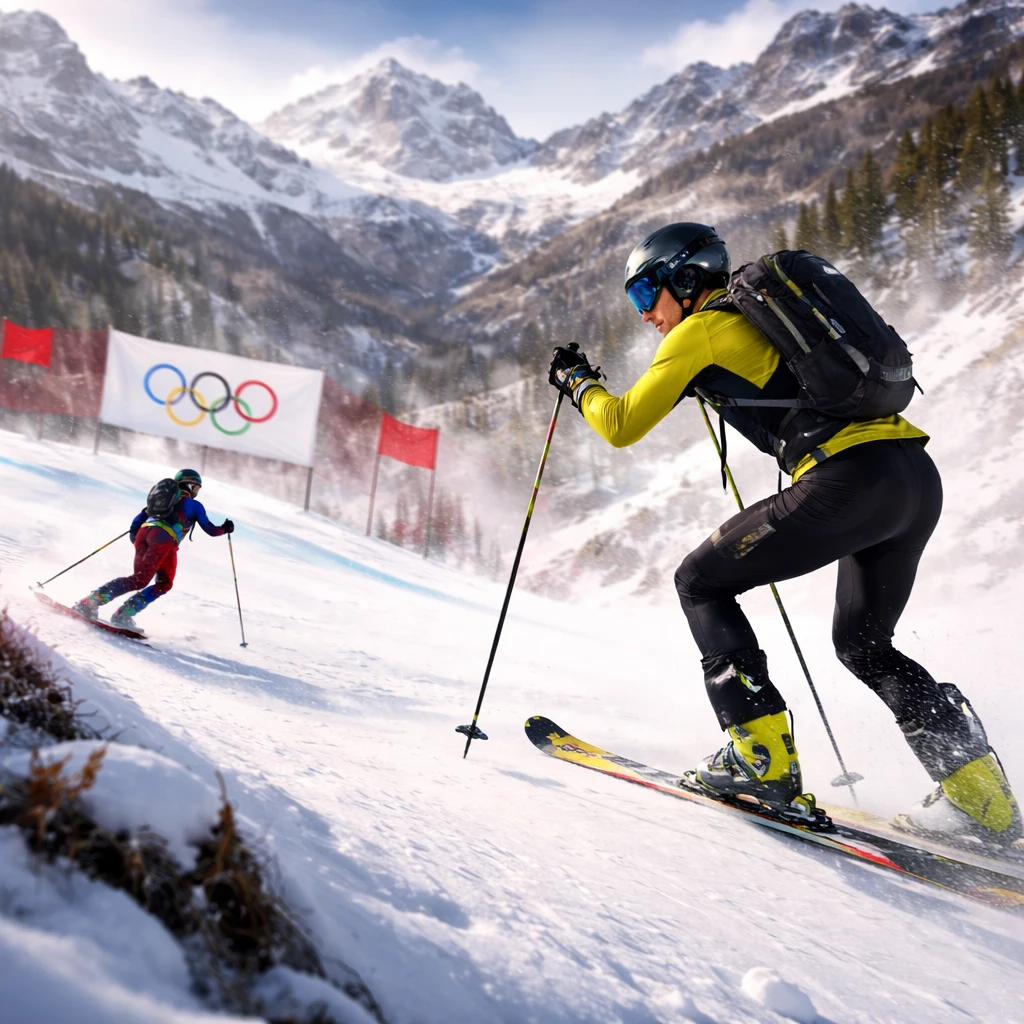

The upcoming Winter Olympics at Milan Cortina will feature ski mountaineering for the first time, showcasing a discipline that merges rapid ascents and descents through snowy terrain. This dynamic sport involves sprinting uphill using skis equipped with climbing skins and occasionally on foot, coupled with high-speed downhill skiing sections. While relatively new to the Olympic program, ski mountaineering traces its roots back to winter backcountry sports of the late 1800s and has seen a surge in global popularity, particularly during the pandemic period.
Competitors in ski mountaineering face short and intense races, with sprint events lasting approximately three minutes. The format includes separate men’s and women’s sprint races, along with a mixed relay combining male and female athletes from each participating nation. Athletes begin by ascending slopes wearing climbing skins that provide traction on their skis. They subsequently remove their skis for a brief section of uphill running with their boots before resuming their ski ascent. Upon reaching the summit, skiers strip off their skins and navigate rapid downhill stretches.
The sprint event begins with qualifying heats where 18 racers vie in three rounds to secure positions in the semifinals. The fastest three athletes from each heat, along with three additional competitors based on time, move forward. In subsequent semifinals, two skiers from each heat and two additional time qualifiers proceed to the medal races. The mixed relay requires teams comprising one female and one male competitor, each completing two uphill and downhill laps. Typically, a female athlete starts the race and then tags her male counterpart to continue. The first team to finalize all four legs clinches the gold medal.
Among the champions to watch are Switzerland’s Marianne Fatton and Spain’s Oriol Cardona Coll, current leaders in ski mountaineering sprints. France’s Emily Harrop, who triumphed at last winter’s test event held at the Olympic venue, ranks as a favorite as well. Cardona Coll recently won the men’s race ahead of Switzerland’s Jon Kistler and Arno Lietha. For the relay, Coll teamed with Ana Alonso Rodriguez to secure victory, followed by Harrop and Thibault Anselmet in second place. Rodriguez has faced challenges ahead of the Games, having suffered a knee ligament injury from a cycling accident. Representing the United States, Anna Gibson and Cam Smith earned Olympic qualification through a World Cup mixed relay win.
All ski mountaineering events will take place in the Stelvio Ski Center in Bormio. The men’s and women’s sprint races are scheduled for February 19, with the mixed relay occurring two days later. Notably, winners at these Games will become the sport’s inaugural Olympic medalists.
The competition enforces various penalties for infractions such as unsportsmanlike conduct, technical mishaps, and equipment violations. Sanctions range from time additions to disqualification. The sport’s formal international governance is provided by the International Ski Mountaineering Federation (ISMF), which oversees approximately 55 national federations across five continents. Ski mountaineering debuted at the 2020 Winter Youth Olympics in Lausanne and is proposed for inclusion in the 2030 Winter Games in the French Alps. The inaugural World Championship took place in France in 2002, highlighting the relative youth of ski mountaineering’s organized competitive history.