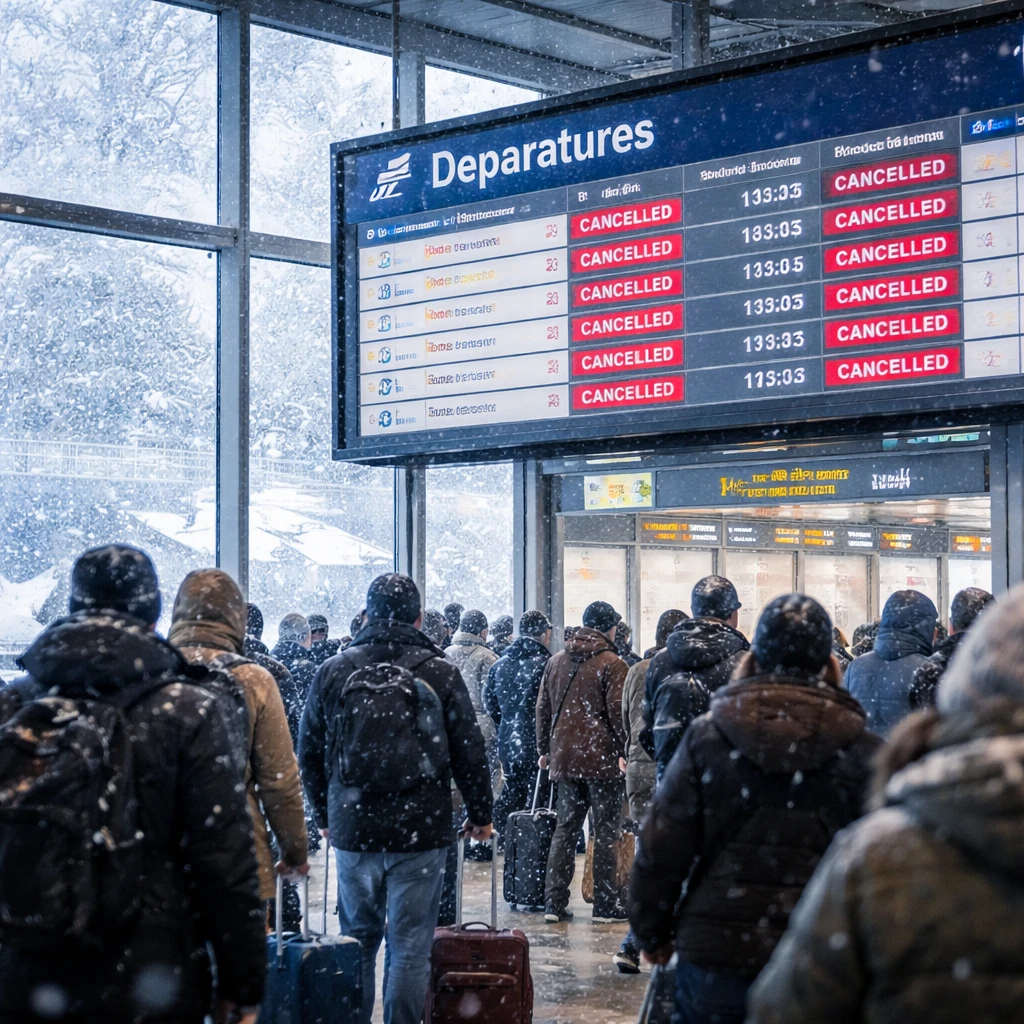

The busy holiday travel season in the Northeast and Great Lakes has been heavily affected by a substantial snowstorm that led to major disruptions in air and road transportation. From Friday night into early Saturday, the winter weather system brought notable snowfall across key areas, including New York City and its surroundings.
Flight-tracking data from FlightAware reported at least 1,500 flights canceled starting Friday night, reflecting the significant impact on airline operations during one of the busiest travel periods of the year. Despite the initial disturbances, conditions started improving by morning as skies and roads began to clear, easing the travel situation.
New York City recorded approximately 4 inches (10.2 centimeters) of snow overnight, somewhat less than certain forecasts had anticipated. Central eastern Long Island faced higher accumulations exceeding 6 inches (15 centimeters), while the Catskills region north of the city experienced up to 10 inches (25 centimeters) of snow. Correspondingly, major airports including Newark Liberty International, John F. Kennedy International, and LaGuardia issued snow warnings through social media to alert travelers of potential flight interruptions.
National Weather Service forecaster Bob Oravec highlighted that the storm was subsiding, leaving only light flurries across parts of the Northeast in the early hours. The weather system was moving from the northwest toward the Southeast, contributing to varying snowfall amounts within the affected regions.
In New York City, municipal crews dressed in red were visible working to clear streets and sidewalks in high-traffic areas like Times Square, employing shovels and snowblowers to manage the mixture of snow and slush coating surfaces.
Travelers in the city expressed mixed reactions to the snow event. Jennifer Yokley, visiting from North Carolina for the holidays, described the accumulating snowfall adorning urban landscapes as "absolutely beautiful." Similarly, visitors Payton Baker and Kolby Gray from West Virginia viewed the snow as an unexpected but welcome Christmas surprise during their anniversary trip, noting the cold temperatures and commending the city’s efforts to maintain road safety through salting and clearing operations.
Government officials issued emergency declarations to manage the storm’s impact. New York Governor Kathy Hochul declared a state of emergency covering more than half the state. Similarly, New Jersey’s Acting Governor Tahesha Way initiated a state of emergency with advisories urging travelers to avoid road travel during the storm, heed safety protocols, and remain alert to possible road closures and hazardous conditions.
Alongside the Northeast storm, California was contending with the aftermath of severe weather that manifested as heavy rains, flash floods, and mudslides earlier in the week. The Los Angeles County Sheriff’s Department reported four fatalities linked to these events, including the discovery of a man’s body in a partially submerged vehicle near Lancaster on Friday.
Throughout some mountainous areas of California, precipitation totals ranged from 10 to 18 inches (25 to 45 centimeters) over a three-day period culminating on Christmas Eve, according to meteorologist Rose Schoenfeld from the National Weather Service. Other populated sections, including the Los Angeles Basin and coastal zones, received up to 4 inches (10 centimeters) of rainfall.
The mountain community of Wrightwood, with a population around 5,000, was particularly affected with extensive damage to homes and vehicles as floods and mudslides converted roads into torrents and buried cars beneath debris and rocks.
Looking ahead, dry conditions in California were expected before a forecast of Santa Ana winds with gusts surpassing 60 mph (96 kph) from Sunday night into Tuesday. Such strong winds pose risks of uprooting trees weakened by saturated soils, potentially resulting in power outages and other damage.