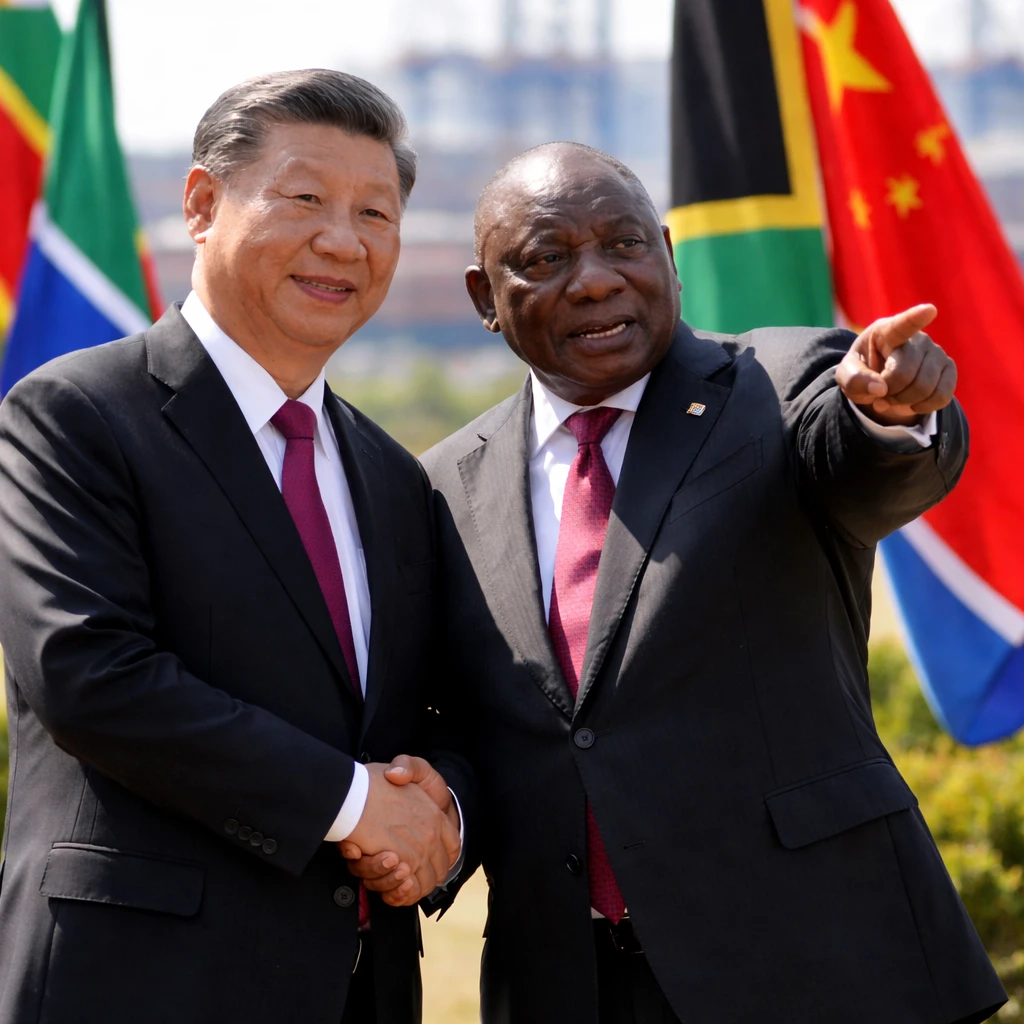

South Africa has taken a significant step to strengthen its economic relationship with China by signing a framework agreement intended to pave the way for a comprehensive trade deal. The signing, which took place on a Friday, marks a deliberate move by Africa's most industrialized economy to explore new international markets in response to increased import tariffs imposed by the United States and the resultant diplomatic tensions with the former Trump administration.
According to the South African Ministry of Trade and Industry, the newly signed framework will formally initiate negotiations that could result in certain South African goods, including fruit products, accessing the Chinese market free of import duties. The ministry conveyed its expectation to conclude the trade agreement by the end of March, signaling an accelerated timeline for the pact.
Complementing these market access provisions, the agreement also seeks to amplify investment flows from China into South Africa. The trade ministry highlighted China's expanding presence in South Africa, noting the rapid increase in Chinese automobile sales within the country, which underscores the broader economic partnership potential between the two nations.
The catalyst for South Africa's pursuit of alternative trade relationships is largely tied to the United States' implementation of 30% tariffs on select South African exports. These tariffs, imposed under President Donald Trump's reciprocal tariffs policy, represent among the heaviest levies applied globally and have prompted South Africa to persist in negotiations to seek more favorable terms with the U.S.
South Africa's agreement with China is part of a broader tendency among various countries to seek partnerships beyond the United States amid the Trump administration’s assertive trade policies. Notably, the announcement coincided with the U.S. decision to extend the African Growth and Opportunity Act (AGOA) only temporarily, until the end of the year, while signaling forthcoming policy adjustments aligned with the administration's America First stance. South Africa remains a key beneficiary of AGOA, underscoring the importance of these trade discussions.
Trade relations between South Africa and China are already robust, as China holds the position of South Africa's largest trading partner for both imports and exports. China's economic footprint continues to expand across the African continent. In particular, China exerts significant influence over the extraction of critical minerals on the continent, which serve as essential inputs for cutting-edge technology products worldwide.
The South African trade ministry expressed optimism about the new partnership, stating, "South Africa looks forward to working with China in a friendly, pragmatic and flexible manner." This sentiment was echoed by Trade and Industry Minister Parks Tau, who personally traveled to China to formalize the agreement. The minister emphasized that the deal is expected to benefit multiple South African industries, including mining, agriculture, renewable energy, and technology sectors, highlighting the diverse economic impact anticipated from stronger Sino-South African collaboration.
Diplomatic relations between the U.S. and South Africa have deteriorated significantly, reaching their lowest point in decades. This decline stems partly from accusations made by the Trump administration that South Africa pursues anti-American policies and tolerates violence against a white minority group within its borders. South African officials have rejected these accusations as unfounded, particularly denying claims of systemic attacks aimed at land seizure from white Afrikaner farmers.
Further exacerbating tensions, South Africa has been excluded from participation in the Group of 20 meetings hosted in the United States during the year in question. Meanwhile, South Africa’s major exports to China primarily comprise gold, iron ore, and platinum-group metals – commodities vital to global industry.
Beyond raw materials, Chinese automotive brands have markedly increased their share of South Africa’s domestic car market, capturing an estimated 11% to 15% of sales in the past year. This growth is a considerable rise from about 2.8% in 2020. Notably, Chinese electric vehicle producer BYD surpassed American counterpart Tesla in 2025 to become the world's leading manufacturer of electric cars, reflecting China's broader ambitions and capabilities in advanced manufacturing sectors.