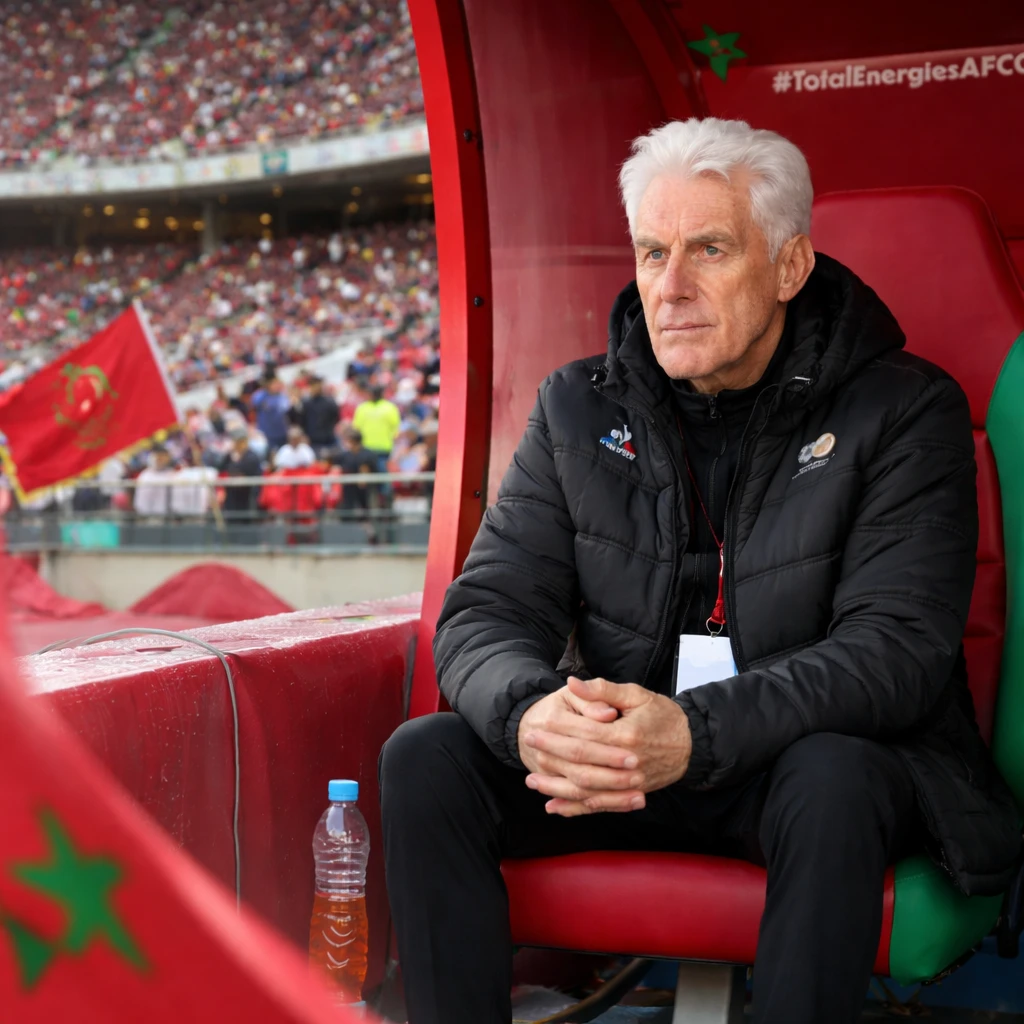

In Rabat, Morocco, Hugo Broos, the head coach of South Africa's national football team, has voiced his disappointment with the atmosphere at the 35th Africa Cup of Nations being held in Morocco. Previously, Broos led Cameroon to an AFCON title in 2017 in Gabon and secured a third-place finish for South Africa at the 2023 tournament in Ivory Coast. However, he indicated on Sunday that the current edition lacked the spirited environment he had come to expect.
"During the tournaments in Ivory Coast and Gabon, every moment exuded the essence of AFCON," Broos remarked. "People were visibly present, waving flags enthusiastically, and showing their support from the streets as we traveled to training sessions. Here, such displays are noticeably absent." The Belgian coach shared these observations in Marrakech, ahead of South Africa's concluding group stage match against Zimbabwe on Monday.
South Africa, nicknamed Bafana Bafana, began the competition by securing a hard-earned 2-1 victory against Angola in Marrakech. This was followed by a narrow 1-0 loss to Egypt in Agadir. Group B standings currently have Egypt at the top, having won both their matches and earning six points. South Africa is second in the group with three points, while Angola and Zimbabwe each hold a single point. The group’s upcoming fixtures include Angola facing Egypt, with the tournament's progression criteria set to advance the two highest-ranked teams from each group alongside the best third-placed teams.
Beyond team performance, the tournament has faced significant hurdles in attracting fans to the stadiums. Persistent heavy rainfall throughout most days of the tournament, except for December 25 when no games were played—a Christian holiday—has had a discouraging effect. Morocco, as the host nation, is predominantly Muslim, which also influences the scheduling considerations.
Originally slated for the summer, the competition was rescheduled to winter to avoid clashing with FIFA’s Club World Cup in the United States. Notably, even matches involving Morocco, which have been sold out, saw unoccupied seats during games. Ticket scalpers have been identified as a key issue, having acquired many tickets and thereby hindering genuine supporter's access to the near 70,000-capacity Prince Moulay Abdellah Stadium, the venue for all Moroccan group stage matches.
Security protocols at other venues have allowed fans to enter freely after kickoff in an effort to increase attendance. This policy has led to large crowds of non-ticket holders waiting outside with the expectation of admission, further complicating ingress and egress management. Broos criticized the organizational arrangements during South Africa’s match against Egypt, characterizing the situation as chaotic. He described barriers preventing even ticket holders from entering the stadium due to overwhelming crowds of spectators without tickets being granted admission.
Despite complimenting the infrastructure—highlighting the nine stadiums either newly built or renovated for this tournament—Broos remarked that the atmosphere lacked the traditional fervency associated with AFCON, describing it as "cool." He stressed that without the relaxation of entry restrictions to allow more spectators inside, attendance would remain sparse, specifically expressing concern that even the upcoming South Africa-Zimbabwe match would suffer from poor crowd presence.
Looking beyond the immediate tournament, Morocco is also set to co-host the 2030 FIFA World Cup. Issues currently affecting fan turnout and the organization at AFCON could carry implications for future events hosted by the country.
Additional information and coverage on the Africa Cup of Nations are accessible through relevant sports event hubs and official releases.