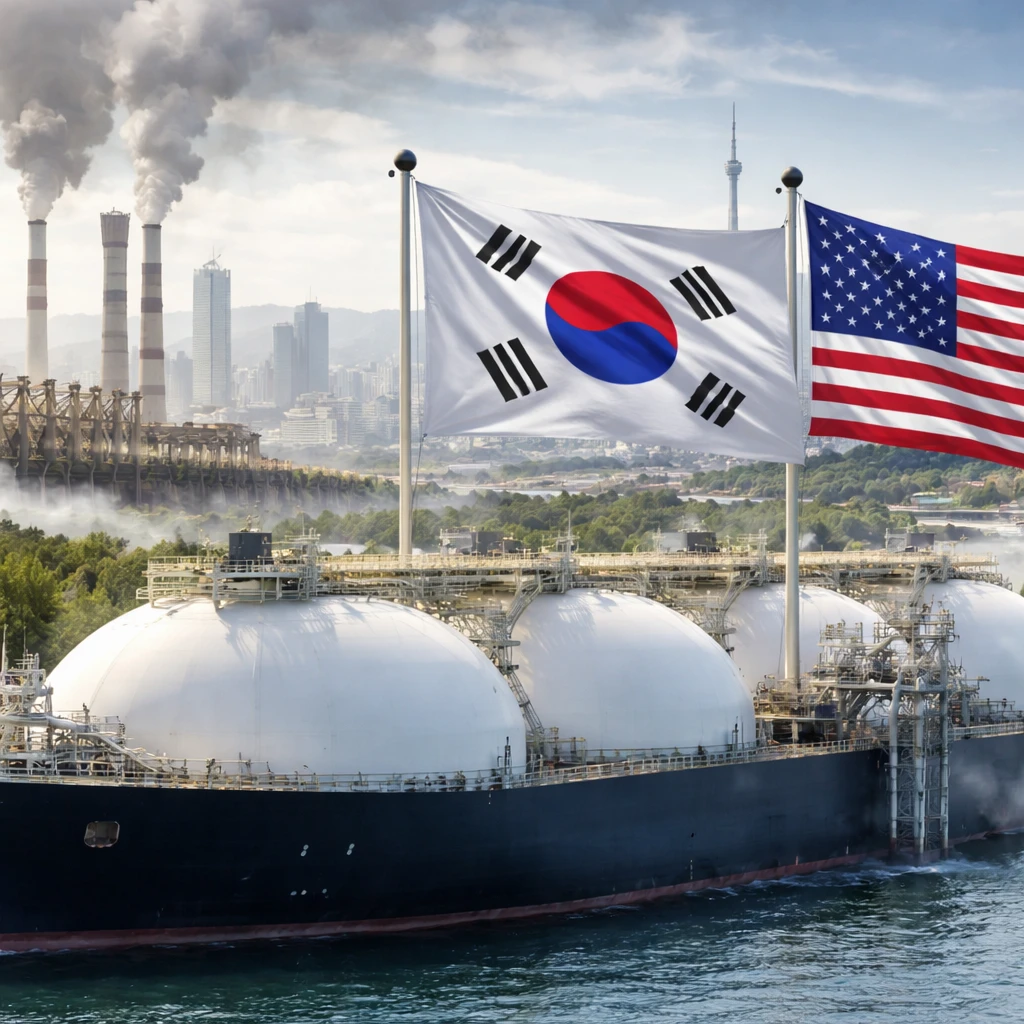

South Korea is signaling its intent to reduce coal dependency as it pursues carbon emission cuts to combat climate change. At the recent United Nations climate conference, the nation's Ministry of Climate, Energy and Environment presented plans to phase out most coal-fired power plants by 2040 and to decrease carbon emissions by at least half come 2035. These targets indicate South Korea’s aim to accelerate the adoption of renewable energy, closing the gap with regional neighbors and global averages in clean energy development.
However, this ambition appears to conflict with expanded imports of U.S. liquefied natural gas (LNG), a trend driven by trade arrangements with the Trump administration. LNG, natural gas cooled to a liquid state for transport, burns cleaner than coal but still emits greenhouse gases, including methane, a potent contributor to climate change.
Ongoing discussions suggest South Korea may invest approximately $350 billion in U.S. projects and acquire up to $100 billion in American energy products, including LNG. This move could result in increased shipments to South Korea, a development that climate advocates argue may contradict the country's environmental commitments and lock it into a fossil fuel-reliant trajectory.
South Korea’s overall LNG import quantity might not rise if supplies from other regions such as Australia and the Middle East are reduced to compensate. Yet, industry analysts express uncertainty over how the country will reconcile these seemingly opposing energy strategies. Michelle Kim, an energy specialist at the Institute for Energy Economics and Financial Analysis, remarked on the challenge of harmonizing inconsistent policies within South Korea’s energy sector.
Following a snap election in June, President Lee Jae Myung has championed reinforced climate targets, differentiating himself from former President Yoon Suk Yeol whose administration had softened emission reduction plans prior to his departure. Kim Sung-hwan, the newly appointed Minister of Climate, Energy and Environment, underscored the nation's growing sense of accountability toward climate action amid global warming.
South Korea aims to reduce carbon emissions to between 53% and 61% of 2018 levels, a goal that falls short of some activists’ aspirations yet surpasses business lobbying proposals advocating a 48% cut. This range reflects attempts to balance differing perspectives on the economic implications and climate responsibilities confronting the country, according to Joojin Kim of the advocacy organization Solutions for Our Climate.
Despite robust climate commitments, South Korea’s agreement to boost U.S. LNG imports forms part of broader negotiations aimed at preventing increased tariffs under the previous U.S. administration’s "America First" strategy. These tentative accords could extend from three to ten years, potentially leading to annual imports of three to nine million tons of American LNG.
Liquefied natural gas comprised close to 20% of South Korea’s energy supply last year, based on International Energy Agency data, with governmental targets aiming to reduce LNG’s share to approximately 10.6% by 2038. Experts warn, however, that increasing LNG volumes through such trade deals could lead to excessive supply and additional gas consumption, undermining climate goals.
Insung Lee of Greenpeace Korea cautioned that merely substituting coal with LNG does not equate to a green transition, as it merely shifts South Korea’s dependency from one fossil fuel to another, weakening the overall commitment to climate action.
Regarding the nation’s energy composition, renewable sources accounted for 7% of power generation in 2022 according to the IEA, a figure that government data suggests rose to 10.5% last year but continues to lag behind that of several other developed economies including Japan and Spain. Nuclear power contributes significantly, representing 31% of total domestic electricity generation in 2023.
Minister Kim indicated a strategic move towards an energy system emphasizing renewables and nuclear power, with LNG serving as a supportive or backup resource to address the intermittent nature of renewable supplies. An additional target was set earlier in December to increase offshore wind capacity tenfold, reaching 4 gigawatts.
Michelle Kim remarked on commercial ramifications tied to these developments, noting that companies failing to reduce carbon footprints may encounter competitive disadvantages amid intensifying global emission reduction pressures spanning sectors such as shipping and aviation.
South Korea remains part of the Powering Past Coal Alliance, a coalition promoting clean energy transitions, although some view this membership mainly as symbolic. The country imports nearly all of its coal from Australia, Indonesia, and Russia, and the planned retirement of 40 coal plants by 2040 is expected to substantially impact regional coal markets.
James Bowen from Climate Analytics described this policy shift as an "enforced transition" for coal exporters in the Asia-Pacific, underscoring the reality that one of the world's largest coal importers is moving away from the commodity, which could precipitate a downturn in the coal market.