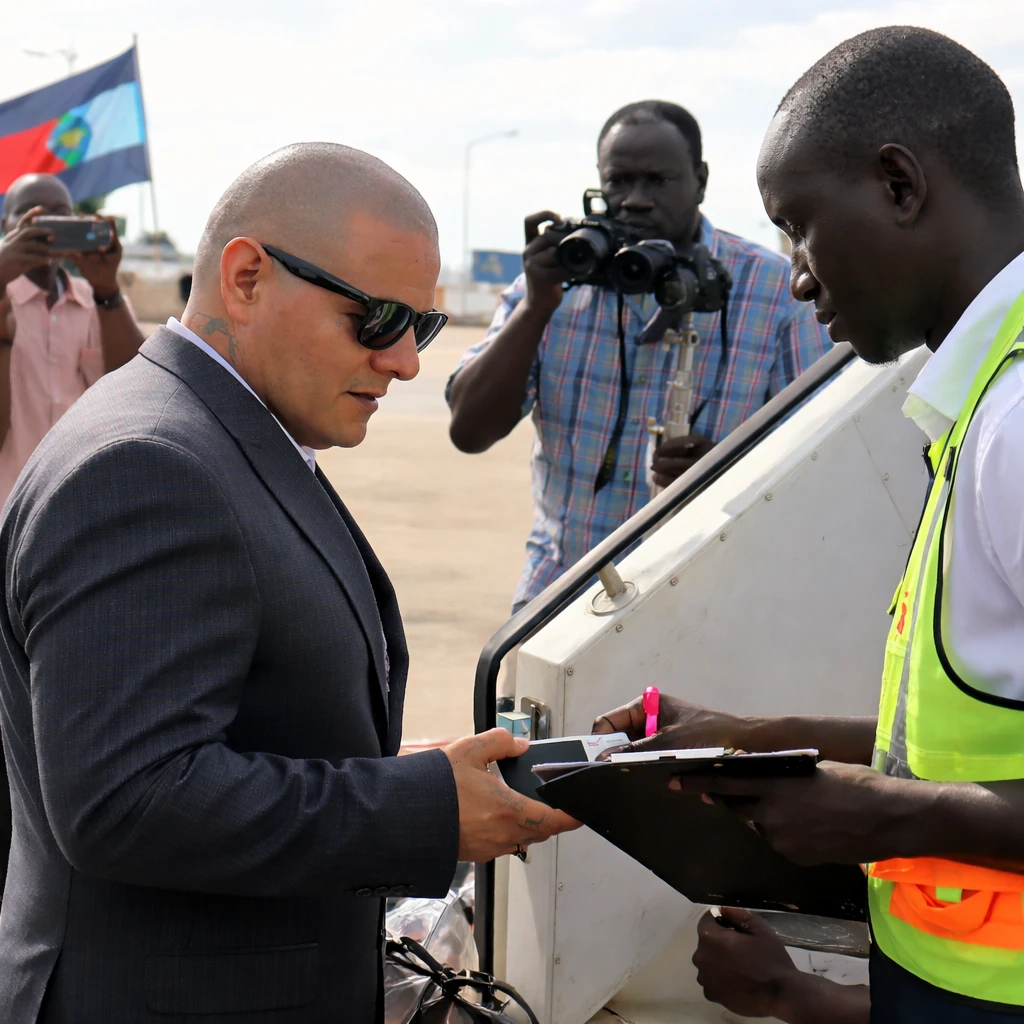

In 2023, the government of South Sudan consented to receive deportees from the United States, marking a notable development as the first African nation to accept such individuals. Following this agreement, South Sudan submitted diplomatic communications to the U.S. outlining a series of requests that highlight the potential advantages it sought in exchange. Among these were appeals for the U.S. to endorse prosecutions against a political opponent and to rescind sanctions imposed on a high-ranking official accused of redirecting over one billion dollars of public funds for personal gain.
The recently disclosed documents, released by the U.S. State Department, offer a rare glimpse into the diplomatic negotiations concerning these deportees. They also document the U.S. government's gratitude towards South Sudan for cooperating on this sensitive matter. The deportees, originating from nations such as Mexico, Cuba, Vietnam, Laos, Myanmar, and including South Sudanese nationals, were previously detained on a U.S. military base in Djibouti after a federal court temporarily halted their deportation.
Upon arrival, six of the eight deportees stayed in a supervised residential facility in Juba. Two individuals, namely South Sudanese national Dian Peter Domach and Mexican citizen Jesus Munoz-Gutierrez, were subsequently released and repatriated, respectively. South Sudanese authorities have yet to disclose comprehensive plans for the ongoing management or integration of those still in custody. The transfer of these deportees has drawn criticism from human rights organizations, which express concerns about South Sudan becoming a repository for expelled individuals under controversial circumstances.
Financial arrangements linked to these agreements remain opaque. Human Rights Watch has reported that in similar cases, Rwanda received around $7.5 million from the U.S. to accept up to 250 deportees, while Eswatini was allocated $5.1 million to receive up to 160 deportees. However, details on financial or other incentives offered to South Sudan are not publicly confirmed.
In one confidential diplomatic communication dated May 12, South Sudan's Ministry of Foreign Affairs put forward eight concerns warranting U.S. consideration. These ranged from requests to lift visa restrictions on South Sudanese citizens to appeals for humanitarian infrastructure developments and assistance in addressing the challenge of armed civilian groups.
Of particular note within these demands was the request to remove U.S. sanctions imposed on former Vice President Benjamin Bol Mel, accused in a United Nations report of misdirecting more than a billion dollars intended for infrastructure projects into companies linked to him. Bol Mel had been an influential figure in South Sudanese politics and was considered a potential successor to President Salva Kiir before his dismissal and house arrest in November. He was also reportedly instrumental in pursuing charges against opposition leader Riek Machar.
Machar, the first vice president who is currently suspended, faces allegations of treason, murder, and other crimes linked to a violent militia attack that occurred in March. His supporters label the charges as politically motivated. The former deputy president's continued prosecution has drawn criticism for undermining the 2018 peace agreement, with the ongoing conflict resulting in over 1,800 deaths reported between January and September 2025 according to U.N. figures.
The U.N. has also cautioned that escalating hostilities risk plunging South Sudan into renewed civil war. Meanwhile, Machar remains under house arrest in Juba as a protracted trial unfolds.
South Sudan's proposals further encompass requests to lift sanctions on the country's oil sector to stimulate foreign investment, along with calls for U.S. engagement in fossil fuels, minerals, and agricultural endeavors.
When queried about whether the U.S. provided or pledged any benefits in return for South Sudan accepting deportees, a State Department representative maintained confidentiality in line with diplomatic norms. South Sudan's Ministry of Foreign Affairs declined to comment on the matter.
Despite agreeing to receive deportees, diplomatic relations between South Sudan and the United States remain strained. In December 2023, the U.S. threatened to reduce aid to South Sudan, citing government-imposed fees on aid organizations and impediments to their operations. Historically, the U.S. has been a principal donor, contributing approximately $9.5 billion in aid since South Sudan's independence in 2011. Continued conflict and administrative challenges have left the country dependent on this external support to provide basic public services.