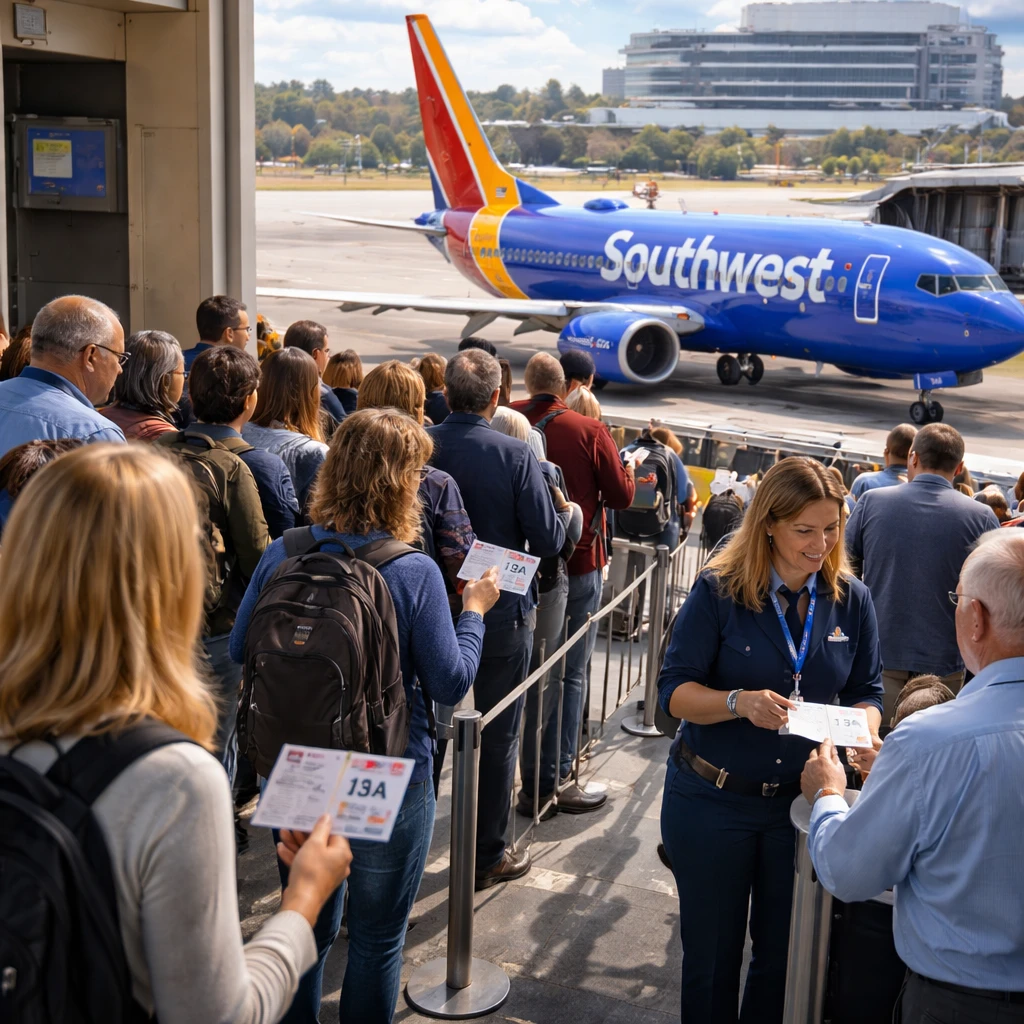

Starting Tuesday, Southwest Airlines will officially transition from its hallmark open-seating policy to a system featuring assigned seats, a move that ends one of the airline’s most unique features after more than half a century. Passengers will now receive specific seat assignments and will have the opportunity to pay additional fees for favored seating options, such as seats near the front of the aircraft or those offering more legroom. These changes have been reflected in ticket sales since July, signaling a significant shift in Southwest's boarding approach.
Under the past open-seating system, passengers checked in precisely 24 hours before departure to secure their position in one of the boarding groups labeled "A," "B," or "C." Early check-ins falling into group "A" often guaranteed access to aisle or window seats, while later check-ins were relegated to groups "B" or "C," increasing the chance of being assigned a middle seat. This practice was initially designed to expedite boarding and minimize aircraft turnaround times, thereby boosting operational efficiency and enabling Southwest to optimize its flight schedule and maintain profitability before the COVID-19 pandemic disrupted the aviation sector.
Over time, however, the system evolved to allow passengers to pay extra for earlier boarding positions, gradually diminishing the egalitarian nature of the open-seating policy.
The new procedure replaces the previous three-group boarding system with an eight-group structure. Instead of lining up behind numbered metal columns at gates, passengers will proceed through two alternating lanes as their designated boarding groups are called. Modifications to airport gate areas started Monday night and are anticipated to take approximately two months to complete. Any remaining columns with group numbers will have their labels removed or concealed during this interim period.
Southwest’s ticket offerings now include various fare categories associated with different seating selections. Standard seats will be assigned during check-in, whereas preferred and extra-legroom seat options can be chosen at the time of booking for an extra cost. Additionally, select flights will provide customers the choice to purchase priority boarding that begins 24 hours pre-departure.
Boarding passes have been redesigned to display assigned seats and indicate boarding groups. Reservations for parties of nine or fewer individuals, including families, will ensure group boarding together. The airline determines boarding groups based on factors such as seat location, fare class, loyalty program tier, and benefits linked to Southwest’s branded credit cards. Customers who pay for extra-legroom seats will be placed in the first two groups, while premium fare holders and those with the highest loyalty status gain access to priority boarding and seating options. Conversely, passengers with basic fares generally fall within groups six through eight.
The transition to assigned seating also introduces modifications to policies concerning travelers who require additional space. Effective with the change, passengers who do not fit within a single seat's armrest width must purchase an extra seat prior to travel. Previously, travelers could opt to buy an extra seat that was refundable or request complimentary accommodations at the gate. Now, refunds on additional seats are contingent upon seat availability and fare class, eliminating the prior guarantee of a full refund.
Moreover, Southwest discontinued its longstanding "bags fly free" promotion in May 2025 and has implemented baggage fees for most passengers. These cumulative changes represent significant departures from the carrier’s traditional customer perks, aligning its service model more closely with the practices common among other major U.S. airlines.
According to Southwest CEO Robert Jordan, the move aims to increase profitability amid investor expectations. In announcing the plan in 2024, the airline cited research indicating a shift in traveler preferences, with the majority expressing a desire to know their assigned seating before arriving at the airport. Jordan also highlighted that Southwest’s open seating policy had become a deterrent for some customers, being cited as the primary reason for selecting other airlines over Southwest.