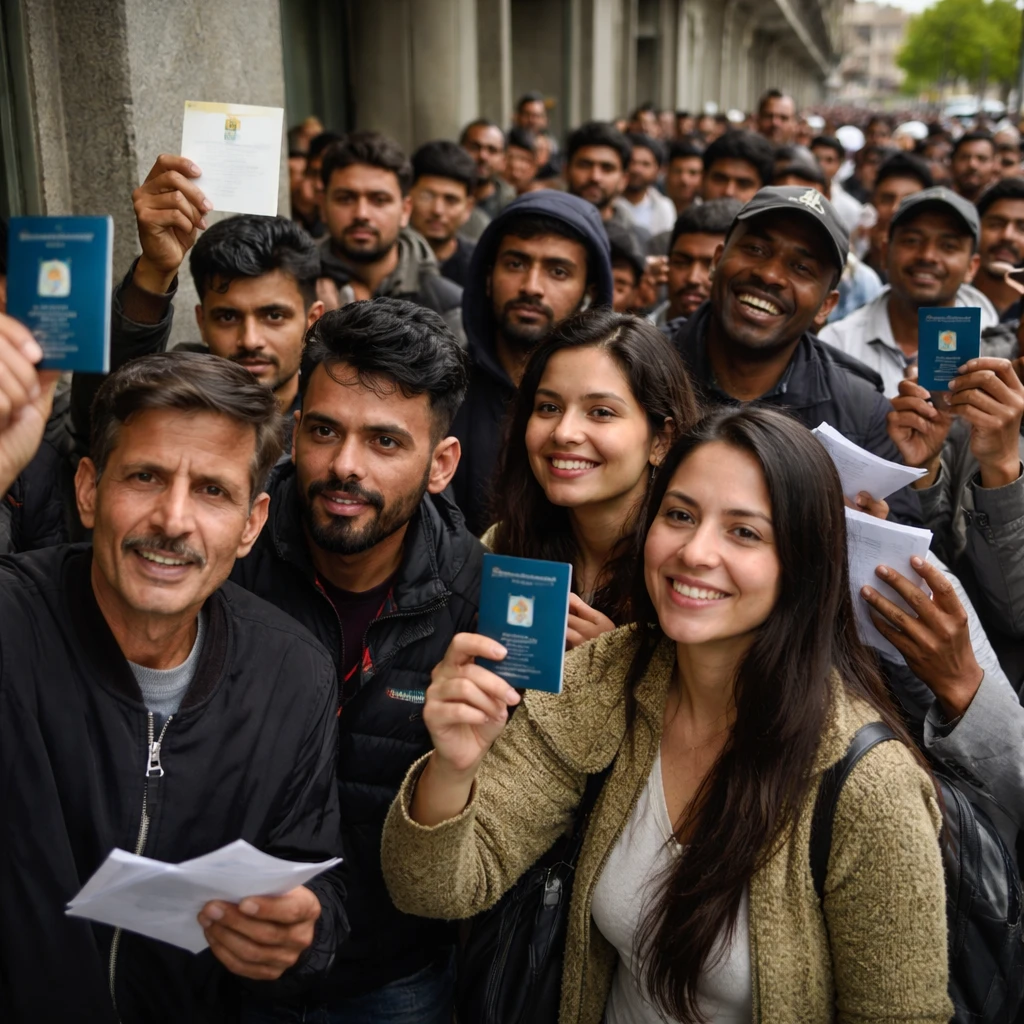

Spain is home to an estimated half a million immigrants currently residing without legal authorization. These individuals perform roles that are often undesirable to native Spaniards, including harvesting crops, caregiving for children and the elderly, as well as cleaning work in homes and hotels. A proportion of this population experiences homelessness and social invisibility, frequently facing exploitation and societal marginalization.
In a significant policy shift, the Spanish government recently declared that it will issue residency and work permits to all foreigners who entered Spain prior to December 31, 2025, have legally resided in the country for at least five months, and have no criminal background. Prime Minister Pedro Sánchez, representing the socialist party, described this initiative on social media as a formal recognition of individuals who "have, together with us, built progress in this country."
This decision stands in stark contrast to the tightening immigration controls and deportation practices increasingly seen in the United States and several other European Union nations.
Voices from the Immigrant Community
Among those hopeful for regularization is Ale Castañeda, an asylum-seeker from Colombia whose temporary residence permit was nearing expiration. Previously driven by anxiety over his uncertain status, he now anticipates a legal avenue to remain in Spain if his asylum claim is denied. Castañeda emphasizes his desire to engage in legal employment and access fundamental services like opening a bank account, without intending to depend on public welfare programs.
Like many Latin American immigrants, Castañeda initially came to Spain on a tourist visa and subsequently chose to stay. After fleeing discrimination as a queer individual in Colombia, and unsuccessfully seeking refuge in Argentina due to increasing hostility under the newly elected right-wing government, he found a degree of safety in Spain. Although encouraged by the government's announcement, he remains concerned about procedural delays and the logistics of managing a surge of applications, noting that even securing an appointment at immigration offices has become difficult enough to generate an illicit market charging fees to expedite access.
Spain's Migration Minister Elma Saiz has committed additional resources to ensure the program's success, acknowledging the need to efficiently process the high volume of applications anticipated within the limited time frame.
Paulina Valenzuela, originally from Chile, also expressed relief and newfound hope. A former architect who moved to Spain after losing her job, Valenzuela's three-year struggle to regularize her status included costly scams and rejected applications. She has subsisted on low-paying cleaning jobs, often in the high-pressure tourism sector that relies heavily on informal immigrant labor.
In 2025, Spain welcomed a record 97 million tourists who spent over 130 billion euros, yet immigrants like Valenzuela receive only a marginal share of the economic benefits. Exhausted physically and emotionally, she resigned from demanding cleaning work and has relied on social services for basic necessities. The new policy offers her a chance to break free from poverty, though she remains wary of potential unforeseen obstacles.
Another immigrant affected by this development is Hussain Dar, a 30-year-old Pakistani who has lived in Spain for nearly a year without documentation. Originally from a country facing economic hardship, Dar pursued graduate studies in the United Kingdom but moved to Spain due to stricter immigration laws there. Depleted of savings and possessions, and having experienced homelessness, Dar is currently waiting in line at the Pakistani consulate in Barcelona to fulfill the new legal requirements for residency, including obtaining a criminal record certificate.
Dar highlights the narrow application window—from April through June—and appreciates the consulate's decision to stay open on weekends to facilitate documentation for its citizens. He expresses gratitude for Spain's climate, culture, and people, underscoring the opportunity legal status will provide to work, contribute taxes, and reunite with family.
Challenges Ahead
While the Spanish government's initiative marks a hopeful development, significant uncertainties remain. The specific regulations and procedural details are yet to be fully disclosed in the official state bulletin. Applicants and observers alike are apprehensive about the administrative capacity to process hundreds of thousands of applications within a short timeframe.
Furthermore, longstanding issues such as the informal labor market dependency in sectors reliant on immigrant workers and the risks of exploitation persist. The tourism industry, agriculture, and domestic work sectors stand to be directly impacted if formalization leads to shifts in labor availability or cost structures.
The policy represents an ambitious attempt to bring a substantial undocumented population into the formal economy, with the potential for economic contributions through taxation and improved social integration, but its success will depend on effective implementation and support systems.