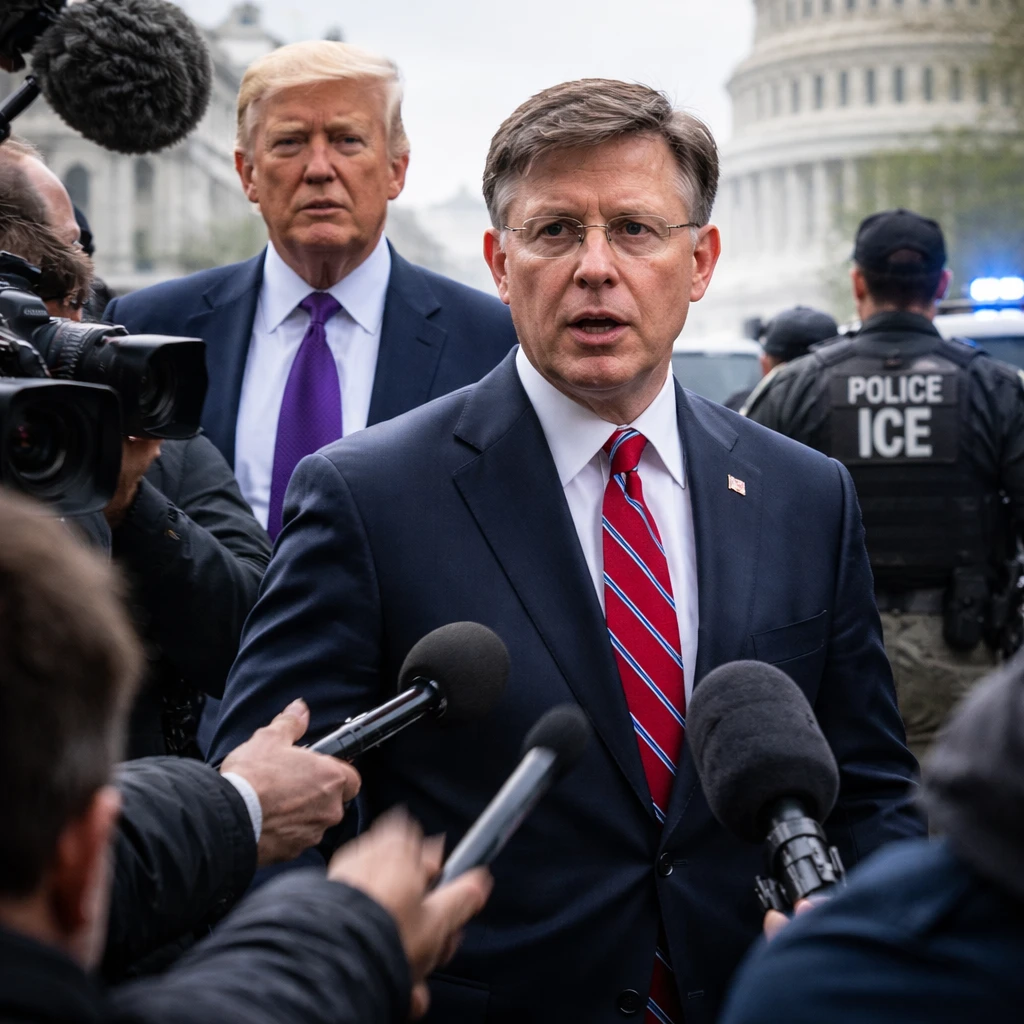

House Speaker Mike Johnson, a Republican from Louisiana, is facing a difficult legislative environment as he works to pass a federal funding package intended to prevent a prolonged partial government shutdown. The challenges arise amidst heated debate over expansive immigration enforcement activities initiated under the Trump administration, particularly following heightened public backlash after two deadly shootings occurred during protests in Minneapolis against Immigration and Customs Enforcement (ICE).
In efforts to expedite progress, President Donald Trump negotiated with Senate leaders to separate the funding for the Department of Homeland Security (DHS) from the broader government funding bill. The Senate-approved plan provides temporary DHS funding only through February 13, creating a deadline for Congress to agree on any new limitations regarding ICE's operational practices.
Johnson acknowledged on "Fox News Sunday" that the president is spearheading these efforts, stating, "It's his play call to do it this way." He further noted that Trump has "already conceded that he wants to turn down the volume" on federal immigration raids.
The first significant hurdle for Johnson is a committee vote scheduled for Monday afternoon, where he must secure the Republican majority's backing to advance the funding package. Democratic members of the committee have declined to support expedited consideration, making the vote crucial. Johnson remains optimistic that the House could hold a full vote by Tuesday.
Democrats Demand Broader ICE Controls
Democratic leaders continue to press for stricter oversight of ICE beyond the $20 million allocated for body cameras in the current bill. Their demands include requirements that federal immigration agents clearly identify themselves to the public and an end to so-called roving patrols. House Democratic Leader Hakeem Jeffries of New York remarked on ABC's “This Week” program that DHS requires "dramatic reform." He urged the administration to begin immigration enforcement negotiations immediately rather than over the course of the two-week funding period.
Jeffries emphasized the need for transparency and constitutional consistency, insisting that warrants should be judicially approved before DHS or ICE agents enter homes or detain individuals, stating, "Masks should come off" to ensure accountability.
Republicans Assert Their Priorities
Meanwhile, factions within the Republican Party are asserting their own requirements for supporting the funding package. The House Freedom Caucus advocates for full DHS funding, while some Republicans push for additional legislative provisions such as the SAVE Act. This act, a lesser-priority measure supported by President Trump, seeks to mandate proof of citizenship as a prerequisite for voter eligibility in elections.
Speaker Johnson is engaging with lawmakers throughout the week to gauge the necessary compromises needed to build a coalition to pass the funding plan.
Continuing Impacts of the Partial Government Shutdown
The partial government shutdown has lingered through the weekend, with a variety of federal agencies affected by the funding impasse. Departments including Defense, Health and Human Services, Transportation, and Housing have been directed to prepare for shutdown conditions, although many essential services continue uninterrupted. If the standoff endures, some federal workers face unpaid periods and possible furloughs.
Members of both parties have expressed growing concern about disruptions to the Federal Emergency Management Agency (FEMA), whose disaster relief efforts in various states could be compromised. This marks the second recent federal funding impasse within a few months, echoing the longest-ever shutdown last fall initiated by Democratic resistance to the expiration of health insurance tax credits.
That prior shutdown concluded with commitments to vote on extending Affordable Care Act tax credits. However, Republican opposition prevented the preservation of these subsidies, resulting in increased insurance premiums for millions of Americans in the new year.
Administration Signals Desire for Swift Resolution
This time, the administration has indicated a preference for a quicker shutdown resolution. Johnson shared that he witnessed President Trump and border security official Tom Homan meeting with Senate Democratic Leader Chuck Schumer to negotiate immigration enforcement changes.
Johnson expressed hope for an agreement, highlighting body cameras and restrictions on roving immigration patrols as likely points of consensus. However, he conveyed concerns about policies requiring agents to remove masks and visibly display names, citing risks to law enforcement personnel who have been targeted by protesters and had their personal information exposed online. He stated, "I don't think the president would approve it – and he shouldn't."
Democratic Calls to End Aggressive ICE Operations
Despite these discussions, Democrats maintain that current immigration enforcement operations, especially in cities like Minneapolis, are out of control and must be ended. Growing numbers of legislators have called for Homeland Security Secretary Kristi Noem to be either dismissed or impeached.
Senator Chris Murphy of Connecticut, who has led efforts advocating for increased reforms, described the situation in Minnesota as "a dystopia" and criticized ICE for diminishing national safety. Murphy emphasized, "Our focus over the next two weeks has to be reining in a lawless and immoral immigration agency."